WORLDWIDE SHIPPING
Share

Japanese Masahiro Dragon Knife Set with name engraving + Dragon chef jacket

As low as €239.00 €195.90
Availability: In stock
Only %1 left
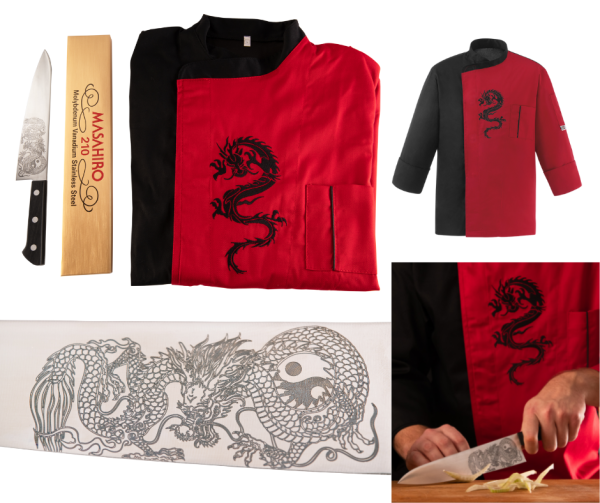
The Japanese Masahiro knife with Dragon laser engraving and name personalization is a magnificent chef's knife adorned with a traditional Japanese symbol of good wishes. It's a winning combination with Egochef's Dragon Chef Jacket! A fantastic gift for anyone who like Japanese cuisine. In Japan, the dragon is seen as a helpful and fortunate creature who brings equilibrium. Giving this knife with Dragon to someone is a sign of good fortune, sickness protection, family protection, and the wish for a long life. The Japanese chef's knife Masahiro with blade length of 21 cm may be utilized for a variety of tasks in the kitchen and is a must-have shape and length for any chef. This knife was made from MBS-26, a high-carbon molybdenum-vanadium stainless steel that was hardened in three steps to 58-59 HRC. Masahiro knives have an unrivaled level of sharpness thanks to the work of master artisans with over 30 years of experience. The handle is composed of Black Pakkawood, which has been pressed into a single, exceptionally durable, moisture and water resistant material. The antibacterial-coated oak handle is easy to clean and has been secured with three carefully placed rivets. The knife is compact and light, with a grip that fits comfortably in both small and large hands. It permits a rhythmic, very efficient movement, waving over the surface when slicing or chopping various items in the kitchen, thanks to the excellent balance between blade and handle. The Dragon-engraving knife can be customised with a name or text of your choice. The engraved name or text can be entered in the Order Comments section of the Shopping Cart. 65 percent polyester and 35 percent cotton make up the Egochef unisex chef jacket with beautiful dragon-shaped embroidery. Snap buttons and a breathable Air Plus back are included. M, L, and XL are the sizes available. ph. Andrea Vaccari
FAQs
What deeply characterises the Masahiro BWH series?
The BWH series represents a more accessible interpretation of the Masahiro world, but that does not make it simplistic or generic. It preserves good cutting quality and a recognisable Japanese approach, while placing a more visible balance between performance, ergonomics and ease of ownership. In practical terms, it offers part of the technical Masahiro character without forcing the user into an excessively demanding or highly specialised blade.
Who is this series truly recommended for?
It is recommended for advanced home cooks, professionals who want a less demanding knife for daily use and users transitioning from Western knives toward a more Japanese cutting philosophy. It makes particular sense for people looking for serious and dependable quality without immediately stepping into the most technical and severe side of the brand.
What is it ideal for?
The BWH series is ideal for broad, everyday use: general preparation, vegetables, boneless meat, fish and precise but not extreme cutting work. Its strength lies in offering good precision with a more natural and less nervous feel than the more aggressively professional lines. For that reason, it is often perceived as a series that is easier to live with over the long term.
How should it be maintained correctly?
Even though it is more accessible than other Masahiro lines, it should still be treated like a proper Japanese knife: hand washing, immediate drying, regular sharpening and correct board use are all important. The blade is somewhat more forgiving, but it should not be trivialised, because neglected maintenance quickly erodes the balance between comfort and precision that defines its value.
What distinguishes Japanese knives from Western ones?
Thinner geometries, sharper edge angles and an approach focused on precision and clean cutting.
Santoku or Gyuto: which should you choose?
The santoku is compact and versatile for everyday use; the gyuto is closer to a classic chef’s knife and is ideal for long cuts and sustained work.
Are Japanese knives more delicate?
Yes, they often require more care: they are not suitable for bones, frozen foods or twisting, but offer superior cutting performance when used correctly.
How do you properly sharpen a Japanese knife?
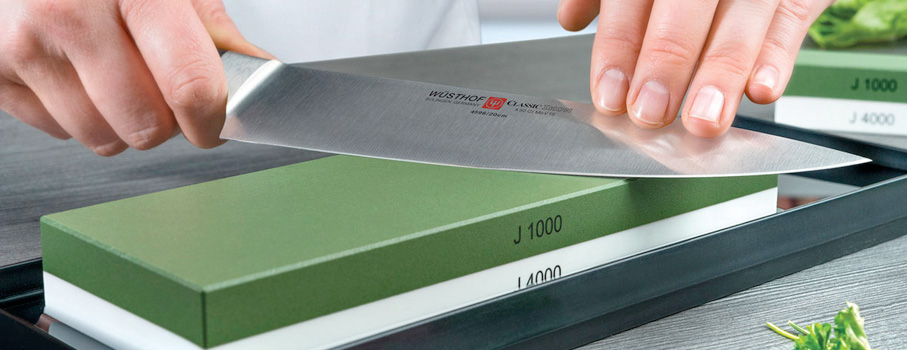
Whetstone sharpening is ideal: a medium grit for maintenance and a finer grit for finishing, adapting the choice to the steel and usage.
Chat with us