WORLDWIDE SHIPPING

FAQ


Prodotti
What is the ideal length for a chef's knife?
The most common length for a chef's knife is 20 cm (8 inches), which is perfect for most kitchen tasks. However, the ideal choice depends on several factors: Hand size: Smaller hands handle 16–18 cm blades more comfortably, while larger hands may...
What’s the best way to store kitchen knives?

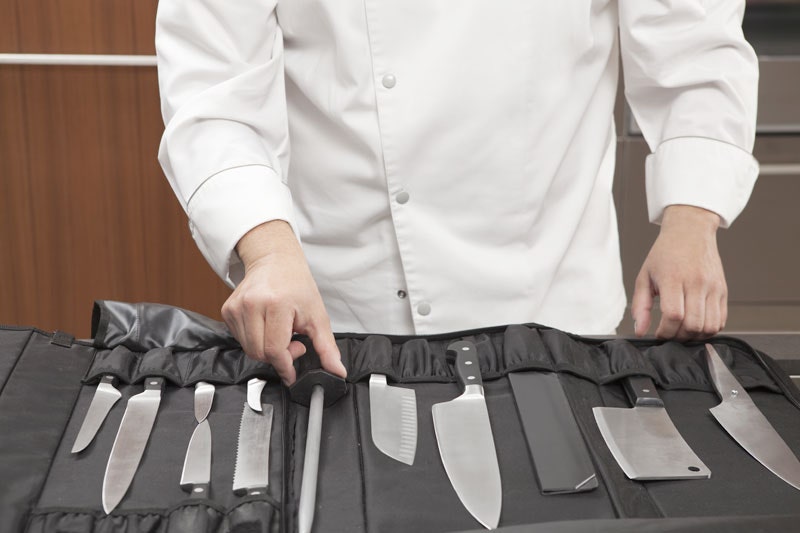
Avoid keeping them loose in drawers, where they can get damaged or become a safety hazard. It’s better to use a wooden block, magnetic strip, or blade guard. You can find the right solution in our catalog.
Do you have professional chef knives?
Yes, in our ecommerce store you will find only professional and high-quality chef knives. Each model is selected to meet the needs of chefs, cooks, and cooking enthusiasts who seek reliable, sharp, and durable tools. We offer a complete range of professional...
Can I put knives in the dishwasher?

It’s highly discouraged. High heat and aggressive detergents can damage both blade and handle. Knives can also knock against other items, dulling the edge.
What does "blade hardness" mean?

Hardness refers to how resistant the steel is, measured on the Rockwell scale (HRC). The harder the steel, the better it retains its edge—but it’s also more brittle and prone to chipping.
What’s the difference between a chef’s knife and a Santoku?

Both are versatile, but the chef’s knife has a curved blade ideal for rocking cuts. The Santoku has a straighter blade, better for fast, clean slicing. It’s often lighter and more compact.
What is a paring knife used for?

A paring knife is small and precise—perfect for peeling, trimming, or detailed work on fruits and vegetables.
What’s the difference between a set, a block, and a case?
A set is a coordinated group of knives sold together. A block is the stand where knives are stored and protected. A case is a rigid or semi-rigid carrying solution designed to transport knives safely – often used by chefs, culinary students, or cooking...
Who should use a knife case?
A knife case is ideal for professional chefs, culinary students, or anyone who enjoys cooking outside the home. It keeps your knives organized, protected, and always ready for use.
How do I choose the right knife block?
It depends on your kitchen space, how many knives you own, and your style. You can choose from vertical blocks, horizontal blocks, or magnetic ones. On AFcoltellerie, you’ll find a full range to compare.
View all
Spedizione & Consegna
Quali sono i tempi di consegna standard in Italia?
2–4 giorni lavorativi
View all
Pagamenti & Fatturazione
View all
Assistenza & Garanzia
View all
Account & Privacy
Come creo un account cliente?
Compilando email, password e dati personali
View all
Programma Fedeltà & Promozioni
Come funziona il programma fedeltà AF_Fidelity?
Con AF_Fidelity, ogni euro speso su afcoltellerie.com vale 1 punto. Al raggiungimento di soglie specifiche, ottieni sconti sul tuo prossimo ordine (non cumulabili con altri codici): 100 punti = 2% 200 punti = 3% 300 punti = 4% 500 punti = 5% 1500...
View all
Coltelli
What is the ideal length for a chef's knife?
The most common length for a chef's knife is 20 cm (8 inches), which is perfect for most kitchen tasks. However, the ideal choice depends on several factors: Hand size: Smaller hands handle 16–18 cm blades more comfortably, while larger hands may...
What’s the best way to store kitchen knives?

Avoid keeping them loose in drawers, where they can get damaged or become a safety hazard. It’s better to use a wooden block, magnetic strip, or blade guard. You can find the right solution in our catalog.
Do you have professional chef knives?
Yes, in our ecommerce store you will find only professional and high-quality chef knives. Each model is selected to meet the needs of chefs, cooks, and cooking enthusiasts who seek reliable, sharp, and durable tools. We offer a complete range of professional...
Can I put knives in the dishwasher?

It’s highly discouraged. High heat and aggressive detergents can damage both blade and handle. Knives can also knock against other items, dulling the edge.
What does "blade hardness" mean?

Hardness refers to how resistant the steel is, measured on the Rockwell scale (HRC). The harder the steel, the better it retains its edge—but it’s also more brittle and prone to chipping.
What’s the difference between a chef’s knife and a Santoku?

Both are versatile, but the chef’s knife has a curved blade ideal for rocking cuts. The Santoku has a straighter blade, better for fast, clean slicing. It’s often lighter and more compact.
What is a paring knife used for?

A paring knife is small and precise—perfect for peeling, trimming, or detailed work on fruits and vegetables.
What materials are used for knife blades?
Blades can be made of stainless steel (rust-resistant), carbon steel (very sharp but delicate), or ceramic (lightweight and razor-sharp but fragile). Premium knives often use Damascus steel or advanced alloys. Not sure which to choose? Contact us—AFcoltellerie...
What are knife handles made of?
Handles can be made of wood (classic but delicate), plastic (durable and hygienic), or technical materials like micarta or G-10, which are extremely tough and non-slip even when wet.
European or Japanese knives: what’s the difference?
European knives are sturdier, with thick, curved blades for rocking cuts and tough ingredients. Japanese knives have thinner, harder blades for clean, precise slicing—but they’re also more fragile. In short: Europeans are durable and versatile, Japanese...
View all
Valigette, Ceppi e Set
What’s the difference between a set, a block, and a case?
A set is a coordinated group of knives sold together. A block is the stand where knives are stored and protected. A case is a rigid or semi-rigid carrying solution designed to transport knives safely – often used by chefs, culinary students, or cooking...
Who should use a knife case?
A knife case is ideal for professional chefs, culinary students, or anyone who enjoys cooking outside the home. It keeps your knives organized, protected, and always ready for use.
How do I choose the right knife block?
It depends on your kitchen space, how many knives you own, and your style. You can choose from vertical blocks, horizontal blocks, or magnetic ones. On AFcoltellerie, you’ll find a full range to compare.
How many knives do I really need in a set?
That depends on your needs. Basic sets typically include 3–5 essential knives (chef’s knife, paring knife, bread knife, carving knife). Professional sets may contain 10 or more tools, such as sharpeners, kitchen scissors, and carving forks.
Is it better to buy a full set or individual knives?
If you’re just starting out or want a complete setup in one go, a set is a practical and cost-effective choice. If you’re experienced, building your own collection piece by piece might suit you better.
Do blocks and cases include knives?
It depends on the product. Some come pre-filled with knives, while others are empty and compatible with most standard knives. Always check the product description to know what’s included.
How do you clean knife blocks and cases?
Wooden blocks should be cleaned with a dry or slightly damp cloth. Knife cases can be wiped down with a mild detergent. Avoid dishwashers or soaking in water.
Can I create a custom set if I don’t find what I’m looking for?
Yes! If the combination of knives, block, or case you’re looking for isn’t listed, feel free to contact us. We’ll help you put together a custom set tailored to your needs and cooking style.
View all
Affilare
Why is it important to sharpen knives?
A sharp knife is safer and more efficient: it requires less force and delivers precise cuts. A dull blade can slip and increase the risk of accidents.
How often should I sharpen my knives?
It depends on how often you use them and the type of blade. Generally, regular honing with a honing steel is recommended, along with deeper sharpening every few months or when the knife loses effectiveness.
Should I use a honing steel or a sharpener?
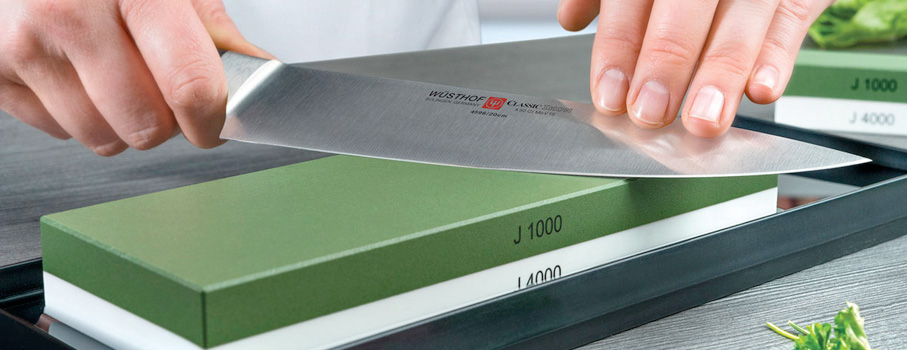
A honing steel maintains the edge and prolongs the life of the knife, but it doesn’t actually sharpen. To restore the edge, you need a sharpener (manual, electric, or whetstone). The ideal routine is to use both: the honing steel for daily care, the ...
What’s the difference between a smooth, grooved, or ceramic honing steel?
A smooth steel realigns the edge without removing metal. A grooved one has a slightly abrasive action, taking off a small amount of material. A ceramic steel is gentler and suitable even for hard blades like Japanese knives.
How do you correctly use a honing steel?
Hold the steel vertically and draw the blade across both sides at a 15–20° angle using light, steady strokes. Just a few passes are enough to maintain the edge.
Can I sharpen any type of knife?
Almost all types, but be careful with serrated or ceramic blades: they require specific tools or techniques. Always check the manufacturer's guidelines or ask us for advice.
View all

Can't find what are you looking for?