Case for the professional chef Sushi-Man, who wants the maximum cutting performance of his knives.
Inside the briefcase you will find 4 Kasumi knife Sandvik blades damask line.
The Sandvik blade is formed on the outside by 32-layer stainless damask steel, while the cutting edge is made of Japanese VG-10 stainless steel with high carbon content.
for a hardness of HRC 59-60 which guarantees an effective and long-lasting cut.
HANDLE: Black plywood.
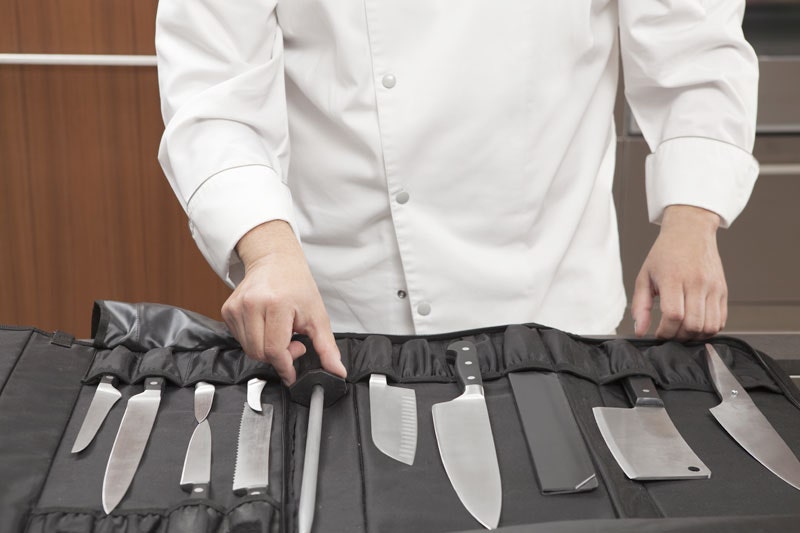
The large Wusthof Chef's case contains the following work tools:
n. 1 Nakiri damascus knife from Kasumi blade cm. 17 to work all the vegetables
n. 1 knife Thread Kasumi damascus blade cm. 24 for fish preparation
n. 1 knife Damascus chef from Kasumi blade cm. 24 for all cuts in the kitchen
n. 1 knife Sashimi damask from Kasumi blade cm. 24 for slicing raw fish
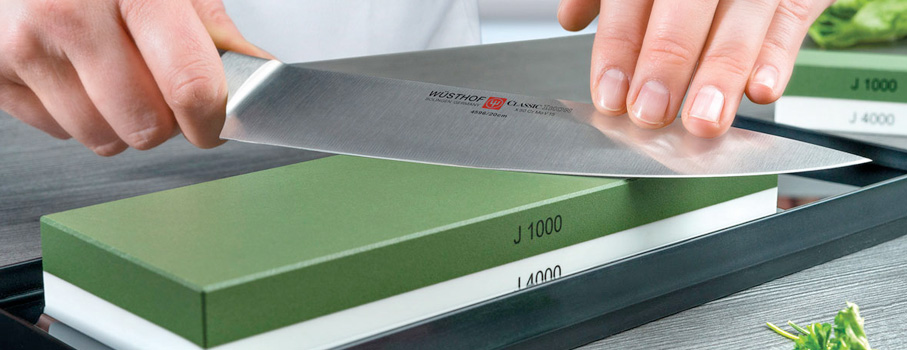
n. 1 Double Grain Sharpening Stone 3000/8000
n. 1 Double Grain Sharpening Stone 240/1000
n. 1 Sharpening guides to give a correct inclination of the cut during the sharpening operation of your knives
The case can hold up to 20 knives, has a book opening, two compartments that can be closed with a sturdy zipper, a handle and a shoulder strap and a safety lock included
Case dimensions: 48 x 25 x 10 cm.
FAQs
What is the ideal length for a chef's knife?
The most common length for a chef's knife is 20 cm (8 inches), which is perfect for most kitchen tasks.
However, the ideal choice depends on several factors:
Hand size: Smaller hands handle 16–18 cm blades more comfortably, while larger hands may prefer a 21–25 cm blade.
Personal habits: Those who favor broad movements and long cuts might lean toward longer knives; those who prioritize precision or work in tight spaces might prefer a shorter blade.
Experience level: Beginners tend to choose shorter, more manageable blades, while professionals often prefer 21 or 24 cm knives for greater efficiency.
In short, there is no “perfect” size for everyone — the right length should be chosen based on comfort, control, and intended use.
What’s the best way to store kitchen knives?
Avoid keeping them loose in drawers, where they can get damaged or become a safety hazard. It’s better to use a wooden block, magnetic strip, or blade guard. You can find the right solution in our catalog.
Do you have professional chef knives?
Yes, in our ecommerce store you will find only professional and high-quality chef knives.
Each model is selected to meet the needs of chefs, cooks, and cooking enthusiasts who seek reliable, sharp, and durable tools.
We offer a complete range of professional kitchen knives, ideal for precision cutting, meat, fish, vegetables, and much more.
You will find slicing knives, santoku, paring knives, and other models commonly used in professional kitchens.
We collaborate only with brands recognized at the professional level, such as [e.g., Victorinox, Global, Kai, F. Dick, Ambrogio Sanelli, Wüsthof, etc.], to offer you the best in performance and safety in the kitchen
Can I put knives in the dishwasher?
It’s highly discouraged. High heat and aggressive detergents can damage both blade and handle. Knives can also knock against other items, dulling the edge.
What does "blade hardness" mean?
Hardness refers to how resistant the steel is, measured on the Rockwell scale (HRC). The harder the steel, the better it retains its edge—but it’s also more brittle and prone to chipping.
Who should use a knife case?
A knife case is ideal for professional chefs, culinary students, or anyone who enjoys cooking outside the home. It keeps your knives organized, protected, and always ready for use.
How do I choose the right knife block?
It depends on your kitchen space, how many knives you own, and your style. You can choose from vertical blocks, horizontal blocks, or magnetic ones. On AFcoltellerie, you’ll find a full range to compare.
How many knives do I really need in a set?
That depends on your needs. Basic sets typically include 3–5 essential knives (chef’s knife, paring knife, bread knife, carving knife). Professional sets may contain 10 or more tools, such as sharpeners, kitchen scissors, and carving forks.
Is it better to buy a full set or individual knives?
If you’re just starting out or want a complete setup in one go, a set is a practical and cost-effective choice. If you’re experienced, building your own collection piece by piece might suit you better.
Do blocks and cases include knives?
It depends on the product. Some come pre-filled with knives, while others are empty and compatible with most standard knives. Always check the product description to know what’s included.
How do you clean knife blocks and cases?
Wooden blocks should be cleaned with a dry or slightly damp cloth. Knife cases can be wiped down with a mild detergent. Avoid dishwashers or soaking in water.
Can I create a custom set if I don’t find what I’m looking for?
Yes! If the combination of knives, block, or case you’re looking for isn’t listed, feel free to contact us. We’ll help you put together a custom set tailored to your needs and cooking style.
What materials are used for knife blades?
Blades can be made of stainless steel (rust-resistant), carbon steel (very sharp but delicate), or ceramic (lightweight and razor-sharp but fragile). Premium knives often use Damascus steel or advanced alloys. Not sure which to choose? Contact us—AFcoltellerie has them all.
What are knife handles made of?
Handles can be made of wood (classic but delicate), plastic (durable and hygienic), or technical materials like micarta or G-10, which are extremely tough and non-slip even when wet.
European or Japanese knives: what’s the difference?
European knives are sturdier, with thick, curved blades for rocking cuts and tough ingredients. Japanese knives have thinner, harder blades for clean, precise slicing—but they’re also more fragile. In short: Europeans are durable and versatile, Japanese are sharp and surgical.
What’s the best knife for beginners?
A 20 cm chef’s knife is the most versatile option to start with. Paired with a paring knife, it covers most everyday kitchen needs.
What are the grooves (granton edge) on a blade for?
The grooves or “granton edge” reduce friction and prevent food from sticking to the blade. They’re especially useful with wet or soft foods like fish, cheese, or vegetables.
Are there knives for left-handed users?
Yes. Some single-bevel Japanese knives are made specifically for right- or left-handed use. Many universal knives, with a double bevel, work well for both.
What does a complete knife case include?
A set of knives already arranged in their case, often with accessories such as a honing steel, scissors, tongs, a peeler, spatulas or a thermometer; some also include chef's clothing. The contents vary from model to model and are listed on the product page: check the type and length of each blade before you buy.
What deeply characterises the Damascus VG-10 series?
The Damascus VG-10 series represents Kasumi’s most iconic identity: a high-hardness VG-10 steel core is clad in Damascus layers that are not only aesthetic, but also contribute to improved surface resistance. The result is a blade that combines very high cutting performance with a strong visual identity, while still remaining more approachable than other more extreme Damascus knives.
What characterises Kasumi complete cases?
Kasumi complete cases stand out because they are not simply transport solutions, but fully equipped sets designed for professional or advanced use. Inside, they include a selection of professional knives and premium accessories, arranged in a safe and organised way. The case therefore serves not only to protect and transport the equipment, but also as a complete solution that combines quality, function and presentation.
A complete case or an empty case with individual knives?
A complete case is ready to use and coordinated, which helps if you're starting from scratch or want a uniform set. An empty case with knives chosen one by one is the better option if you already own part of your kit, want to mix brands or need very specific models.
Who is this series really recommended for?
It is recommended for those who want an authentic Japanese knife but do not want to move immediately into the most technical and demanding segment. It is perfect for advanced enthusiasts looking for a significant step up from Western or entry-level knives, but also for professionals who want an elegant, high-performing blade without excessive complexity in day-to-day use.
Who are they recommended for?
They are recommended for professionals, trainers, travelling chefs and anyone looking for a complete set of high-level knives and accessories. They are especially suitable for users who want a ready-to-use solution that combines operational practicality with the value of premium equipment.
Which case should I choose for culinary school?
Start from the equipment list provided by the school, which often specifies knife types and blade lengths, and compare it with the case contents. For school use, sturdy knives with non-slip, easy-to-wash handles are the best choice. A case with a few free slots lets you add the knives you'll need in later years.
For which uses does it deliver the greatest value?
This series performs at its best in precision work on vegetables, fish and boneless meat, where edge quality and blade smoothness directly affect the result. It is especially effective in long, controlled cuts, while being less suitable for heavy-duty tasks or cuts involving twisting.
For which uses do they offer the greatest value?
They offer the greatest value in situations where having a complete and well-organised set always available is important, such as catering, training, consulting, cooking schools or moving between kitchens and workstations. In these contexts, the case is not just a transport accessory, but a true extension of professional equipment.
What is the correct way to manage it over time?
Maintenance requires care, but not extreme rigidity: whetstone sharpening helps preserve the original profile, while hand washing and immediate drying help protect the finish. It is important to avoid hard surfaces and improper use that could compromise the thin edge typical of VG-10.
How should they be maintained and managed?
Cases should be kept clean and dry and checked regularly to ensure that compartments, protections, accessories and closures continue to function properly. A complete case truly retains its value when it is handled with care and order, helping protect both the knives and the included accessories over time.
Can I personalise my knives?
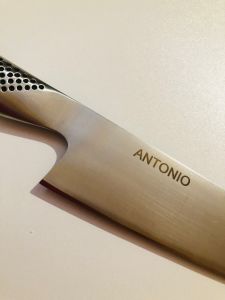
Yes, with laser engraving on the blade of knives bought from AFcoltellerie: a name, a short text or your business logo. It helps you recognise your knives in a kitchen brigade or at school, or makes a personal gift. Add the personalisation service to your basket and write the text in the order notes, or send it to info@afcoltellerie.com; for a logo, we need a DXF file.