WORLDWIDE SHIPPING

 IT
IT FR
FR




 IT
IT FR
FR Share
Share


Chef case complete with 11 knives and 4 Global accessories
€1,389.00
€1,138.52
Availability:
In stock
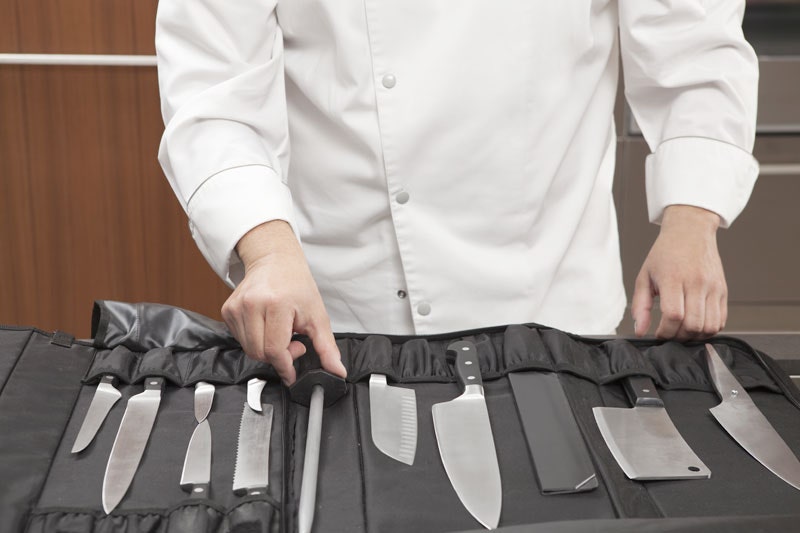
Friedr's Culinary Bag case. Dick has been set up with all the useful tools for the professional cook on the go, who can easily carry knives, accessories, chef's uniform, pens and business cards in a briefcase and leave at any time.
The case is supplied complete with Global knives and accessories to allow the chef to have all the essential tools to work in the kitchen, in a laboratory or at an event.
Dick's Culinary Bag is equipped with the following tools:
n. 1 Global G74 ceramic sharpener
n. 1 Slicing knife blade cm. 22 Global G8
n. 1 Meat cutting knife blade cm. 21 Global G3
n. 1 Chef's knife blade cm. 20 Global G2
n. 1 Santoku knife with alveoles cm. 18 Global G80
n. 1 Oriental chef's knife cm. 18 Global G4
n. 1 serrated multipurpose knife cm. 15 Global GS14
n. 1 Carving knife to slice cm. 13 Global GS3
n. 1 kitchen knife cm. 11 Global GS1
n. 1 Global kitchen scissors GKS210
n. 1 Kitchen tongs length cm. 30 Global GS28
n. 1 Flexible step spatula blade cm. 15 total length cm. 28 Global GS42 / 6
n. 1 multipurpose knife blade cm. 11 Global GSF49
n. 1 straight paring knife blade cm. 8 Global GSF31
n. 1 Curved paring knife blade cm. 6 Global GSF34
Dick's Culinary Bag is equipped with the following tools:
n. 1 Global G74 ceramic sharpener
n. 1 Slicing knife blade cm. 22 Global G8
n. 1 Meat cutting knife blade cm. 21 Global G3
n. 1 Chef's knife blade cm. 20 Global G2
n. 1 Santoku knife with alveoles cm. 18 Global G80
n. 1 Oriental chef's knife cm. 18 Global G4
n. 1 serrated multipurpose knife cm. 15 Global GS14
n. 1 Carving knife to slice cm. 13 Global GS3
n. 1 kitchen knife cm. 11 Global GS1
n. 1 Global kitchen scissors GKS210
n. 1 Kitchen tongs length cm. 30 Global GS28
n. 1 Flexible step spatula blade cm. 15 total length cm. 28 Global GS42 / 6
n. 1 multipurpose knife blade cm. 11 Global GSF49
n. 1 straight paring knife blade cm. 8 Global GSF31
n. 1 Curved paring knife blade cm. 6 Global GSF34
FAQs