WORLDWIDE SHIPPING

 IT
 FR

- KNIVES
- JAPANESE KNIVES
- EUROPEAN KNIVES
- PROMOTIONAL AND CUSTOMIZATIONS
- CHEF'S CASES - KNIVES BLOCKS - SETS
- SHARPENING
- PASTRY
- PASTRY UTENSILS
- ACCESSORIES & UTENSILS
- CAKE STANDS AND DISPLAY
- CHOCOLATE
- MARTELLATO PROFESSIONAL
- PAVONI ITALIA
- BRUSHES, SPATULAS AND WHIPS
- SCHNEIDER
- SILICONE
- SILIKOMART PROFESSIONAL
- AIRPLUS
- CHOCADO
- ÉCLAIR
- DECORATIVE ELEMENTS
- FRUITS 3D
- ICE
- MINI DESSERTS - MIGNON
- MODERN SINGLE PORTIONS
- CLASSIC SINGLE PORTIONS AND CAKES
- NATURAE
- 60 X 40 MOLDS
- AIR MAT
- TARTE 4.0
- JELLY MOULDS
- MODERN CAKES
- STORAGE AND DISPLAY I-GLOO AND MACADO'
- MOULDS FOR CHOCOLATES
- CHOCOLATE ACCESSORIES
- SMALL PLATES
- ACCESSORIES
- CRAFT MOULDS
- PASTRY CUTTER
- TRAYS, GRADE, BOWLS, JUGS, BOTTLES
- THERMOMETERS, TIMER AND SCALES
- BAKEWARE, RINGS AND MOULDS
- MOULDS
- PACKAGING AND PASTRY TRAYS
- BAKING MATS & LINERS
- GUITARS - FRAMES
- VALENTINE'S DAY - MOTHER'S DAY
- DECORATING CAKES
- ICE-CREAM SHOP
- PASTRY UTENSILS
- KITCHEN
- WELLNESS KITCHEN
- COOKING UTENSILS
- ELECTRIC KITCHEN UTENSILS
- POTS
- CARVING & DECORATION
- MANDOLINE AND GRATERS
- ETHNIC CUISINE
- CATERING & BUFFET
- COOKING BOOKS

- CLOTHING
- TABLE & BAR
- HOME & FREE TIME
- GIFT IDEAS
- NEWS
- SALES
- SPARE PARTS
- DELUXE
- AFCOLTELLERIE Home
- Blog
- Business

 IT
 FR


Empty knife holder case with 16 positions by Chroma F.A. Porsche
€93.00
€76.23
Availability:
In stock
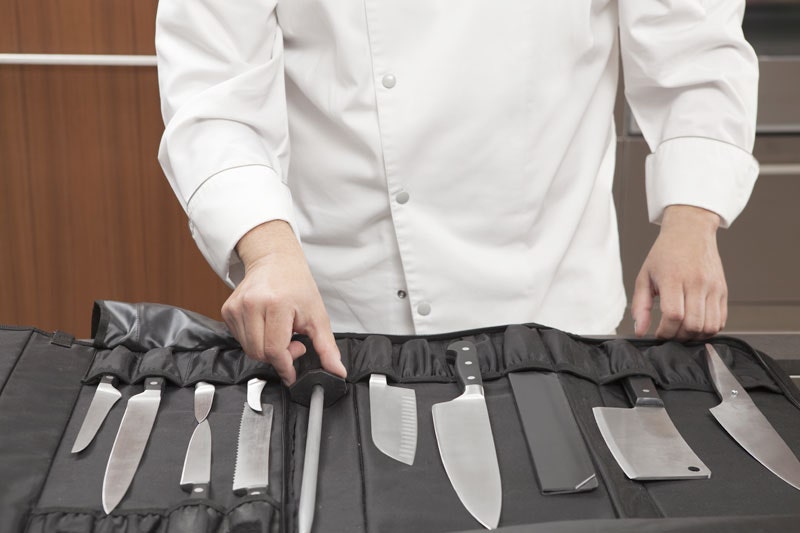
The Chroma knife bag is ideal for storing and transporting your high quality knives safely.
The bag is made of black nylon and has two compartments - separated by a zipper - with space for about 16 knives with a total length of up to 48 cm. and an additional compartment for a large sharpening stone.
These are held securely in place thanks to the tight winding and Velcro closure.
The bag features a shoulder strap and two handles for easy transport.
The briefcase is provided empty.
Dimensions: 51 x 20 cm.
FAQs
What is the ideal length for a chef's knife?
The most common length for a chef's knife is 20 cm (8 inches), which is perfect for most kitchen tasks.
However, the ideal choice depends on several factors:
Hand size: Smaller hands handle 16–18 cm blades more comfortably, while larger hands may prefer a 21–25 cm blade.
Personal habits: Those who favor broad movements and long cuts might lean toward longer knives; those who prioritize precision or work in tight spaces might prefer a shorter blade.
Experience level: Beginners tend to choose shorter, more manageable blades, while professionals often prefer 21 or 24 cm knives for greater efficiency.
In short, there is no “perfect” size for everyone — the right length should be chosen based on comfort, control, and intended use.
What’s the best way to store kitchen knives?
Avoid keeping them loose in drawers, where they can get damaged or become a safety hazard. It’s better to use a wooden block, magnetic strip, or blade guard. You can find the right solution in our catalog.
Do you have professional chef knives?
Yes, in our ecommerce store you will find only professional and high-quality chef knives.
Each model is selected to meet the needs of chefs, cooks, and cooking enthusiasts who seek reliable, sharp, and durable tools.
We offer a complete range of professional kitchen knives, ideal for precision cutting, meat, fish, vegetables, and much more.
You will find slicing knives, santoku, paring knives, and other models commonly used in professional kitchens.
We collaborate only with brands recognized at the professional level, such as [e.g., Victorinox, Global, Kai, F. Dick, Ambrogio Sanelli, Wüsthof, etc.], to offer you the best in performance and safety in the kitchen
Can I put knives in the dishwasher?
It’s highly discouraged. High heat and aggressive detergents can damage both blade and handle. Knives can also knock against other items, dulling the edge.
What does "blade hardness" mean?
Hardness refers to how resistant the steel is, measured on the Rockwell scale (HRC). The harder the steel, the better it retains its edge—but it’s also more brittle and prone to chipping.
Who should use a knife case?
A knife case is ideal for professional chefs, culinary students, or anyone who enjoys cooking outside the home. It keeps your knives organized, protected, and always ready for use.
How do I choose the right knife block?
It depends on your kitchen space, how many knives you own, and your style. You can choose from vertical blocks, horizontal blocks, or magnetic ones. On AFcoltellerie, you’ll find a full range to compare.
How many knives do I really need in a set?
That depends on your needs. Basic sets typically include 3–5 essential knives (chef’s knife, paring knife, bread knife, carving knife). Professional sets may contain 10 or more tools, such as sharpeners, kitchen scissors, and carving forks.
Is it better to buy a full set or individual knives?
If you’re just starting out or want a complete setup in one go, a set is a practical and cost-effective choice. If you’re experienced, building your own collection piece by piece might suit you better.
Do blocks and cases include knives?
It depends on the product. Some come pre-filled with knives, while others are empty and compatible with most standard knives. Always check the product description to know what’s included.
How do you clean knife blocks and cases?
Wooden blocks should be cleaned with a dry or slightly damp cloth. Knife cases can be wiped down with a mild detergent. Avoid dishwashers or soaking in water.
Can I create a custom set if I don’t find what I’m looking for?
Yes! If the combination of knives, block, or case you’re looking for isn’t listed, feel free to contact us. We’ll help you put together a custom set tailored to your needs and cooking style.
What materials are used for knife blades?
Blades can be made of stainless steel (rust-resistant), carbon steel (very sharp but delicate), or ceramic (lightweight and razor-sharp but fragile). Premium knives often use Damascus steel or advanced alloys. Not sure which to choose? Contact us—AFcoltellerie has them all.
What are knife handles made of?
Handles can be made of wood (classic but delicate), plastic (durable and hygienic), or technical materials like micarta or G-10, which are extremely tough and non-slip even when wet.
European or Japanese knives: what’s the difference?
European knives are sturdier, with thick, curved blades for rocking cuts and tough ingredients. Japanese knives have thinner, harder blades for clean, precise slicing—but they’re also more fragile. In short: Europeans are durable and versatile, Japanese are sharp and surgical.
What’s the best knife for beginners?
A 20 cm chef’s knife is the most versatile option to start with. Paired with a paring knife, it covers most everyday kitchen needs.
What are the grooves (granton edge) on a blade for?
The grooves or “granton edge” reduce friction and prevent food from sticking to the blade. They’re especially useful with wet or soft foods like fish, cheese, or vegetables.
Are there knives for left-handed users?
Yes. Some single-bevel Japanese knives are made specifically for right- or left-handed use. Many universal knives, with a double bevel, work well for both.
What sets CHROMA Turbo Design by F.A. Porsche knives apart?
CHROMA Turbo Design by F.A. Porsche knives combine an instantly recognisable aesthetic with a construction developed to deliver high cutting performance. The series applies the clean, essential design language of F.A. Porsche to kitchen cutlery: an all-metal construction, visual continuity between blade and handle, and particular attention to ergonomics. The small blue metal sphere positioned near the handle is also one of the Turbo range's signature details and provides a tactile reference point when gripping the knife.
The most distinctive technical feature is the Ka-Six edge treatment. The concept behind the series gives the cutting edge a higher hardness than the rest of the knife, combining improved edge retention with a structure that remains less rigid overall. This balance between edge hardness, resilience and handling is precisely what distinguishes CHROMA Turbo from a conventional all-steel knife range.
The range is therefore aimed at users looking for a contemporary knife in which design and performance are conceived as part of the same project, with aesthetics and kitchen functionality working together rather than being treated as separate elements.
Who are CHROMA Turbo F.A. Porsche knives recommended for?
The CHROMA Turbo F.A. Porsche range is particularly well suited to chefs, experienced cooking enthusiasts and users who prefer sharp, contemporary knives with an all-metal handle. The distinctive ergonomics provide a very different feel from traditional knives fitted with wooden or synthetic handle scales, making the series especially appealing to those who appreciate a clean, continuous grip without the conventional joints between blade and handle.
Good edge retention also makes the range attractive to users who regularly perform precision cutting and want to reduce the frequency of sharpening. At the same time, a particularly hard cutting edge requires appropriate use: these knives are not intended for bones, frozen foods, twisting motions or tasks that expose the blade to lateral impacts.
CHROMA Turbo is therefore designed for users who prioritise precision, smooth cutting action and control, while also looking for a professional kitchen tool with the strong design identity associated with F.A. Porsche.
What types of food preparation are CHROMA Turbo knives suitable for?
The CHROMA Turbo range includes blade geometries for different kitchen tasks, from chef's knives and Santoku knives to smaller blades, filleting knives, vegetable knives and serrated models. The choice should therefore be based on the specific preparation: chef's knives are suitable for general work with vegetables, herbs, boneless meat and a wide variety of everyday ingredients, while specialist blades allow greater precision and smoother performance in dedicated tasks.
The Ka-Six edge performs particularly well in clean, controlled cuts, allowing the blade to pass through food without requiring excessive force. Fish, meat fillets, fruit and vegetables are good examples of ingredients where the characteristics of the series can be used to full advantage.
Use on bones, frozen foods or very hard surfaces should instead be avoided. CHROMA Turbo is conceived as a high-performance cutting range, and using each blade according to its intended function helps preserve its geometry and sharpness for longer.
How should a CHROMA Turbo F.A. Porsche knife be maintained and sharpened?
Maintenance of CHROMA Turbo F.A. Porsche knives should take into account the particular hardness of the cutting edge. Hand washing is recommended, followed by immediate drying, and the knives should be stored so that the edge cannot strike other utensils. The cutting surface is equally important: wooden or suitable synthetic cutting boards are preferable to glass, ceramic or stone.
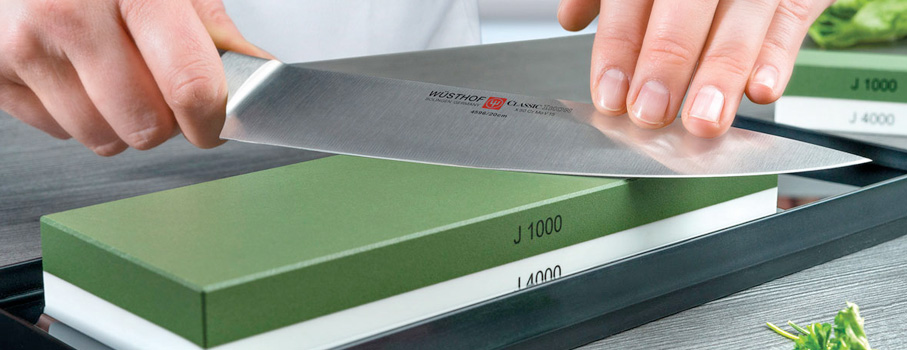
When the edge needs to be restored, sharpening methods compatible with hard blades and the geometry of the series should be used, such as suitable sharpening stones. Aggressive techniques or unsuitable tools should be avoided because they may damage the cutting edge. Greater edge retention does not eliminate the need for correct maintenance, but it generally makes sharpening less frequent when the knife is used appropriately.
A controlled cutting technique, without lateral twisting or impacts against hard materials, is itself part of proper maintenance. It protects the Ka-Six edge and helps CHROMA Turbo knives retain the characteristics for which they were designed over time.