WORLDWIDE SHIPPING

 IT
IT FR
FR




 IT
IT FR
FR Share
Share


FAST-CHEF Case complete with 3 knives Kai Wasabi Black, Mandoline, Thermometer
€289.00
€236.89
Availability:
In stock
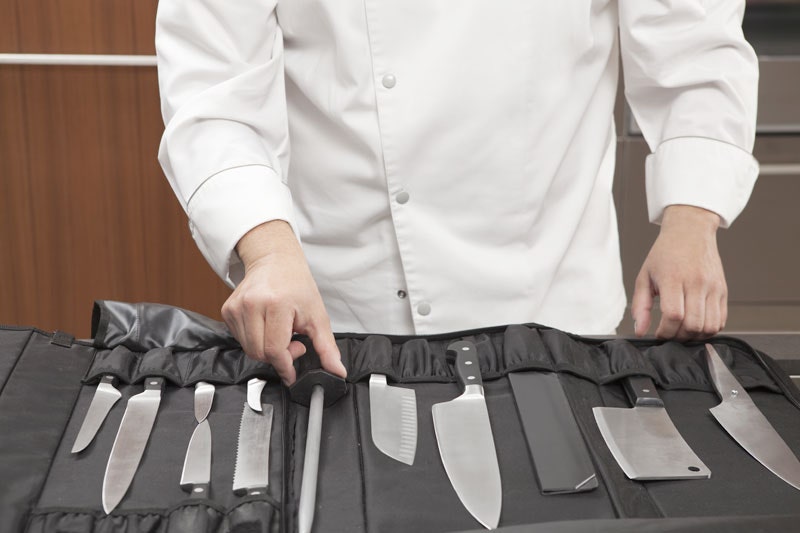
Dynamic case for the chef who wants to work accurately using the high quality Kai Japanese knives, precision mandoline and the professionalism of the German TFA thermometer.
In this robust Wusthof chef case made of excellent materials and detailed details you will find the following accessories:
n. 1 Chef knife cm. 20 Kai Wasabi Black Series
n. 1 Nakiri vegetable knife cm. 16 Kai Wasabi Black Series
n. 1 Paring Knife cm. 10 Kai Wasabi Black Series
n. 1 Mandoline Veggie V. You will allow you to smoothly cut from 0 to 4 mm and cut to julienne. Protected security included.
Mandoline size: 28.9 x 23.34 x 6.35 cm.
n. 1 TFA Probe Digital Thermometer.
Measurement of liquid, pasteurized and semisolid liquid temperature. In accordance with HACCP regulations
Probe length 140 mm.
Water splash protection IP 55
Automatic shutdown
Complete with plastic hood cap.
Detects temperatures from -50 ° C to + 300 ° C
The case has two separate compartments for 20 knives and accessories, each with a zipper closure.
Combination lock for a higher safety.
Equipped with handle and shoulder strap.
Black Colour.
Dimensions: 480 x 250 x 100 mm
In this robust Wusthof chef case made of excellent materials and detailed details you will find the following accessories:
n. 1 Chef knife cm. 20 Kai Wasabi Black Series
n. 1 Nakiri vegetable knife cm. 16 Kai Wasabi Black Series
n. 1 Paring Knife cm. 10 Kai Wasabi Black Series
n. 1 Mandoline Veggie V. You will allow you to smoothly cut from 0 to 4 mm and cut to julienne. Protected security included.
Mandoline size: 28.9 x 23.34 x 6.35 cm.
n. 1 TFA Probe Digital Thermometer.
Measurement of liquid, pasteurized and semisolid liquid temperature. In accordance with HACCP regulations
Probe length 140 mm.
Water splash protection IP 55
Automatic shutdown
Complete with plastic hood cap.
Detects temperatures from -50 ° C to + 300 ° C
The case has two separate compartments for 20 knives and accessories, each with a zipper closure.
Combination lock for a higher safety.
Equipped with handle and shoulder strap.
Black Colour.
Dimensions: 480 x 250 x 100 mm
FAQs