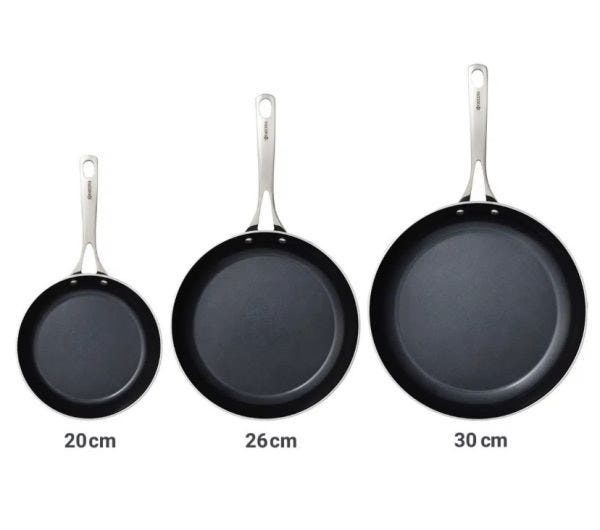
The Kyocera 3-Piece Frying Pan Set brings together three of the most versatile frying pans in the Kyocera range, in Ø20, Ø26 and Ø30 cm sizes. An ideal combination for preparing all kinds of dishes, from small portions to meals for the whole family.
The frying pans are made of aluminium with a Kyocera ceramic coating, designed to provide excellent non-stick properties and even cooking. The coating is free from PTFE, PFOA, lead and heavy metals, for healthier and more conscious cooking.
The 3-layer base promotes even heat distribution, helping to reduce cooking times and energy consumption. The base and handles are made of stainless steel, providing strength, practicality and durability.
The three sizes allow you to always choose the most suitable pan according to the quantity and type of food being prepared.
Set contents
* 1 Kyocera frying pan Ø20 cm
* 1 Kyocera frying pan Ø26 cm
* 1 Kyocera frying pan Ø30 cm
Features
* Set of 3 Kyocera frying pans
* Diameters: 20, 26 and 30 cm
* Aluminium body
* Kyocera ceramic non-stick interior coating
* 3-layer base for even heat distribution
* Stainless steel base and handle
* Free from PTFE, PFOA, lead and heavy metals
* Compatible with all cooktops
* Oven-safe up to 200 °C
* Easy to clean
* Ideal for healthy cooking with reduced use of fats
Why choose the Kyocera 3-Piece Frying Pan Set
Three sizes designed to meet the main everyday cooking needs: the Ø20 cm pan is ideal for small quantities and individual portions, the Ø26 cm is the most versatile size for everyday use, while the Ø30 cm provides a large cooking surface for more generous portions.
A practical and complete set for those who want the quality of Kyocera technology concentrated in three of the most useful frying pans.
Contents: 3 frying pans Ø20 + Ø26 + Ø30 cm
Brand: Kyocera
FAQs
What is the role of Kyocera accessories for ceramic knives?
They are essential because ceramic requires specific tools: dedicated sharpeners, guards and storage solutions help prevent damage and maintain blade performance over time.
How should accessories be chosen?
They should be chosen according to function: sharpeners for edge restoration, guards for transport and supports for storage. The goal is to build a system that matches the way the knife is actually used.
Why not use accessories designed for steel knives?
Standard abrasives may damage ceramic or prove ineffective; specific materials and geometries are required.
How should they be maintained?
They should be kept clean and replaced when worn out; unsuitable accessories can compromise the blade.
What distinguishes Kyocera knives from other ceramic knives?
Kyocera stands out for build quality, production precision and the use of zirconia ceramic, an advanced material that helps deliver light weight, clean cutting and long edge retention. Compared with many more generic options, the result is a more precise, consistent and reliable user experience over time.
How do the Kyocera series differ?
The main differences concern finish, ergonomics and the level of blade development. White is more essential and lightweight, while Shin Black represents a more advanced option with a stronger sense of solidity and long-term durability.
Who are Kyocera knives suitable for?
They are ideal for users looking for lightness, cutting precision and low maintenance, especially when working with fruit, vegetables and delicate ingredients.
How do you choose the right series?
Choose White for simplicity and ease of use; choose Shin Black for a more advanced ceramic and a greater sense of durability.
What is the correct maintenance?
Hand washing, immediate drying and use on wood or polyethylene cutting boards are recommended. Sharpening should only be carried out with ceramic-specific tools, while impacts, twisting, bones and frozen foods should be avoided.
What distinguishes Japanese knives from Western ones?
Thinner geometries, sharper edge angles and an approach focused on precision and clean cutting.
Santoku or Gyuto: which should you choose?
The santoku is compact and versatile for everyday use; the gyuto is closer to a classic chef’s knife and is ideal for long cuts and sustained work.
Are Japanese knives more delicate?
Yes, they often require more care: they are not suitable for bones, frozen foods or twisting, but offer superior cutting performance when used correctly.
How do you properly sharpen a Japanese knife?
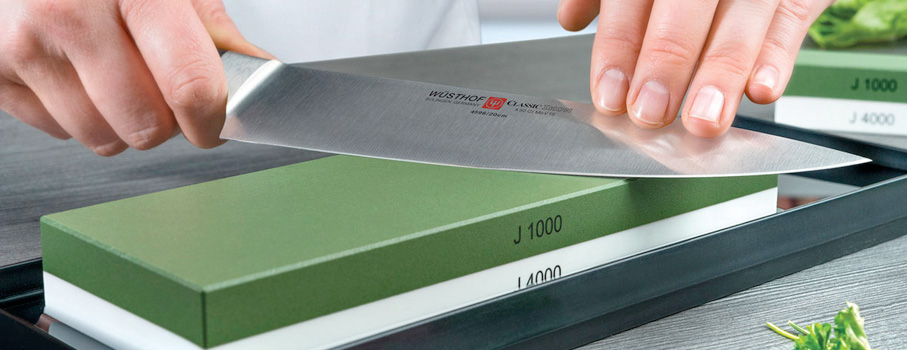
Whetstone sharpening is ideal: a medium grit for maintenance and a finer grit for finishing, adapting the choice to the steel and usage.