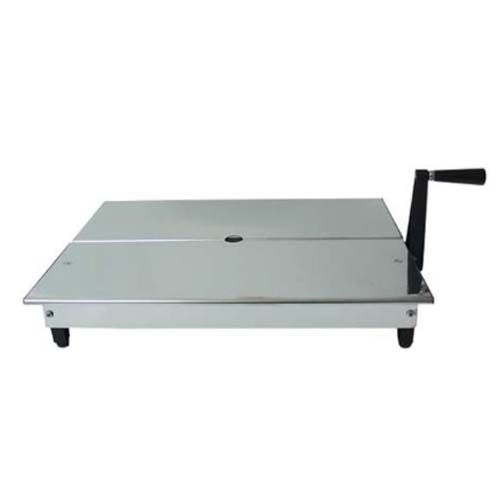
Manual stainless steel top, perfect for cutting cheese thanks to a stainless steel wire.
You can cut your cheeses quickly and accurately.
A patented wire winding system allows you to wind or arrange the stainless steel wire without the risk of breaking.
Dimensions 42x55x10 cm
FAQs
What is the ideal length for a chef's knife?
The most common length for a chef's knife is 20 cm (8 inches), which is perfect for most kitchen tasks.
However, the ideal choice depends on several factors:
Hand size: Smaller hands handle 16–18 cm blades more comfortably, while larger hands may prefer a 21–25 cm blade.
Personal habits: Those who favor broad movements and long cuts might lean toward longer knives; those who prioritize precision or work in tight spaces might prefer a shorter blade.
Experience level: Beginners tend to choose shorter, more manageable blades, while professionals often prefer 21 or 24 cm knives for greater efficiency.
In short, there is no “perfect” size for everyone — the right length should be chosen based on comfort, control, and intended use.
What materials are used for knife blades?
Blades can be made of stainless steel (rust-resistant), carbon steel (very sharp but delicate), or ceramic (lightweight and razor-sharp but fragile). Premium knives often use Damascus steel or advanced alloys. Not sure which to choose? Contact us—AFcoltellerie has them all.
What are knife handles made of?
Handles can be made of wood (classic but delicate), plastic (durable and hygienic), or technical materials like micarta or G-10, which are extremely tough and non-slip even when wet.
European or Japanese knives: what’s the difference?
European knives are sturdier, with thick, curved blades for rocking cuts and tough ingredients. Japanese knives have thinner, harder blades for clean, precise slicing—but they’re also more fragile. In short: Europeans are durable and versatile, Japanese are sharp and surgical.
What’s the best knife for beginners?
A 20 cm chef’s knife is the most versatile option to start with. Paired with a paring knife, it covers most everyday kitchen needs.
What are the grooves (granton edge) on a blade for?
The grooves or “granton edge” reduce friction and prevent food from sticking to the blade. They’re especially useful with wet or soft foods like fish, cheese, or vegetables.
Are there knives for left-handed users?
Yes. Some single-bevel Japanese knives are made specifically for right- or left-handed use. Many universal knives, with a double bevel, work well for both.
What are the essential basic tools in the kitchen?
Essential tools include good quality knives, cutting boards, pots and pans of various sizes, ladles, spatulas, whisks, and bowls. These tools allow you to easily handle most everyday cooking tasks.
What is the best material for pots and pans?
It depends on the use: stainless steel is versatile and durable, cast iron retains heat well, aluminum is lightweight and has excellent heat conductivity, while ceramic offers a non-stick surface without chemicals.
How do I choose the best cookware set?
Consider the material (stainless steel, aluminum, copper), compatibility with your stovetop, the number of pieces included, and ease of cleaning. A good set should be versatile and long-lasting.
How can I prevent damage to pots and pans over time?
Avoid using metal utensils on non-stick coatings, do not heat pots empty, and clean them with soft sponges. When storing, protect surfaces by stacking pots with cloths or separators to prevent scratches.
How do I properly care for and clean kitchen tools?
It’s important to wash them immediately after use, avoiding harsh detergents especially on delicate materials like wood or ceramic. Some tools are dishwasher safe, while others, like knives and special pots, should be hand washed. Always follow the manufacturer’s instructions.
When should I replace a kitchen utensil?
Replace utensils when they show significant wear, such as deep scratches on non-stick surfaces, broken or deformed parts, or when the material emits unusual odors or substances.
What should I do if I’m looking for a specific tool but can’t find it?
Contact us! We can help you find the right utensil or suggest suitable alternatives for your needs.