WORLDWIDE SHIPPING
Share

Meat processing accessories kit for sausage production

€69.00 €56.56
Availability: In stock
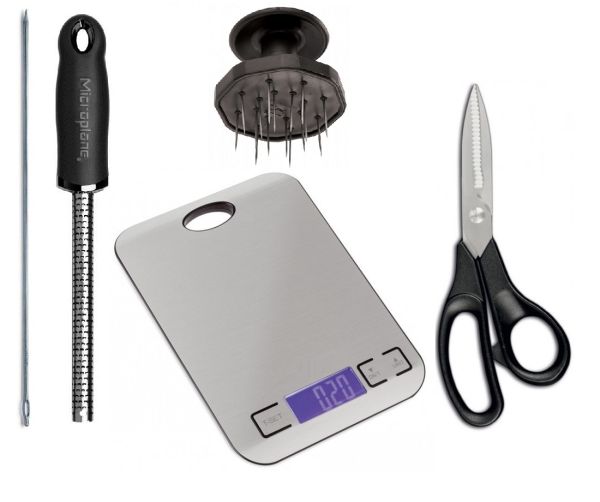
This Meat Processing Accessories Kit is suitable for the production of cured meats and sausages and completes the cutlery necessary to process pork meat. In the Italian regional tradition the processing of the pig, for the production of cold cuts and sausages, is historical and to the artisan and food laboratories, homemade products are combined, with traditional recipes and local authenticity. In this kit we find useful and often indispensable accessories for processing pork in the production of sausage. The kit includes: n. 1 needle in stainless steel total length cm. 18 for sewing the pancetta n. 1 Fine cut grater of Microplane for spices and especially for nutmeg n. 1 Pungi salami to pierce the gut n. 1 Multipurpose scissors in stainless steel for cutting the string or the different cuts during processing. Total length cm. 19 n. 1 Electronic scale with stainless steel base for weighing spices, salt and aromas to be added to the mixture of salami, cotechino and all the sausages. Weight from 1 gr. at 5 kg Device: tare, automatic zeroing and switching off, low battery indicator, timer function and clock function. Power supply: 3 AAA alkaline batteries not included Measurements: 21.5 x 15.5 x 1.7 cm.
FAQs
What are the essential basic tools in the kitchen?
Essential tools include good quality knives, cutting boards, pots and pans of various sizes, ladles, spatulas, whisks, and bowls. These tools allow you to easily handle most everyday cooking tasks.
What is the best material for pots and pans?
It depends on the use: stainless steel is versatile and durable, cast iron retains heat well, aluminum is lightweight and has excellent heat conductivity, while ceramic offers a non-stick surface without chemicals.
How do I choose the best cookware set?
Consider the material (stainless steel, aluminum, copper), compatibility with your stovetop, the number of pieces included, and ease of cleaning. A good set should be versatile and long-lasting.
How can I prevent damage to pots and pans over time?
Avoid using metal utensils on non-stick coatings, do not heat pots empty, and clean them with soft sponges. When storing, protect surfaces by stacking pots with cloths or separators to prevent scratches.
How do I properly care for and clean kitchen tools?
It’s important to wash them immediately after use, avoiding harsh detergents especially on delicate materials like wood or ceramic. Some tools are dishwasher safe, while others, like knives and special pots, should be hand washed. Always follow the manufacturer’s instructions.
When should I replace a kitchen utensil?
Replace utensils when they show significant wear, such as deep scratches on non-stick surfaces, broken or deformed parts, or when the material emits unusual odors or substances.
What should I do if I’m looking for a specific tool but can’t find it?
Contact us! We can help you find the right utensil or suggest suitable alternatives for your needs.
Chat with us