WORLDWIDE SHIPPING

 IT
IT FR
FR


 IT
IT FR
FR Share
Share

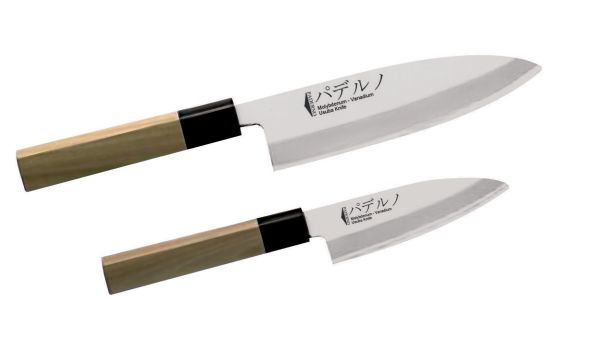
Sushi Deba Japanese Knife
Availability:
Out of stock
Only %1 left
An excellent option to prepare sushi and vegetables.
Stainless steel, molybdenum and vanadium blades, giving a long duration of edge and a razor sharpening, handles in anti-slip wood.
The sharpened but strong one side edge, makes it a knife fit for fish preparation.
Considering the particular sharpening and the steel used for production, we recommend to wash it by hand and to wipe off the blades immediately and with care.
Stainless steel, molybdenum and vanadium blades, giving a long duration of edge and a razor sharpening, handles in anti-slip wood.
The sharpened but strong one side edge, makes it a knife fit for fish preparation.
Considering the particular sharpening and the steel used for production, we recommend to wash it by hand and to wipe off the blades immediately and with care.
FAQs