WORLDWIDE SHIPPING
Share

TOP Fillet Fish set: Deba Shun Pro Sho knife+Yanagiba Seki Magoroku KK+Kai Levalische pliers

was €404.90 Special Price €364.00 €298.36
Availability: Out of stock
Excellent tools to professionally fillet your fish with high quality Japanese knives from the manufacturer Kai. The TOP Fillet Fish Set combines a unique blade design and its traditional Japanese shapes for working fish, with modern elements. The Set Top Fillet Fish includes: No. 1 Yanagiba knife blade cm. 27 Seki Magoroku KK series by Kai with octagonal handle in matt black pakka wood. The extremely long and slender shape of the blade allows for fine and precise cuts, perfect for filleting fish. The Yanagiba series blade is ground on one side, made of stainless carbon steel, which meets the strict European standards. Decorated with a soft, wavy line in a satin finish. The KK series combines robust quality with understated functionality. No. 1 Deba knife blade cm. 16.5 Shun Pro Sho series by Kai with an artistic ornamental motif that decorates the blades, made with an innovative production process, gives a great visual impact to these knives. The black pakka wood handle, the same used for the Shun Classic series, with a minimalist and elegant shape, deliberately contrasts with the decorative richness of the blade. The knife blade is made of corrosion-resistant VG 10 steel with a hardness of 61 (± 1) HRC. The 45° asymmetrical sharpening blade makes it particularly sharp, therefore suitable for cutting with maximum precision. The flat side of the blade is worked in concave to create an air gap between the blade and the food to be cut. The high and flat edge minimizes friction to ensure perfect cutting results. The black pakka handle is very elegant and ergonomic. Its asymmetrical chestnut shape allows a secure and comfortable grip during cutting. The continuous tang ensures stability and balance. No. 1 Fish bone tweezers by Kai in stainless steel, functional and elegant, with a closure studied in detail to pick up the bones without cutting or breaking them. Size: 13.9 x 2.1 x 2.3 cm.
FAQs
What is the ideal length for a chef's knife?
The most common length for a chef's knife is 20 cm (8 inches), which is perfect for most kitchen tasks. However, the ideal choice depends on several factors: Hand size: Smaller hands handle 16–18 cm blades more comfortably, while larger hands may prefer a 21–25 cm blade. Personal habits: Those who favor broad movements and long cuts might lean toward longer knives; those who prioritize precision or work in tight spaces might prefer a shorter blade. Experience level: Beginners tend to choose shorter, more manageable blades, while professionals often prefer 21 or 24 cm knives for greater efficiency. In short, there is no “perfect” size for everyone — the right length should be chosen based on comfort, control, and intended use.
What’s the best way to store kitchen knives?

Avoid keeping them loose in drawers, where they can get damaged or become a safety hazard. It’s better to use a wooden block, magnetic strip, or blade guard. You can find the right solution in our catalog.
Do you have professional chef knives?
Yes, in our ecommerce store you will find only professional and high-quality chef knives. Each model is selected to meet the needs of chefs, cooks, and cooking enthusiasts who seek reliable, sharp, and durable tools. We offer a complete range of professional kitchen knives, ideal for precision cutting, meat, fish, vegetables, and much more. You will find slicing knives, santoku, paring knives, and other models commonly used in professional kitchens. We collaborate only with brands recognized at the professional level, such as [e.g., Victorinox, Global, Kai, F. Dick, Ambrogio Sanelli, Wüsthof, etc.], to offer you the best in performance and safety in the kitchen
Can I put knives in the dishwasher?

It’s highly discouraged. High heat and aggressive detergents can damage both blade and handle. Knives can also knock against other items, dulling the edge.
What does "blade hardness" mean?

Hardness refers to how resistant the steel is, measured on the Rockwell scale (HRC). The harder the steel, the better it retains its edge—but it’s also more brittle and prone to chipping.
What materials are used for knife blades?
Blades can be made of stainless steel (rust-resistant), carbon steel (very sharp but delicate), or ceramic (lightweight and razor-sharp but fragile). Premium knives often use Damascus steel or advanced alloys. Not sure which to choose? Contact us—AFcoltellerie has them all.
What are knife handles made of?
Handles can be made of wood (classic but delicate), plastic (durable and hygienic), or technical materials like micarta or G-10, which are extremely tough and non-slip even when wet.
What’s the best knife for beginners?
A 20 cm chef’s knife is the most versatile option to start with. Paired with a paring knife, it covers most everyday kitchen needs.
What are the grooves (granton edge) on a blade for?
The grooves or “granton edge” reduce friction and prevent food from sticking to the blade. They’re especially useful with wet or soft foods like fish, cheese, or vegetables.
Are there knives for left-handed users?
Yes. Some single-bevel Japanese knives are made specifically for right- or left-handed use. Many universal knives, with a double bevel, work well for both.
European or Japanese knives: what’s the difference?
European knives are sturdier, with thick, curved blades for rocking cuts and tough ingredients. Japanese knives have thinner, harder blades for clean, precise slicing—but they’re also more fragile. In short: Europeans are durable and versatile, Japanese are sharp and surgical.
What are the essential basic tools in the kitchen?
Essential tools include good quality knives, cutting boards, pots and pans of various sizes, ladles, spatulas, whisks, and bowls. These tools allow you to easily handle most everyday cooking tasks.
What is the best material for pots and pans?
It depends on the use: stainless steel is versatile and durable, cast iron retains heat well, aluminum is lightweight and has excellent heat conductivity, while ceramic offers a non-stick surface without chemicals.
How do I choose the best cookware set?
Consider the material (stainless steel, aluminum, copper), compatibility with your stovetop, the number of pieces included, and ease of cleaning. A good set should be versatile and long-lasting.
How can I prevent damage to pots and pans over time?
Avoid using metal utensils on non-stick coatings, do not heat pots empty, and clean them with soft sponges. When storing, protect surfaces by stacking pots with cloths or separators to prevent scratches.
How do I properly care for and clean kitchen tools?
It’s important to wash them immediately after use, avoiding harsh detergents especially on delicate materials like wood or ceramic. Some tools are dishwasher safe, while others, like knives and special pots, should be hand washed. Always follow the manufacturer’s instructions.
When should I replace a kitchen utensil?
Replace utensils when they show significant wear, such as deep scratches on non-stick surfaces, broken or deformed parts, or when the material emits unusual odors or substances.
What should I do if I’m looking for a specific tool but can’t find it?
Contact us! We can help you find the right utensil or suggest suitable alternatives for your needs.
What characterizes the KAI ACCESSORIES series?
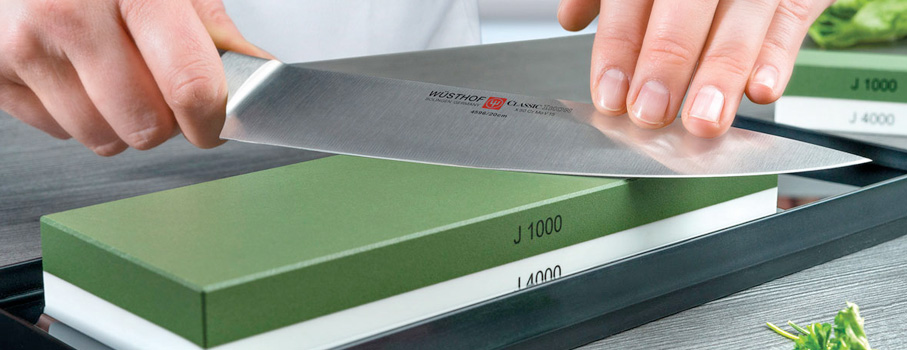
The KAI ACCESSORIES series brings together tools designed to support every stage of kitchen work: from ingredient preparation — with utensils such as peelers and tongs — to blade care, thanks to sharpening stones developed to KAI's exacting standards. Each accessory is crafted with the same attention to quality and functionality that defines the brand's entire range.
What characterises the Kai Shun Pro Sho series?
The Kai Shun Pro Sho series is designed according to the tradition of professional Japanese knives used for fish preparation. The blades are made from high-carbon steel and feature a traditional single-bevel edge designed to deliver extremely precise, clean and controlled cuts typical of Japanese cuisine. The minimalist design focuses on functionality, blade rigidity and cutting accuracy for delicate tasks. The natural wooden handle with ferrule ensures a stable grip and excellent control.
What characterises the COMPLETE KNIFE CASES AND BLOCKS from Kai?
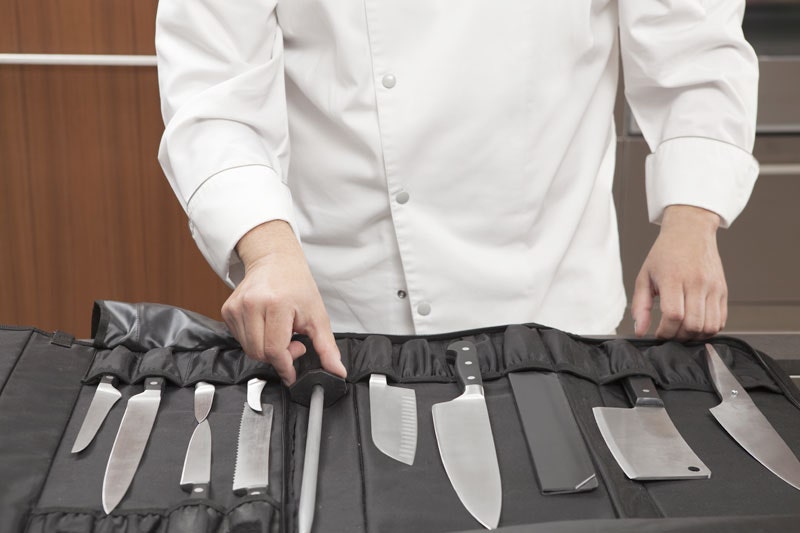
The complete knife cases and blocks from Kai provide organised and professional kitchen solutions designed to keep essential tools always within reach. The knife blocks are made from high-quality materials such as selected wood or specially designed structures that help protect the blades, ensuring stability, safety and proper storage. These sets include a versatile selection of knives and useful accessories, such as chef’s knives, santoku knives, paring knives, kitchen scissors or honing steels, providing a complete toolkit for a wide range of kitchen tasks.
Who is this series recommended for?
It is suitable for both professionals and cooking enthusiasts who want to complete their kitchen kit with reliable, precise and long-lasting tools that integrate seamlessly with KAI knives.
Who is this series recommended for?
It is recommended primarily for professional chefs, sushi chefs and experienced enthusiasts looking for traditional Japanese knives designed for highly precise cutting techniques.
Who is this series recommended for?
It is recommended for professional chefs, kitchen professionals and demanding enthusiasts looking for a complete and well-organised set of high-quality knives and accessories.
What is the ideal use?
Preparation utensils such as peelers and tongs are designed for intensive daily use, while sharpening stones are ideal for those who want to keep their blades in optimal condition over time, with precise edge control.
What type of use is it ideal for?
It is ideal for specialised fish preparation, including sashimi, sushi and precise filleting tasks where clean and accurate cuts are essential.
What type of use is it ideal for?
It is ideal for daily kitchen organisation, offering different tools for preparing meat, fish and vegetables, with knives always easily accessible.
How should these accessories be properly maintained?
Kitchen utensils should be cleaned after each use, and hand washing is recommended to preserve the materials. Sharpening stones require thorough rinsing after use and should be stored dry; some types need to be soaked before use — always follow the specific product instructions.
How should it be maintained?
Regular sharpening on Japanese whetstones, the use of wooden or high-quality synthetic cutting boards and hand washing with immediate drying are recommended to preserve edge performance and blade durability.
How should it be maintained?
To preserve performance and durability, it is recommended to sharpen knives regularly on whetstones or honing steels, wash them by hand and dry them immediately, and store them completely dry in the block or case.
Chat with us