Kai Shun's knife block is perfect for placing your knives in a practical and safe way on the top of your kitchen.
The walnut knife block can hold up to eight knives.
In the different grooves of this knife block you can insert knives of these sizes:
no. 1 knife with length 25 cm. and 3.2 cm wide
no. 1 knife with length 23.5 cm. and 3.2 cm wide
no. 1 knife with length 22 cm. and 3.2 cm wide
no. 1 knife with length 20 cm. and 4 cm wide
no. 1 knife with length 25 cm. and 5.2 cm wide
no. 1 knife with length 23.5 cm. and 5.2 cm wide.
no. 1 knife with length 22 cm. and 5.2 cm wide.
no. 1 knife with length 20 cm. and 5.2 cm wide.
The block is in American walnut.
Weight 2kg.
Total dimensions 22 x 13 x 23 cm.
FAQs
What characterizes the KAI ACCESSORIES series?
The KAI ACCESSORIES series brings together tools designed to support every stage of kitchen work: from ingredient preparation — with utensils such as peelers and tongs — to blade care, thanks to sharpening stones developed to KAI's exacting standards. Each accessory is crafted with the same attention to quality and functionality that defines the brand's entire range.
Who is this series recommended for?
It is suitable for both professionals and cooking enthusiasts who want to complete their kitchen kit with reliable, precise and long-lasting tools that integrate seamlessly with KAI knives.
What is the ideal use?
Preparation utensils such as peelers and tongs are designed for intensive daily use, while sharpening stones are ideal for those who want to keep their blades in optimal condition over time, with precise edge control.
How should these accessories be properly maintained?
Kitchen utensils should be cleaned after each use, and hand washing is recommended to preserve the materials. Sharpening stones require thorough rinsing after use and should be stored dry; some types need to be soaked before use — always follow the specific product instructions.
What characterises the KAI series?
The KAI series stands out for the combination of Japanese tradition and modern manufacturing, providing reliable knives for conscious and precise kitchen use.
Who is this series recommended for?
It is suitable for professionals and advanced enthusiasts seeking consistent performance and quality.
What type of use is it ideal for?
It is ideal for everyday preparation and precise cutting tasks.
How should it be maintained?
Regular whetstone sharpening and proper cutting boards help preserve performance.
What distinguishes Japanese knives from Western ones?
Thinner geometries, sharper edge angles and an approach focused on precision and clean cutting.
Santoku or Gyuto: which should you choose?
The santoku is compact and versatile for everyday use; the gyuto is closer to a classic chef’s knife and is ideal for long cuts and sustained work.
Are Japanese knives more delicate?
Yes, they often require more care: they are not suitable for bones, frozen foods or twisting, but offer superior cutting performance when used correctly.
How do you properly sharpen a Japanese knife?
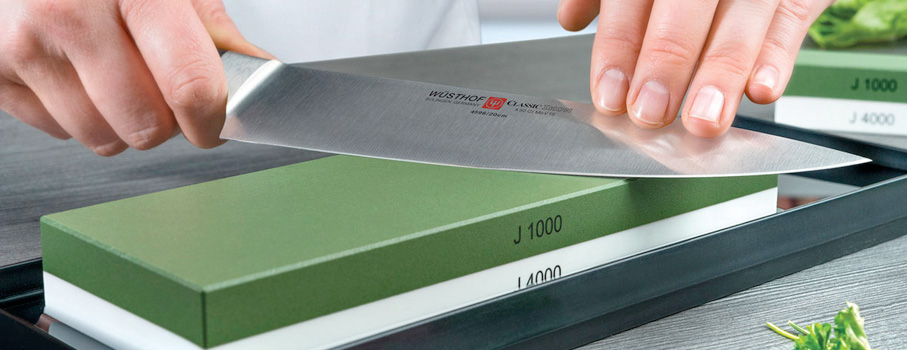
Whetstone sharpening is ideal: a medium grit for maintenance and a finer grit for finishing, adapting the choice to the steel and usage.