WORLDWIDE SHIPPING
Share

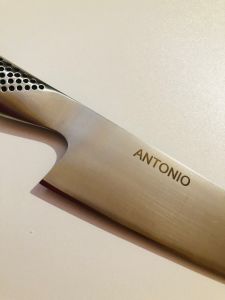
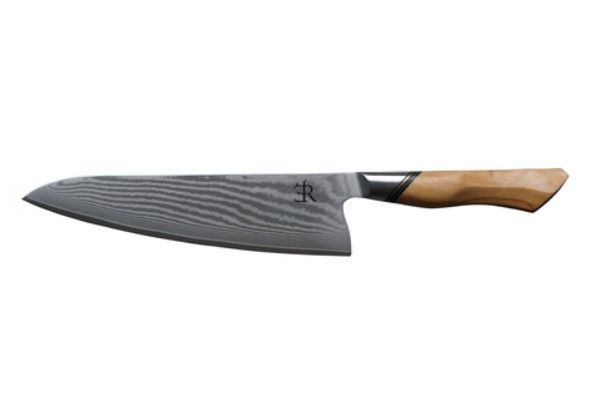
20.5cm Chef's Knife A-73 Series by Ryda

€239.00 €195.90
Availability: In stock
The Ryda A-73 Series 20.5cm Chef's Knife is an essential and highly versatile tool, designed to tackle all your kitchen tasks with precision. Perfect for chopping, slicing, and mincing vegetables, meat, fish, and herbs, it ensures impeccable control even during the most rhythmic and sweeping movements. The long, balanced blade offers stability and power, while the curved edge allows for smooth swinging, making this knife an indispensable companion for both quick tasks and extremely precise cuts. The A-73 Series represents the most prestigious collection ever created by Ryda Knives, designed to ensure that each model is perfectly balanced for its specific use. Each knife is developed with meticulous attention to detail: the handles, crafted from fine, polished French olive wood, ensure a natural and comfortable grip, while the blades utilize a custom ST650 steel core. Thanks to the unique Ryda grind, this series exceeds the 840 score in the CATRA test, synonymous with extraordinary cutting performance and long-lasting sharpness. Designed for professional chefs who require the highest-quality tools, the A-73 series is also perfect for enthusiasts and ambitious beginners who want reliable tools designed to last for years. The line celebrates the brand's tenth anniversary and includes the Legacy knife, winner of the prestigious 2024 Red Dot Award, a symbol of the excellence and innovation that distinguish Ryda. Blade length: 20.5 cm Shipping time: 3-4 days
FAQs
What is the ideal length for a chef's knife?
The most common length for a chef's knife is 20 cm (8 inches), which is perfect for most kitchen tasks. However, the ideal choice depends on several factors: Hand size: Smaller hands handle 16–18 cm blades more comfortably, while larger hands may prefer a 21–25 cm blade. Personal habits: Those who favor broad movements and long cuts might lean toward longer knives; those who prioritize precision or work in tight spaces might prefer a shorter blade. Experience level: Beginners tend to choose shorter, more manageable blades, while professionals often prefer 21 or 24 cm knives for greater efficiency. In short, there is no “perfect” size for everyone — the right length should be chosen based on comfort, control, and intended use.
What’s the best way to store kitchen knives?

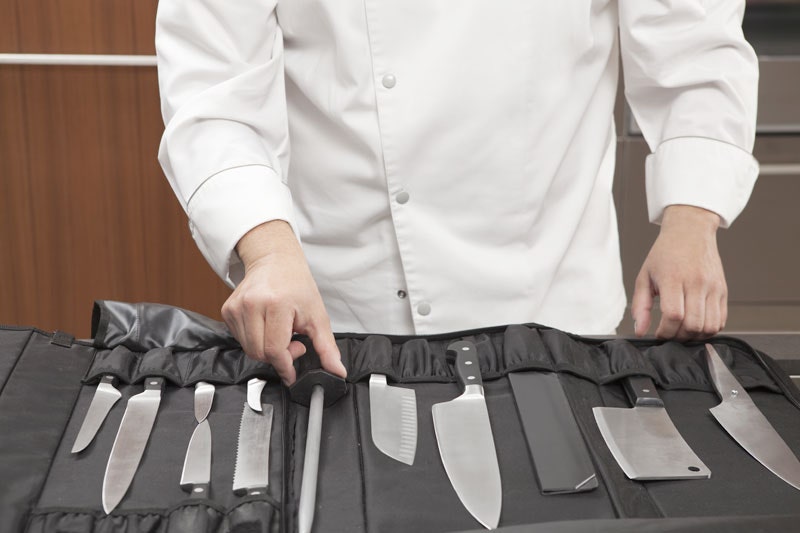
Avoid keeping them loose in drawers, where they can get damaged or become a safety hazard. It’s better to use a wooden block, magnetic strip, or blade guard. You can find the right solution in our catalog.
Do you have professional chef knives?
Yes, in our ecommerce store you will find only professional and high-quality chef knives. Each model is selected to meet the needs of chefs, cooks, and cooking enthusiasts who seek reliable, sharp, and durable tools. We offer a complete range of professional kitchen knives, ideal for precision cutting, meat, fish, vegetables, and much more. You will find slicing knives, santoku, paring knives, and other models commonly used in professional kitchens. We collaborate only with brands recognized at the professional level, such as [e.g., Victorinox, Global, Kai, F. Dick, Ambrogio Sanelli, Wüsthof, etc.], to offer you the best in performance and safety in the kitchen
Can I put knives in the dishwasher?

It’s highly discouraged. High heat and aggressive detergents can damage both blade and handle. Knives can also knock against other items, dulling the edge.
What does "blade hardness" mean?

Hardness refers to how resistant the steel is, measured on the Rockwell scale (HRC). The harder the steel, the better it retains its edge—but it’s also more brittle and prone to chipping.
What materials are used for knife blades?
Blades can be made of stainless steel (rust-resistant), carbon steel (very sharp but delicate), or ceramic (lightweight and razor-sharp but fragile). Premium knives often use Damascus steel or advanced alloys. Not sure which to choose? Contact us—AFcoltellerie has them all.
What are knife handles made of?
Handles can be made of wood (classic but delicate), plastic (durable and hygienic), or technical materials like micarta or G-10, which are extremely tough and non-slip even when wet.
What’s the best knife for beginners?
A 20 cm chef’s knife is the most versatile option to start with. Paired with a paring knife, it covers most everyday kitchen needs.
What are the grooves (granton edge) on a blade for?
The grooves or “granton edge” reduce friction and prevent food from sticking to the blade. They’re especially useful with wet or soft foods like fish, cheese, or vegetables.
Are there knives for left-handed users?
Yes. Some single-bevel Japanese knives are made specifically for right- or left-handed use. Many universal knives, with a double bevel, work well for both.
European or Japanese knives: what’s the difference?
European knives are sturdier, with thick, curved blades for rocking cuts and tough ingredients. Japanese knives have thinner, harder blades for clean, precise slicing—but they’re also more fragile. In short: Europeans are durable and versatile, Japanese are sharp and surgical.
What makes RYDA A-73 the brand's most advanced series?
RYDA presents A-73 as its highest-level collection, with each knife designed specifically around the function it must perform. This is especially evident in the balance: the chef's knife uses a more forward balance point to support a high pinch grip, while the slicing knife shifts the balance more towards the handle for a steadier grip during cutting. The blade uses a 73-layer San Mai Damascus construction with an ST650 powder-steel core. In the main models hardness reaches approximately 63 HRC, while the handle is made from figured French olive wood. RYDA also states results above 840 in CATRA testing with its sharpening geometry. A-73 is therefore a synthesis of materials, ergonomics and function-specific design. The series also celebrates ten years of RYDA's development and includes the Legacy Chef Knife, winner of a Red Dot Award in 2024.
Who is the RYDA A-73 series recommended for?
RYDA A-73 is designed primarily for professional chefs and experienced users who want to move to a higher-level knife set, but it can also suit those starting a professional path and wishing to invest from the outset in knives designed to last for many years. The key is the user's ability to appreciate differences in balance and geometry from one blade to another. A-73 is particularly interesting for users of the pinch grip who consider the balance point an essential part of the cutting experience. Its model-specific design avoids applying the same weight distribution to knives intended for different functions. The high hardness and thin edge require correct technique. A-73 is not intended for indiscriminate work: it is designed for users seeking precision, control and edge retention who know how to protect a premium blade from impacts, twisting and unsuitable surfaces.
What performance does ST650 steel deliver in the RYDA A-73 series?
In RYDA A-73, ST650 powder steel forms the functional core of a 73-layer San Mai Damascus blade. In the chef's, utility and paring models, stated hardness reaches approximately 63 HRC, a value intended to maintain a highly effective edge during prolonged use. The geometry is sharpened to around 15 degrees per side. RYDA associates this construction with a CATRA test result above 840, a test used to assess cutting performance and edge durability. This helps explain the positioning of the series: A-73 is not focused only on Damascus aesthetics, but on a combination of steel, treatment and geometry aimed at high cutting performance. Higher hardness also brings greater responsibility in use. Edge retention is best exploited with controlled cutting and suitable surfaces, while impacts, bones and twisting should be avoided.
How should RYDA A-73 knives be maintained?
A premium series such as RYDA A-73 requires maintenance consistent with blade hardness and handle materials. The knife should be hand washed immediately after use, dried thoroughly and stored so the edge cannot contact other utensils. The figured olive-wood handle should be protected from dishwashers and prolonged immersion. Wooden or suitable synthetic cutting surfaces are recommended. Glass, ceramic, stone, bones and frozen foods can compromise a thin, hard edge. Lateral movements and using the blade as a lever should also be avoided. When resharpening is required, maintain the original geometry of approximately 15 degrees per side using stones or systems suitable for very hard powder steels. Precise preventive maintenance helps A-73 retain its combination of sharpness, balance and aesthetic quality.
What sets RYDA knives apart?
RYDA Knives was created from an approach strongly rooted in real kitchen experience. Founder Viktor Ingmarsson worked for many years as a chef and developed the project from the need to improve the ergonomics, balance and comfort of knives used for many consecutive hours. Before the first models were launched, years of testing and refinement were devoted to handles, steels, hardness and edge geometry. The defining feature of RYDA knives is therefore the relationship between blade and grip. Handles are designed around different ways of holding a knife, particularly the forward or pinch grip used by many chefs. Weight and balance point are not secondary details but integral parts of the design. A-30, ST650 and A-73 interpret this philosophy with different construction levels and materials. RYDA is therefore aimed at users who look beyond steel hardness or blade aesthetics and want a tool designed around the cutting motion and the relationship between hand, balance and geometry.
What are the main differences between RYDA A-30, ST650 and A-73?
The three RYDA series share a focus on ergonomics but occupy different positions. A-30 is developed for experienced users who appreciate a light, well-balanced construction, with an AUS-10 steel core, hardness around 60 HRC and a stabilised walnut handle. It is technical but relatively straightforward to resharpen and manage in daily work. ST650 introduces proprietary ST650 powder steel as the core of a 73-layer Damascus construction and uses figured olive-wood handles. In the main models, stated hardness is around 62±1 HRC, with a design focused on high cutting ability and edge retention. A-73 is the brand's highest-level offering. It also uses ST650, but each knife type is designed more specifically around its function and corresponding balance point. The series celebrates the brand's development and includes the Legacy Chef Knife, winner of a Red Dot Award in 2024.
Who are RYDA knives recommended for?
RYDA knives are particularly suited to chefs, professionals and experienced enthusiasts who pay close attention to ergonomics and balance. The brand philosophy was born from prolonged kitchen use and the search for a grip capable of reducing the strain generated by poorly balanced tools. A-30 can be interesting for users who already have good technique and want a light, precise knife that is relatively easy to maintain. ST650 is aimed at those seeking a step up in steel quality and edge retention, while A-73 is primarily designed for professionals or enthusiasts seeking the brand's most sophisticated offering. RYDA is particularly coherent with users of the pinch grip who want to clearly feel the balance point during cutting. As with all high-performance knives, selection should be accompanied by correct technique and maintenance appropriate to blade hardness.
What preparations are RYDA knives ideal for?
RYDA's different geometries cover the main tasks of an advanced kitchen. The chef's knife is the reference for vegetables, herbs, boneless meat and general preparation; Santoku and other more compact profiles can favour control and speed with vegetables and smaller ingredients; carving, utility and paring knives address more specific operations. RYDA knives are most effective in tasks where balance and precision allow the edge to work without excessive force. The approximately 15-degree-per-side geometry used across several series promotes clean cutting but requires bones, frozen foods and lateral twisting to be avoided. Choosing the model according to technique is fundamental: RYDA designs the behaviour and balance of different blades around their specific function, an approach especially evident in A-73.
How should RYDA knives be maintained and sharpened?
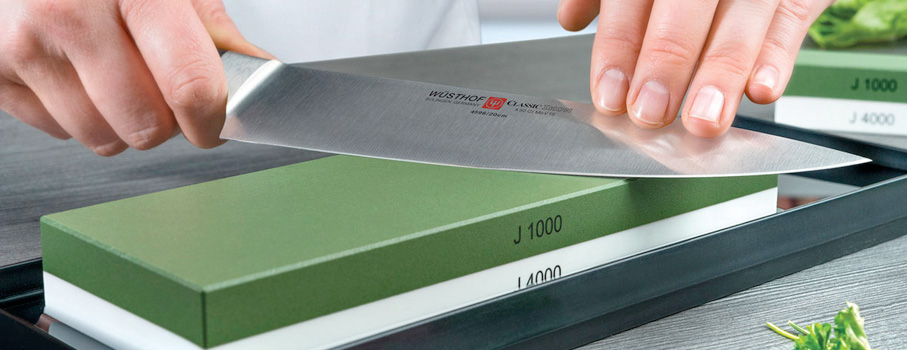
RYDA knives should be hand washed and dried immediately after use, with particular care for stabilised-wood or olive-wood handles and high-carbon blades. Storage should prevent any contact between the edge and other utensils, using knife blocks, suitable magnetic racks or dedicated guards. Wooden or appropriate synthetic cutting surfaces are recommended. Glass, ceramic, stone, bones and frozen foods can subject a thin, hard edge to unsuitable stress. Sharpening should preserve the original geometry: an angle of around 15 degrees per side is common across RYDA series. A-30, at around 60 HRC, is also designed for relatively accessible resharpening; the harder ST650 and A-73 require even greater precision. Controlled, minimally invasive maintenance preserves performance and blade profile for longer.
Chat with us