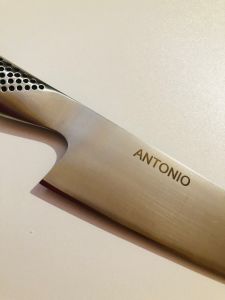
A wood block with (extractable) nylon bristles containing : 3 basic knives for fish preparation, 1 grater for ginger and 1 pliers in stainless steel for serving. Besides its elegant shape and its functionality, this block includes knives and accessories of high quality. The 3 Kai Wasabi Black knives present in the block have a polished blade , a black handle made in polypropylene and bamboo powder, which differently from the traditional Japanese wood handle, completely encloses the blade, avoiding any deposit between the blade and the handle. These knives, manufactured in Japan by Kai, have a blade in polished stainless steel with hardness of 58±1 HRC and give to the kitchen an exclusive atmosphere of Far East. The block made in rubber tree wood includes : n. 1 Kitchen knife cm. 15 n. 1 Deba knife cm. 15 (very fit for important cuts of fish, head, fins etc.) n. 1 Yanagiba knife cm. 15 (ideal for filetting and slicing sushi) n. 1 Microplane grater thin cut to grate ginger, also very fit in kitchen to grate citrus fruit or garlic n. 1 Dick Pliers for serving in stainless steel cm. 25 Dimensions of block : cm. 27,5x 9 x 21,5
FAQs
What characterises the COMPLETE KNIFE CASES AND BLOCKS from Kai?
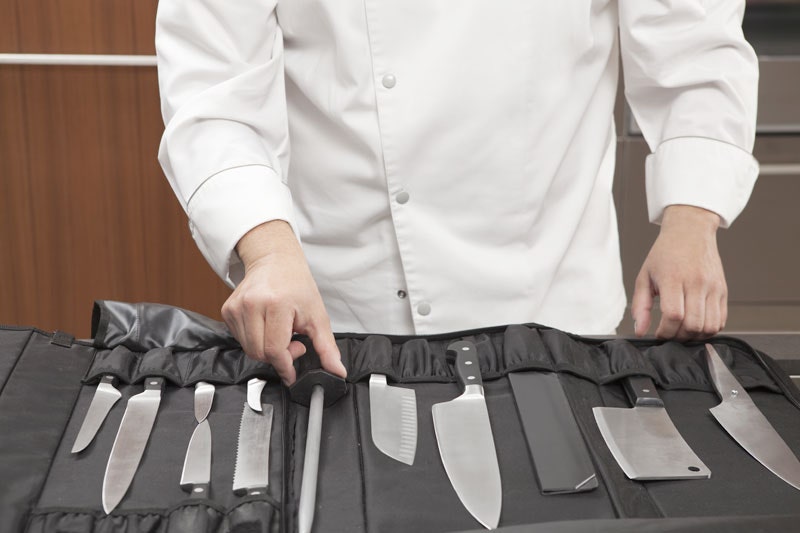
The complete knife cases and blocks from Kai provide organised and professional kitchen solutions designed to keep essential tools always within reach. The knife blocks are made from high-quality materials such as selected wood or specially designed structures that help protect the blades, ensuring stability, safety and proper storage. These sets include a versatile selection of knives and useful accessories, such as chef’s knives, santoku knives, paring knives, kitchen scissors or honing steels, providing a complete toolkit for a wide range of kitchen tasks.
What characterises the WASABI BLACK series?
The WASABI BLACK series offers a practical and functional interpretation of the Japanese kitchen knife, designed for reliable everyday use. The blades are made from Daido 1K6 stainless steel with a hardness of approximately 58 HRC, ensuring good edge retention and easy sharpening. The ergonomic black handle is made from a blend of bamboo powder and polypropylene, a durable and moisture-resistant material designed to provide a secure and comfortable grip.
Who is this series recommended for?
It is recommended for professional chefs, kitchen professionals and demanding enthusiasts looking for a complete and well-organised set of high-quality knives and accessories.
Who is this series recommended for?
It is recommended for professional chefs, culinary students and enthusiasts looking for reliable, versatile and easy-to-maintain knives.
What type of use is it ideal for?
It is ideal for daily kitchen organisation, offering different tools for preparing meat, fish and vegetables, with knives always easily accessible.
What type of use is it ideal for?
It is ideal for everyday food preparation, including meat, fish and vegetables, where precision and control are required.
How should it be maintained?
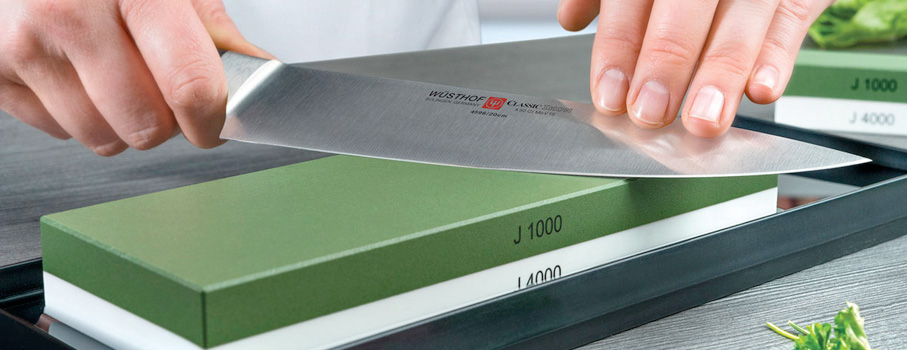
To preserve performance and durability, it is recommended to sharpen knives regularly on whetstones or honing steels, wash them by hand and dry them immediately, and store them completely dry in the block or case.
How should it be maintained?
Regular whetstone sharpening, the use of wooden or high-quality synthetic cutting boards, and hand washing with immediate drying are recommended.
What characterises the KAI series?
The KAI series stands out for the combination of Japanese tradition and modern manufacturing, providing reliable knives for conscious and precise kitchen use.
Who is this series recommended for?
It is suitable for professionals and advanced enthusiasts seeking consistent performance and quality.
What type of use is it ideal for?
It is ideal for everyday preparation and precise cutting tasks.
How should it be maintained?
Regular whetstone sharpening and proper cutting boards help preserve performance.
What distinguishes Japanese knives from Western ones?
Thinner geometries, sharper edge angles and an approach focused on precision and clean cutting.
Santoku or Gyuto: which should you choose?
The santoku is compact and versatile for everyday use; the gyuto is closer to a classic chef’s knife and is ideal for long cuts and sustained work.
Are Japanese knives more delicate?
Yes, they often require more care: they are not suitable for bones, frozen foods or twisting, but offer superior cutting performance when used correctly.
How do you properly sharpen a Japanese knife?
Whetstone sharpening is ideal: a medium grit for maintenance and a finer grit for finishing, adapting the choice to the steel and usage.