WORLDWIDE SHIPPING
Share

Boning cm. 16 Masahiro MV-H Series

€164.00 €134.43
Availability: In stock
Boning cm. 16 Masahiro MV-H series made of high-carbon stainless steel MBS-26. MBS-26 steel is owned by Masahiro and has an ideal hardness for a kitchen knife. MBS-26 stainless steel is treated with three hardening, sub-zero and tempering phases until the steel reaches a hardness of 58-60 HRC. The edge of the MV-H knives is asymmetrical 70/30. 70 percent of the edge is rectified on the right side of the blade and 30 percent is rectified on the left side. This asymmetrical border derives from traditional Japanese knives. The handle is a heat and moisture resistant resin. The handle is also resistant to bacteria which keeps the knife very hygienic in everyday use. The handle has three rivets and the full shank. The Masahiro knives are incredibly light, but perfectly balanced. Blade length cm. 16 Shipping times: 2-3 days
FAQs
What deeply characterises the Masahiro MV-H and MSC series?
The MV-H and MSC series represent the most operational and professional side of Masahiro. Their identity is not built around decorative finishing or visual prestige, but around the blade’s ability to work quickly, precisely and continuously. The use of high-performance stainless steels, combined with geometries designed for a very clean entry into the cut, makes these lines especially valued in environments where the knife must deliver steady output rather than simply make a strong first impression.
Who are these series truly recommended for?
They are recommended primarily for professional cooks, prep workers and highly experienced users who use a knife for many hours each day. Users coming from softer knives or Western-style geometries may find them more reactive and more demanding, because the cutting performance is high but requires a secure hand and sound technical awareness. In other words, these are lines that reward people who already know how to exploit a highly capable blade rather than those who are only looking for immediate comfort.
For which uses do they express the greatest value?
They perform at their best in repetitive and technical work: mise en place, vegetable prep, portioning meat and fish, precise finishing work and line production. Their value becomes especially clear when speed, consistency of motion and the ability to maintain a clean cut through many consecutive tasks are required. They are not designed for abusive or heavy-duty misuse, but for technical, continuous and well-organised kitchen work.
How should they be maintained correctly?
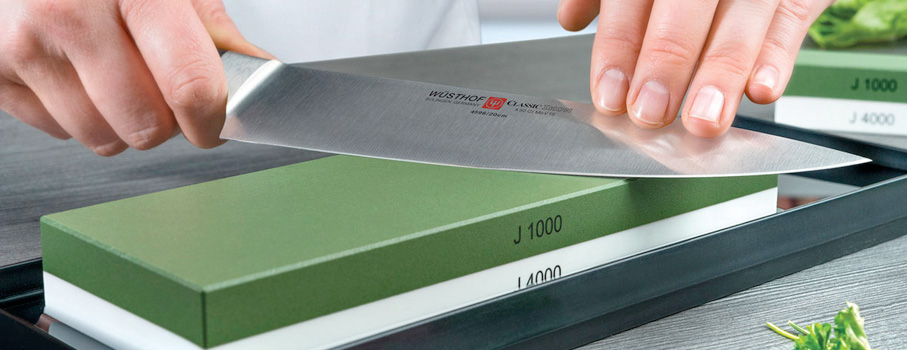
Maintenance should match the technical profile of the blade. Whetstone sharpening is the correct approach, especially because many Masahiro knives perform best when their cutting geometry is respected. They should be hand-washed, dried immediately and used on suitable cutting surfaces, while twisting cuts, overly hard materials and careless habits should be avoided because they quickly reduce the quality of a highly tuned professional edge.
What distinguishes Japanese knives from Western ones?
Thinner geometries, sharper edge angles and an approach focused on precision and clean cutting.
Santoku or Gyuto: which should you choose?
The santoku is compact and versatile for everyday use; the gyuto is closer to a classic chef’s knife and is ideal for long cuts and sustained work.
Are Japanese knives more delicate?
Yes, they often require more care: they are not suitable for bones, frozen foods or twisting, but offer superior cutting performance when used correctly.
How do you properly sharpen a Japanese knife?
Whetstone sharpening is ideal: a medium grit for maintenance and a finer grit for finishing, adapting the choice to the steel and usage.
Chat with us