WORLDWIDE SHIPPING
Share

Case complete with 3 Pink Spirit Series knives by Dick

€359.00 €294.26
Availability: In stock
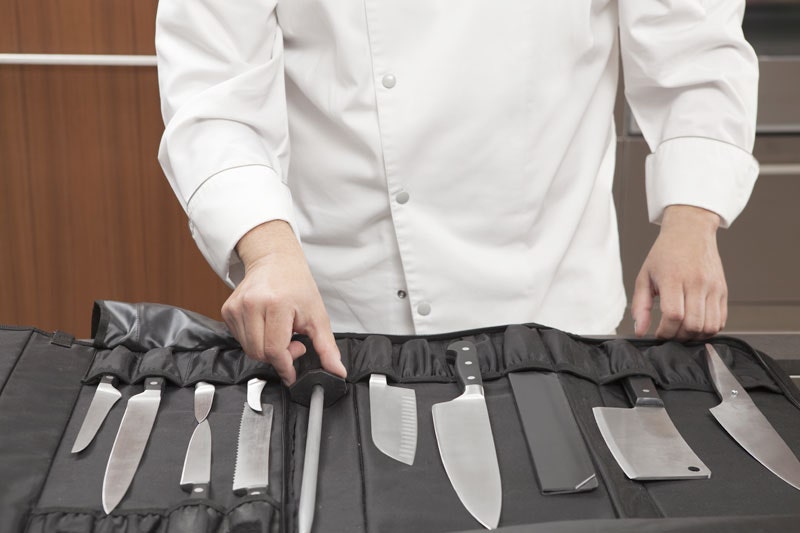
This case complete with 3 Dick's Pink Spirit series knives is inspired by the courage of women around the world in the fight against cancer. For each Pink Spirit knife or knife set, Friedr. Dick will donate an amount to support cancer research through the Pink Ribbon Germany breast cancer organization. This case meets the same standard of pure design, well-thought-out functionality, and maximum precision as Red Spirit, but with a gorgeous fuchsia-coloured handle. Main features of Dick Pink Spirit knives: • High-alloy stainless steel X55CrMo14 - Hardness 56° HRC - 25° cutting angle for a great seal • Great balance thanks to perfect weight distribution • Laser controlled cutting geometry with smoothing • Stainless steel clamp and end piece • Non-slip handle in high-quality synthetic material • Round and symmetrical handle for a comfortable and harmonious ride • Made in Germany In Dick's roll-up knife holder you will find: n. 1 Santoku knife, blade length cm. 18 n. 1 Chef's knife, blade length cm. 21 n. 1 Bread knife, blade length cm. 23 The case is perfect for safely transporting your knives or for placing them in a drawer after use, safeguarding the wire, and arranging them safely. This roll-up knife holder by Dick allows you to place 6 knives with a maximum length of the blade, including the handle, of cm. 46. Internal pocket for chef's jacket or apron. Washable material. Size: 50 cm x 43 cm.
FAQs
What is the ideal length for a chef's knife?
The most common length for a chef's knife is 20 cm (8 inches), which is perfect for most kitchen tasks. However, the ideal choice depends on several factors: Hand size: Smaller hands handle 16–18 cm blades more comfortably, while larger hands may prefer a 21–25 cm blade. Personal habits: Those who favor broad movements and long cuts might lean toward longer knives; those who prioritize precision or work in tight spaces might prefer a shorter blade. Experience level: Beginners tend to choose shorter, more manageable blades, while professionals often prefer 21 or 24 cm knives for greater efficiency. In short, there is no “perfect” size for everyone — the right length should be chosen based on comfort, control, and intended use.
What’s the best way to store kitchen knives?

Avoid keeping them loose in drawers, where they can get damaged or become a safety hazard. It’s better to use a wooden block, magnetic strip, or blade guard. You can find the right solution in our catalog.
Do you have professional chef knives?
Yes, in our ecommerce store you will find only professional and high-quality chef knives. Each model is selected to meet the needs of chefs, cooks, and cooking enthusiasts who seek reliable, sharp, and durable tools. We offer a complete range of professional kitchen knives, ideal for precision cutting, meat, fish, vegetables, and much more. You will find slicing knives, santoku, paring knives, and other models commonly used in professional kitchens. We collaborate only with brands recognized at the professional level, such as [e.g., Victorinox, Global, Kai, F. Dick, Ambrogio Sanelli, Wüsthof, etc.], to offer you the best in performance and safety in the kitchen
Can I put knives in the dishwasher?

It’s highly discouraged. High heat and aggressive detergents can damage both blade and handle. Knives can also knock against other items, dulling the edge.
What does "blade hardness" mean?

Hardness refers to how resistant the steel is, measured on the Rockwell scale (HRC). The harder the steel, the better it retains its edge—but it’s also more brittle and prone to chipping.
Who should use a knife case?
A knife case is ideal for professional chefs, culinary students, or anyone who enjoys cooking outside the home. It keeps your knives organized, protected, and always ready for use.
How do I choose the right knife block?
It depends on your kitchen space, how many knives you own, and your style. You can choose from vertical blocks, horizontal blocks, or magnetic ones. On AFcoltellerie, you’ll find a full range to compare.
How many knives do I really need in a set?
That depends on your needs. Basic sets typically include 3–5 essential knives (chef’s knife, paring knife, bread knife, carving knife). Professional sets may contain 10 or more tools, such as sharpeners, kitchen scissors, and carving forks.
Is it better to buy a full set or individual knives?
If you’re just starting out or want a complete setup in one go, a set is a practical and cost-effective choice. If you’re experienced, building your own collection piece by piece might suit you better.
Do blocks and cases include knives?
It depends on the product. Some come pre-filled with knives, while others are empty and compatible with most standard knives. Always check the product description to know what’s included.
How do you clean knife blocks and cases?
Wooden blocks should be cleaned with a dry or slightly damp cloth. Knife cases can be wiped down with a mild detergent. Avoid dishwashers or soaking in water.
Can I create a custom set if I don’t find what I’m looking for?
Yes! If the combination of knives, block, or case you’re looking for isn’t listed, feel free to contact us. We’ll help you put together a custom set tailored to your needs and cooking style.
What materials are used for knife blades?
Blades can be made of stainless steel (rust-resistant), carbon steel (very sharp but delicate), or ceramic (lightweight and razor-sharp but fragile). Premium knives often use Damascus steel or advanced alloys. Not sure which to choose? Contact us—AFcoltellerie has them all.
What are knife handles made of?
Handles can be made of wood (classic but delicate), plastic (durable and hygienic), or technical materials like micarta or G-10, which are extremely tough and non-slip even when wet.
European or Japanese knives: what’s the difference?
European knives are sturdier, with thick, curved blades for rocking cuts and tough ingredients. Japanese knives have thinner, harder blades for clean, precise slicing—but they’re also more fragile. In short: Europeans are durable and versatile, Japanese are sharp and surgical.
What’s the best knife for beginners?
A 20 cm chef’s knife is the most versatile option to start with. Paired with a paring knife, it covers most everyday kitchen needs.
What are the grooves (granton edge) on a blade for?
The grooves or “granton edge” reduce friction and prevent food from sticking to the blade. They’re especially useful with wet or soft foods like fish, cheese, or vegetables.
Are there knives for left-handed users?
Yes. Some single-bevel Japanese knives are made specifically for right- or left-handed use. Many universal knives, with a double bevel, work well for both.
What truly distinguishes the F. Dick Pink Spirit series?
The F. Dick Pink Spirit series was created to demonstrate that a professional knife can combine outstanding technical performance with a distinctive and recognizable design. While sharing the same construction philosophy as the Spirit range, this collection stands out thanks to its signature pink handle, designed not merely as a decorative feature but as a symbol of personality, creativity and innovation in the professional kitchen. F. Dick Pink Spirit knives are manufactured from X50CrMoV15 stainless steel, hardened to approximately 56 HRC. This professional-grade steel is renowned for its excellent balance of cutting performance, ease of sharpening, corrosion resistance and long-lasting edge retention. The blades are precision ground with carefully engineered geometries to provide smooth cutting action, exceptional accuracy and optimum control during every preparation. The handle is made from polypropylene (PP) coated with thermoplastic elastomer (TPE) in a distinctive pink finish. This combination of materials provides an ergonomic, non-slip and comfortable grip, even during intensive professional use. The excellent balance between blade and handle allows for natural handling and precise cutting throughout long working sessions. Compared with the Red Spirit series, which is primarily inspired by Asian cuisine and Japanese cutting techniques, the Pink Spirit series is aimed at a broader audience of professionals who want to express their individuality through their tools while maintaining the reliability, ergonomics and professional cutting performance that distinguish F. Dick knives.
What does a complete knife case include?
A set of knives already arranged in their case, often with accessories such as a honing steel, scissors, tongs, a peeler, spatulas or a thermometer; some also include chef's clothing. The contents vary from model to model and are listed on the product page: check the type and length of each blade before you buy.
Who is the F. Dick Pink Spirit series recommended for?
The F. Dick Pink Spirit series is ideal for professional chefs, pastry chefs, cake designers, culinary schools and creative food professionals seeking reliable tools with a distinctive visual identity. It is particularly appreciated in pastry laboratories, open kitchens, culinary demonstrations and training environments where tool recognition and ergonomic comfort improve workflow.
A complete case or an empty case with individual knives?
A complete case is ready to use and coordinated, which helps if you're starting from scratch or want a uniform set. An empty case with knives chosen one by one is the better option if you already own part of your kit, want to mix brands or need very specific models.
What is the F. Dick Pink Spirit series ideal for?
The F. Dick Pink Spirit series performs exceptionally well when preparing vegetables, fruit, fish, meat, baked products and pastry creations requiring precision and smooth cutting action. Its lightweight construction and ergonomic handle support comfortable use throughout long working sessions while maintaining excellent versatility across a wide range of professional kitchen tasks.
Which case should I choose for culinary school?
Start from the equipment list provided by the school, which often specifies knife types and blade lengths, and compare it with the case contents. For school use, sturdy knives with non-slip, easy-to-wash handles are the best choice. A case with a few free slots lets you add the knives you'll need in later years.
How should F. Dick Pink Spirit knives be maintained?
Regular maintenance using a professional F. Dick sharpening steel, hand washing, immediate drying and proper storage help preserve both cutting performance and the distinctive appearance of the F. Dick Pink Spirit series for many years.
Can I personalise my knives?
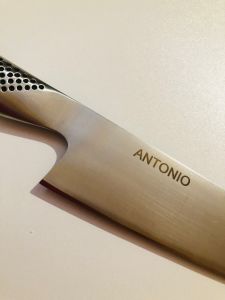
Yes, with laser engraving on the blade of knives bought from AFcoltellerie: a name, a short text or your business logo. It helps you recognise your knives in a kitchen brigade or at school, or makes a personal gift. Add the personalisation service to your basket and write the text in the order notes, or send it to info@afcoltellerie.com; for a logo, we need a DXF file.
How should I store and carry a complete case?
Only put knives away clean and completely dry, each in its own slot, and close the case securely before moving it. Don't leave it for long in damp or very hot places, such as a car in summer. When you get home, open it and check that no moisture is trapped inside.
What truly distinguishes F. Dick knives within the professional cutlery market?
F. Dick knives are among the most respected names in German professional cutlery. Founded in 1778, the company has built its reputation not only by manufacturing professional knives, but also sharpening steels, sharpening systems, and equipment for the meat processing industry. This broad expertise enables F. Dick to design knives based on the real needs of chefs, butchers, and food industry professionals. F. Dick knives are renowned for their reliability, ergonomics, safety, and consistent performance—essential qualities in demanding environments where tools are used continuously for many hours.
Why is F. Dick considered a benchmark for chefs and meat professionals?
Few manufacturers have established such a strong presence in both professional kitchens and the meat processing industry. F. Dick's extensive experience in meat processing has led to the development of blade geometries, handle designs, and manufacturing processes specifically tailored to professional requirements. At the same time, close collaboration with chefs and culinary schools has resulted in product lines designed for modern gastronomy. This dual expertise makes F. Dick knives exceptionally versatile and highly trusted by professionals.
What are the differences between the main F. Dick series?
Each F. Dick series has been developed to meet the needs of specific professionals and working environments. The prestigious 1905 series is the flagship of the brand, combining tradition, innovation, and outstanding cutting performance. The Superior series is designed for chefs seeking an elegant, perfectly balanced professional knife suitable for intensive daily use in commercial kitchens. The ErgoGrip and ProDynamic series are especially popular among butchers, meat processors, and food industry professionals thanks to their outstanding ergonomics, excellent hygiene, exceptional reliability, and outstanding value for money. They are designed to provide maximum comfort, safety, and productivity throughout extended working hours. The 1893 series is directly inspired by F. Dick's long-standing experience in professional butchery and stands out for its robustness and exceptional cutting performance. The DarkNitro series represents the brand's technological evolution, featuring high-performance blades with outstanding hardness and long-lasting edge retention. For those who appreciate Japanese-inspired design and precision, the Red Spirit series combines an Eastern aesthetic with thin, razor-sharp blades and an ergonomic handle, making it ideal for both professional chefs and demanding cooking enthusiasts. Finally, the Vivum series offers a contemporary interpretation of the modern kitchen knife, combining innovative materials, advanced ergonomics, and sophisticated design for users who seek performance, comfort, and style.
Chat with us