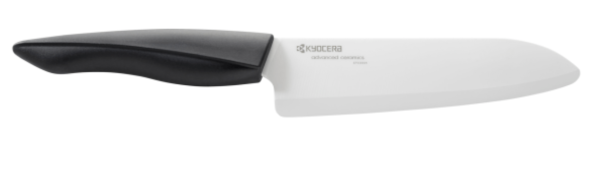
Ceramic Chef Santoku Knife - 16 cm Shin White Series by Kyocera with 16 cm white ceramic blade with rounded tip
Handle: Ergonomic Black ABS
Upper corner between handle and blade to facilitate cutting
It does not rust and does not carry odors or flavors
The unique features of these knives include the tactile and ergonomically shaped handles and the incredibly sharp hand-sharpened ceramic blades.
The impressive light weight of the ergonomic soft design handle makes cutting easier and safer.
FAQs
What characterises the Ceramic White series?
It is the most essential line: very light, sharp white ceramic blades designed for immediate precision and ease of use. The neutral properties of ceramic preserve food colour and taste.
Who is it recommended for?
Home users and enthusiasts looking to get started with ceramic knives, seeking simplicity, precision, and low maintenance.
What is it ideal for?
Fine cuts on fruits, vegetables and herbs, where clean and precise slicing matters most. Less suitable for heavy or prolonged tasks.
How should it be maintained?
Use soft cutting boards and avoid twisting or impact. Sharpening is rarely needed and should be done with dedicated tools; hand wash and dry immediately.
What distinguishes Kyocera knives from other ceramic knives?
Kyocera stands out for build quality, production precision and the use of zirconia ceramic, an advanced material that helps deliver light weight, clean cutting and long edge retention. Compared with many more generic options, the result is a more precise, consistent and reliable user experience over time.
How do the Kyocera series differ?
The main differences concern finish, ergonomics and the level of blade development. White is more essential and lightweight, while Shin Black represents a more advanced option with a stronger sense of solidity and long-term durability.
Who are Kyocera knives suitable for?
They are ideal for users looking for lightness, cutting precision and low maintenance, especially when working with fruit, vegetables and delicate ingredients.
How do you choose the right series?
Choose White for simplicity and ease of use; choose Shin Black for a more advanced ceramic and a greater sense of durability.
What is the correct maintenance?
Hand washing, immediate drying and use on wood or polyethylene cutting boards are recommended. Sharpening should only be carried out with ceramic-specific tools, while impacts, twisting, bones and frozen foods should be avoided.
What distinguishes Japanese knives from Western ones?
Thinner geometries, sharper edge angles and an approach focused on precision and clean cutting.
Santoku or Gyuto: which should you choose?
The santoku is compact and versatile for everyday use; the gyuto is closer to a classic chef’s knife and is ideal for long cuts and sustained work.
Are Japanese knives more delicate?
Yes, they often require more care: they are not suitable for bones, frozen foods or twisting, but offer superior cutting performance when used correctly.
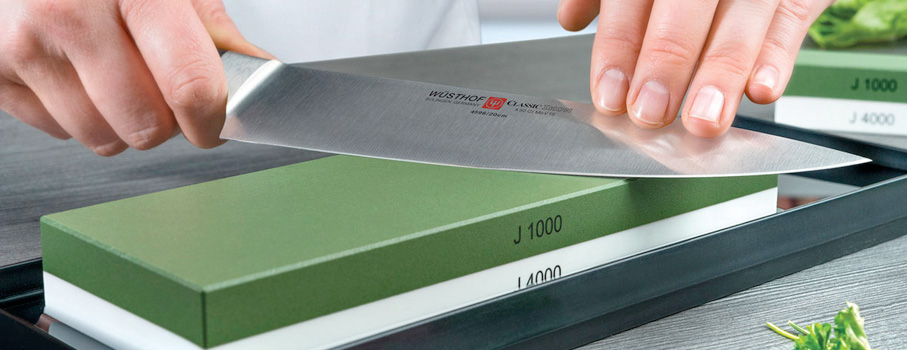
How do you properly sharpen a Japanese knife?
Whetstone sharpening is ideal: a medium grit for maintenance and a finer grit for finishing, adapting the choice to the steel and usage.