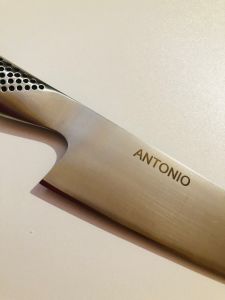
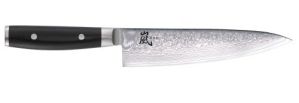
Japanese knife, perfect for cutting bread, in damask steel from the RAN series by Yaxell.
The damask steel blades are composed of 69 layers, the central layer is in VG10 with a hardness of 60-61 HRC.
The knife is sharpened by hand and worked in five working cycles.
Each knife is a unique specimen. The handles are in linen-micarta, an indestructible material that, unlike Pakka wood, does not shrink.
This serrated blade is perfect for cutting bread and all baked goods.
Blade length: cm. 23
FAQs
What characterises the Ran 69 series?
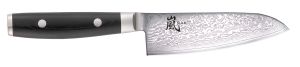
The Ran 69 series by Yaxell represents the balance point within the range. Its 69-layer Damascus construction with a VG-10 core delivers good hardness and, more importantly, highly predictable cutting performance.The blade enters the material progressively and in a controlled way, making it easy to manage even during extended prep sessions. It is not an extreme blade, but this is exactly what makes it one of the most versatile options for everyday use.
Who is it recommended for?
It is ideal for users entering the world of Japanese knives who want real performance without dealing with overly demanding blades. It suits chefs, advanced home users, and those transitioning from Western knives, offering high precision with intuitive handling.
What is it ideal for?
It performs exceptionally well in everyday tasks: vegetables, boneless meat, and fish. It excels in repetitive preparation, where consistency and stability matter more than extreme performance.
How should it be maintained?
Maintenance is relatively easy compared to harder series: regular whetstone sharpening, hand washing, and immediate drying. It is more forgiving and does not require advanced sharpening skills.
What truly distinguishes Yaxell knives within the Japanese knife market?
Yaxell occupies a very specific position: it is one of the brands that most effectively translates Japanese knife-making tradition into a high-quality industrial product, while maintaining both consistency and accessibility. Unlike fully handcrafted knives, Yaxell relies on controlled processes and modern steels such as VG-10 and SG2 to achieve high and consistent performance. The result is a blade that combines Damascus-style aesthetics, high hardness, and stable cutting performance, without entering the extreme complexity of more elite artisanal knives.
What is the real philosophy behind the Yaxell brand?
Yaxell’s philosophy is not just about Japanese tradition, but about making that tradition practical and usable at scale. Each knife is designed to deliver precise cutting, long-lasting edge stability, and strong perceived quality, including visual appeal, while maintaining consistency and reliability through industrial production.
How should the differences between Yaxell series be understood?
The main differences lie in the type of steel (VG-10 vs SG2), blade rigidity, and edge retention. VG-10 lines offer a balance between performance and ease of use, while SG2 lines represent a clear step up in performance, with higher hardness, longer edge life, and greater cutting precision.
Who are Yaxell knives recommended for?
Yaxell covers a wide range of users, from those entering the world of Japanese knives to advanced professionals. It is an ideal choice for anyone looking for high performance that remains manageable in everyday use.
What are they ideal for?
They excel in precision cutting, repetitive preparation tasks, and continuous use. The more advanced series offer greater stability and consistency during extended work sessions.
What is the correct maintenance approach?
Hand wash, dry immediately, and sharpen regularly using whetstones. SG2 series require more attention due to their higher hardness.
What distinguishes Japanese knives from Western ones?
Thinner geometries, sharper edge angles and an approach focused on precision and clean cutting.
Santoku or Gyuto: which should you choose?
The santoku is compact and versatile for everyday use; the gyuto is closer to a classic chef’s knife and is ideal for long cuts and sustained work.
Are Japanese knives more delicate?
Yes, they often require more care: they are not suitable for bones, frozen foods or twisting, but offer superior cutting performance when used correctly.
How do you properly sharpen a Japanese knife?
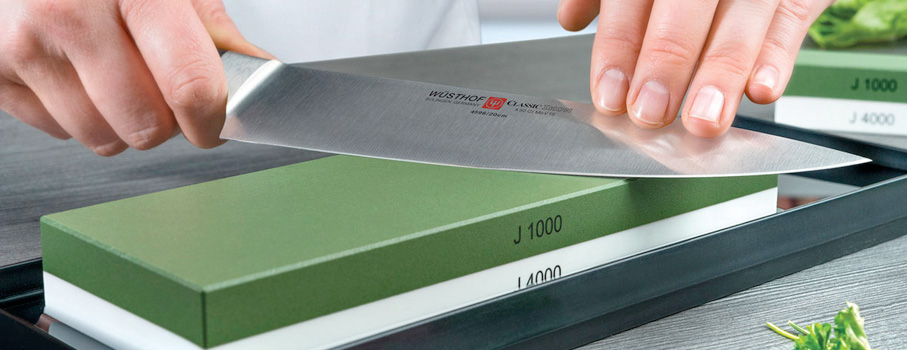
Whetstone sharpening is ideal: a medium grit for maintenance and a finer grit for finishing, adapting the choice to the steel and usage.