WORLDWIDE SHIPPING
Share

Dick 1905 Bread knife cm. 25

was €141.00 Special Price €130.00 €106.56
Availability: In stock
The pointed serrations on the blade are suitable for cutting bread, crusts, cakes and skins of fruit and vegetables. Blade 26 cm
FAQs
What is the ideal length for a chef's knife?
The most common length for a chef's knife is 20 cm (8 inches), which is perfect for most kitchen tasks. However, the ideal choice depends on several factors: Hand size: Smaller hands handle 16–18 cm blades more comfortably, while larger hands may prefer a 21–25 cm blade. Personal habits: Those who favor broad movements and long cuts might lean toward longer knives; those who prioritize precision or work in tight spaces might prefer a shorter blade. Experience level: Beginners tend to choose shorter, more manageable blades, while professionals often prefer 21 or 24 cm knives for greater efficiency. In short, there is no “perfect” size for everyone — the right length should be chosen based on comfort, control, and intended use.
What’s the best way to store kitchen knives?

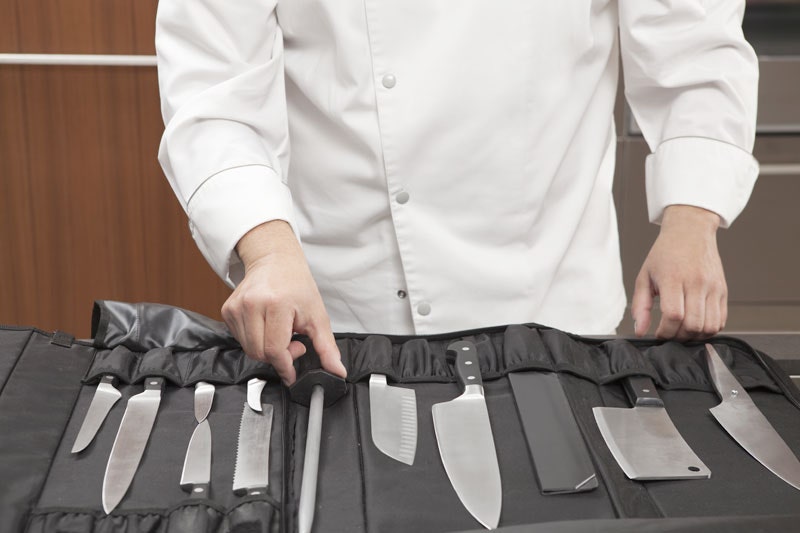
Avoid keeping them loose in drawers, where they can get damaged or become a safety hazard. It’s better to use a wooden block, magnetic strip, or blade guard. You can find the right solution in our catalog.
Do you have professional chef knives?
Yes, in our ecommerce store you will find only professional and high-quality chef knives. Each model is selected to meet the needs of chefs, cooks, and cooking enthusiasts who seek reliable, sharp, and durable tools. We offer a complete range of professional kitchen knives, ideal for precision cutting, meat, fish, vegetables, and much more. You will find slicing knives, santoku, paring knives, and other models commonly used in professional kitchens. We collaborate only with brands recognized at the professional level, such as [e.g., Victorinox, Global, Kai, F. Dick, Ambrogio Sanelli, Wüsthof, etc.], to offer you the best in performance and safety in the kitchen
Can I put knives in the dishwasher?

It’s highly discouraged. High heat and aggressive detergents can damage both blade and handle. Knives can also knock against other items, dulling the edge.
What does "blade hardness" mean?

Hardness refers to how resistant the steel is, measured on the Rockwell scale (HRC). The harder the steel, the better it retains its edge—but it’s also more brittle and prone to chipping.
What materials are used for knife blades?
Blades can be made of stainless steel (rust-resistant), carbon steel (very sharp but delicate), or ceramic (lightweight and razor-sharp but fragile). Premium knives often use Damascus steel or advanced alloys. Not sure which to choose? Contact us—AFcoltellerie has them all.
What are knife handles made of?
Handles can be made of wood (classic but delicate), plastic (durable and hygienic), or technical materials like micarta or G-10, which are extremely tough and non-slip even when wet.
What’s the best knife for beginners?
A 20 cm chef’s knife is the most versatile option to start with. Paired with a paring knife, it covers most everyday kitchen needs.
What are the grooves (granton edge) on a blade for?
The grooves or “granton edge” reduce friction and prevent food from sticking to the blade. They’re especially useful with wet or soft foods like fish, cheese, or vegetables.
Are there knives for left-handed users?
Yes. Some single-bevel Japanese knives are made specifically for right- or left-handed use. Many universal knives, with a double bevel, work well for both.
European or Japanese knives: what’s the difference?
European knives are sturdier, with thick, curved blades for rocking cuts and tough ingredients. Japanese knives have thinner, harder blades for clean, precise slicing—but they’re also more fragile. In short: Europeans are durable and versatile, Japanese are sharp and surgical.
What truly distinguishes the F. Dick 1905 series?
The F. Dick 1905 series is the brand's flagship collection and represents more than two centuries of German knife-making expertise. Its most recognisable feature is the distinctive solid steel rings integrated into the handle, a modern interpretation of an original F. Dick design introduced in the early twentieth century. Beyond their iconic appearance, these steel rings contribute to excellent balance, structural stability and long-term durability. The 1905 Series features X50CrMoV15 stainless steel, a hardness of 56 HRC, and POM handles with the series' distinctive stainless steel rings. Compared with the F. Dick 1778 series, which focuses on traditional wooden handles and classic elegance, the 1905series delivers a more contemporary and professional aesthetic. Unlike the 1893 series, developed primarily for professional butchery, the 1905 range is designed as an all-round solution for modern professional kitchens, combining precision, comfort and versatility.
Who is the F. Dick 1905 series recommended for?
The F. Dick 1905 series is designed for professional chefs, fine-dining restaurants, hotels, culinary schools and demanding cooking enthusiasts looking for one of the brand's most prestigious knife collections. Its outstanding balance and ergonomic design make it particularly suitable for professionals who spend many hours using knives every day. The series reduces hand fatigue while maintaining excellent cutting precision throughout extended working shifts. Because of its premium appearance and iconic design, the 1905 series is also highly appreciated in open kitchens, live cooking events and environments where professional presentation is as important as technical performance.
What is the F. Dick 1905 series ideal for?
The F. Dick 1905 series has been developed as an extremely versatile professional knife collection suitable for virtually every kitchen preparation. It performs exceptionally well when working with meat, fish, vegetables and herbs, especially where cutting precision, control and fluid movement are essential. The excellent balance between blade and handle allows chefs to work comfortably during repetitive and demanding preparation tasks. Compared with more specialised ranges such as the F. Dick 1893, the 1905 series offers greater versatility, making it an ideal everyday choice for chefs who prefer using the same knife family throughout the entire service.
How should F. Dick 1905 knives be maintained?
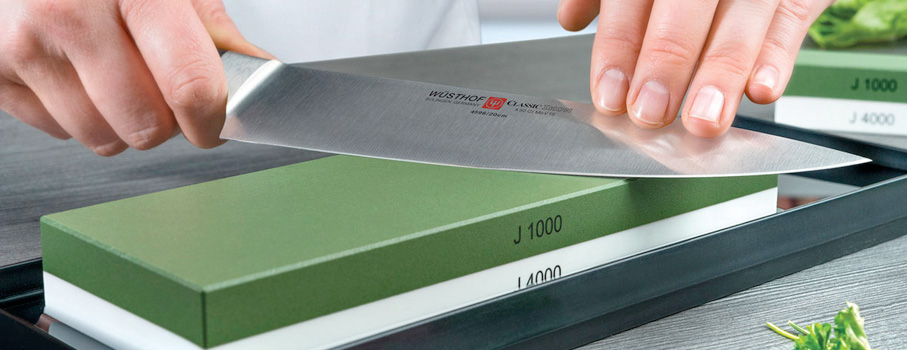
To preserve the cutting performance of F. Dick 1905 knives, regular edge maintenance using a professional F. Dick sharpening steel or dedicated sharpening system is strongly recommended. This helps maintain excellent cutting performance while reducing the need for complete resharpening. Knives should always be washed by hand, avoiding aggressive detergents, abrasive materials and prolonged soaking. Immediate drying protects both the blade and the premium handle construction. Proper storage on magnetic racks, knife blocks or blade guards further protects the cutting edge and ensures the long-term professional performance expected from the F. Dick 1905 series.
What truly distinguishes F. Dick knives within the professional cutlery market?
F. Dick knives are among the most respected names in German professional cutlery. Founded in 1778, the company has built its reputation not only by manufacturing professional knives, but also sharpening steels, sharpening systems, and equipment for the meat processing industry. This broad expertise enables F. Dick to design knives based on the real needs of chefs, butchers, and food industry professionals. F. Dick knives are renowned for their reliability, ergonomics, safety, and consistent performance—essential qualities in demanding environments where tools are used continuously for many hours.
Why is F. Dick considered a benchmark for chefs and meat professionals?
Few manufacturers have established such a strong presence in both professional kitchens and the meat processing industry. F. Dick's extensive experience in meat processing has led to the development of blade geometries, handle designs, and manufacturing processes specifically tailored to professional requirements. At the same time, close collaboration with chefs and culinary schools has resulted in product lines designed for modern gastronomy. This dual expertise makes F. Dick knives exceptionally versatile and highly trusted by professionals.
What are the differences between the main F. Dick series?
Each F. Dick series has been developed to meet the needs of specific professionals and working environments. The prestigious 1905 series is the flagship of the brand, combining tradition, innovation, and outstanding cutting performance. The Superior series is designed for chefs seeking an elegant, perfectly balanced professional knife suitable for intensive daily use in commercial kitchens. The ErgoGrip and ProDynamic series are especially popular among butchers, meat processors, and food industry professionals thanks to their outstanding ergonomics, excellent hygiene, exceptional reliability, and outstanding value for money. They are designed to provide maximum comfort, safety, and productivity throughout extended working hours. The 1893 series is directly inspired by F. Dick's long-standing experience in professional butchery and stands out for its robustness and exceptional cutting performance. The DarkNitro series represents the brand's technological evolution, featuring high-performance blades with outstanding hardness and long-lasting edge retention. For those who appreciate Japanese-inspired design and precision, the Red Spirit series combines an Eastern aesthetic with thin, razor-sharp blades and an ergonomic handle, making it ideal for both professional chefs and demanding cooking enthusiasts. Finally, the Vivum series offers a contemporary interpretation of the modern kitchen knife, combining innovative materials, advanced ergonomics, and sophisticated design for users who seek performance, comfort, and style.
Who are F. Dick knives recommended for?
The F. Dick range is designed for professional chefs, butchers, culinary schools, delicatessens, food production facilities, and serious cooking enthusiasts. Thanks to its extensive selection, every user can choose the knife series that best matches their working style, whether they prioritize elegance, durability, ergonomics, or specialized performance.
How should F. Dick knives be maintained?
To maintain optimum cutting performance, F. Dick knives should be regularly honed using a professional sharpening steel or an appropriate sharpening system. Hand washing followed by immediate drying is strongly recommended. Proper maintenance preserves edge quality, safety, and cutting performance, ensuring reliable use even after many years of professional service.
Chat with us