WORLDWIDE SHIPPING
Share

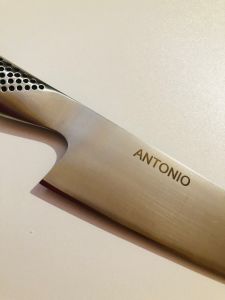
Due Cigni Peeling knife 7 cm.

€13.90 €11.39
Availability: Out of stock
The Italian quality of Due Cigni cutlery has no possible comparison in our country. A tradition in knife making having more than 100 years and a know-how of steels of the Maniago plant allow to obtain knives showing excellent performances.
Handle in POM fit for dish-washer.
Rivets in stainless steel
Satin stainless steel X50CrMOV15 blade
Excellent sharpening for a long duration of use
An excellent Made in Italy
FAQs
What is the ideal length for a chef's knife?
The most common length for a chef's knife is 20 cm (8 inches), which is perfect for most kitchen tasks. However, the ideal choice depends on several factors: Hand size: Smaller hands handle 16–18 cm blades more comfortably, while larger hands may prefer a 21–25 cm blade. Personal habits: Those who favor broad movements and long cuts might lean toward longer knives; those who prioritize precision or work in tight spaces might prefer a shorter blade. Experience level: Beginners tend to choose shorter, more manageable blades, while professionals often prefer 21 or 24 cm knives for greater efficiency. In short, there is no “perfect” size for everyone — the right length should be chosen based on comfort, control, and intended use.
What’s the best way to store kitchen knives?

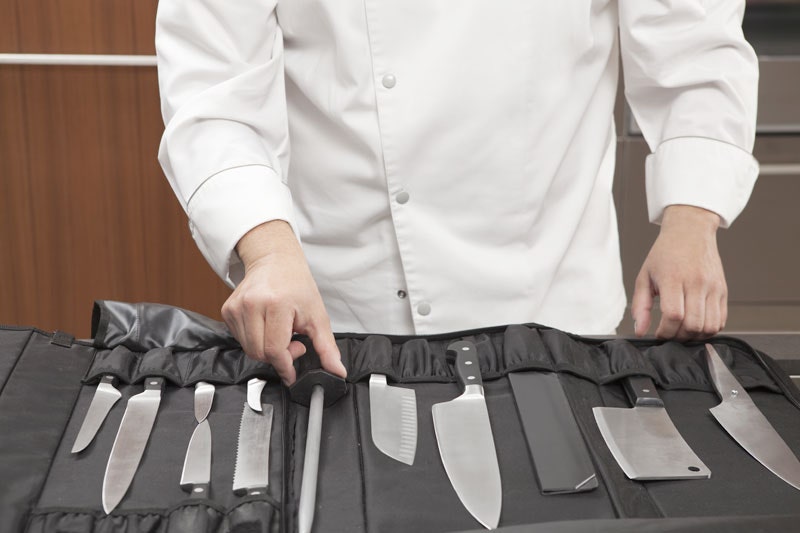
Avoid keeping them loose in drawers, where they can get damaged or become a safety hazard. It’s better to use a wooden block, magnetic strip, or blade guard. You can find the right solution in our catalog.
Do you have professional chef knives?
Yes, in our ecommerce store you will find only professional and high-quality chef knives. Each model is selected to meet the needs of chefs, cooks, and cooking enthusiasts who seek reliable, sharp, and durable tools. We offer a complete range of professional kitchen knives, ideal for precision cutting, meat, fish, vegetables, and much more. You will find slicing knives, santoku, paring knives, and other models commonly used in professional kitchens. We collaborate only with brands recognized at the professional level, such as [e.g., Victorinox, Global, Kai, F. Dick, Ambrogio Sanelli, Wüsthof, etc.], to offer you the best in performance and safety in the kitchen
Can I put knives in the dishwasher?

It’s highly discouraged. High heat and aggressive detergents can damage both blade and handle. Knives can also knock against other items, dulling the edge.
What does "blade hardness" mean?

Hardness refers to how resistant the steel is, measured on the Rockwell scale (HRC). The harder the steel, the better it retains its edge—but it’s also more brittle and prone to chipping.
What is a paring knife used for?

A paring knife is small and precise—perfect for peeling, trimming, or detailed work on fruits and vegetables.
What are knife handles made of?
Handles can be made of wood (classic but delicate), plastic (durable and hygienic), or technical materials like micarta or G-10, which are extremely tough and non-slip even when wet.
What’s the best knife for beginners?
A 20 cm chef’s knife is the most versatile option to start with. Paired with a paring knife, it covers most everyday kitchen needs.
What are the grooves (granton edge) on a blade for?
The grooves or “granton edge” reduce friction and prevent food from sticking to the blade. They’re especially useful with wet or soft foods like fish, cheese, or vegetables.
Are there knives for left-handed users?
Yes. Some single-bevel Japanese knives are made specifically for right- or left-handed use. Many universal knives, with a double bevel, work well for both.
What materials are used for knife blades?
Blades can be made of stainless steel (rust-resistant), carbon steel (very sharp but delicate), or ceramic (lightweight and razor-sharp but fragile). Premium knives often use Damascus steel or advanced alloys. Not sure which to choose? Contact us—AFcoltellerie has them all.
European or Japanese knives: what’s the difference?
European knives are sturdier, with thick, curved blades for rocking cuts and tough ingredients. Japanese knives have thinner, harder blades for clean, precise slicing—but they’re also more fragile. In short: Europeans are durable and versatile, Japanese are sharp and surgical.
What distinguishes the Due Cigni 1896, Classica and Florence ranges?
The Due Cigni 1896, Classica and Florence ranges represent three different interpretations of Due Cigni kitchen cutlery, united by attention to functionality, ergonomics and material quality. The 1896 range recalls the brand's history and offers models with different blade and handle configurations for everyday kitchen use. Classica interprets the kitchen knife in a more traditional way, while Florence offers knives with a more refined construction and overall concept. Features vary by model. When choosing a knife, it is therefore important to consider blade shape and length, steel type, handle material, weight and balance together.
Which steels and handle materials are used for Due Cigni 1896, Classica and Florence knives?
Many models in the Due Cigni 1896, Classica and Florence ranges use 4116 stainless steel, also known as X50CrMoV15, with hardness generally between 55 and 57 HRC. This steel offers a good balance of cutting performance, corrosion resistance and ease of maintenance. Handle material varies according to the model. Classica and Florence include several models with black POM handles, a durable material suitable for everyday and professional use. The 1896 range is available in different configurations, including polypropylene handles and walnut handles. For precise information on steel type, hardness and handle material, always refer to the technical specifications of the individual knife.
Who are the Due Cigni 1896, Classica and Florence ranges recommended for?
The Due Cigni 1896, Classica and Florence ranges are suitable both for cooking enthusiasts and, depending on the selected model, for professional use. The different configurations provide a choice of blade shapes and sizes, handle materials and construction features. Selection should be based mainly on the task, frequency of use and personal cutting technique. An ergonomic handle and correct balance between blade and handle help make the knife more comfortable and precise in use.
What preparations are Due Cigni 1896, Classica and Florence knives suitable for?
The availability of different blade shapes and sizes makes Due Cigni 1896, Classica and Florence knives suitable for many kitchen tasks, including meat, fish, vegetables, fruit, bread, slicing and precision work. The intended use nevertheless depends on the individual model. A chef's knife is suitable for general preparation, while specialist blades such as bread, ham and steak knives or paring knives are designed for different requirements. For a balanced set, it is therefore preferable to start with the most versatile knives and then add specialist blades according to individual needs.
What truly sets Due Cigni knives and accessories apart?
Due Cigni knives and accessories represent one of the most established expressions of Italian cutlery. Founded in Maniago, internationally recognised as Italy's cutlery capital, the company has been developing tools for professionals and enthusiasts for more than a century, with a focus on build quality, cutting precision and long-term reliability. Due Cigni's manufacturing philosophy balances traditional craftsmanship with technological innovation. Each knife is designed around its intended use, blade geometry, steel, handle ergonomics and overall balance. The aim is not simply to create a sharp blade, but a tool that feels natural, precise and comfortable even during extended use. One of Due Cigni's key strengths is the breadth of its range without losing a clear brand identity. The catalogue includes professional and domestic kitchen knives, table knives, specialist tools and accessories designed to complete the user experience. Across the range, Italian design, attention to finishing and practical functionality remain central. Choosing Due Cigni means choosing a brand that interprets the Italian cutlery tradition through a contemporary approach, creating tools designed to support everyday work with precision, reliability and elegance.
What are the main strengths of the Due Cigni range?
One of the main strengths of the Due Cigni range is its ability to meet very different needs while maintaining a consistent stylistic and quality identity. The catalogue includes chef's knives, Santoku knives, paring knives, bread and meat knives, table knives, specialist tools and a broad selection of accessories for a complete workstation. Each product family is developed around specific operating requirements. Steel selection, blade hardness, cutting geometry and handle materials are defined according to the intended use, seeking the best balance between precision, edge retention, ease of maintenance and comfort. Italian design is another distinctive feature. A Due Cigni knife is not conceived only as a technical tool, but as an object intended to be used and appreciated every day. Attention to finishes, proportions and construction details helps combine function with elegance. This approach allows Due Cigni to serve catering professionals, cooking enthusiasts and users who want knives capable of maintaining high performance over time while also offering strong aesthetic value.
Who are Due Cigni knives and accessories recommended for?
Due Cigni knives are intended for a broad range of users because the different collections address significantly different needs. Chefs, restaurateurs and professional operators can choose models designed for frequent, prolonged use, while cooking enthusiasts can select series with more refined materials, finishes and design. They are also well suited to anyone wishing to build a complete knife set progressively. Rather than using one knife for every task, a chef's knife can be complemented by specific blades for bread, meat, vegetables or precision work, improving control and reducing effort. The breadth of the range also makes Due Cigni suitable for users who want to explore quality cutlery without adopting a single cutting tradition: the catalogue combines interpretations of Italian tradition, professional tools and solutions influenced by Japanese knife culture.
What types of food preparation are Due Cigni knives suitable for?
The Due Cigni range can cover virtually all major kitchen preparations when the blade geometry is matched to the ingredient and technique. Chef's knives suit general work with boneless meat, vegetables and herbs; smaller blades provide greater precision for peeling and finishing; serrated knives are suited to bread and foods with a firm crust or surface. Collections with thinner, more agile geometries are particularly effective when clean cuts are required on vegetables, fish and delicate ingredients. More substantial models favour stability and control in everyday preparation. Choosing the right knife improves more than precision: it reduces the force required, helps preserve the structure of the ingredient and makes cutting more fluid. The individual Due Cigni series should therefore be assessed in relation to personal cooking techniques rather than selected only by shape or appearance.
How should Due Cigni knives and accessories be maintained?
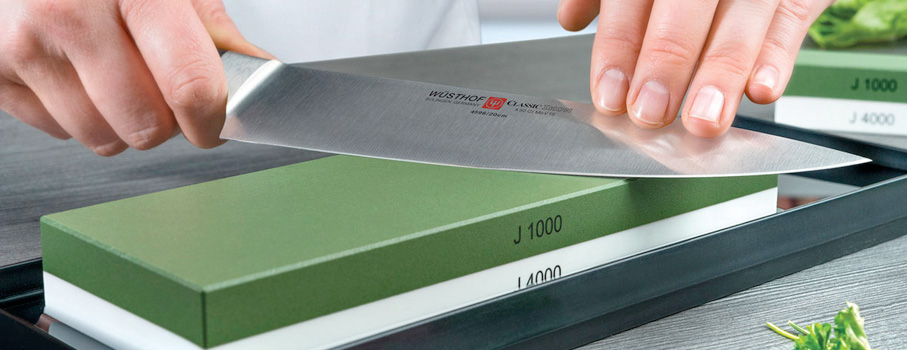
Maintenance should be adapted to the materials and construction of each Due Cigni series. As a general rule, hand wash the knife with a mild detergent, rinse and dry it immediately, avoiding prolonged contact with water or food residues. Hand washing also helps protect the edge, finishes and handle materials. Use wooden or suitable synthetic cutting boards and avoid very hard surfaces such as glass, ceramic or stone, which accelerate edge wear. For storage, knife blocks, suitable magnetic racks or individual blade guards help prevent contact with other utensils. Edge maintenance should be matched to the type of knife: regular honing and actual sharpening are different operations. With thinner or premium blades, it is especially important to use suitable tools and angles and to avoid aggressive procedures that may alter the original geometry.
Chat with us