WORLDWIDE SHIPPING
Share

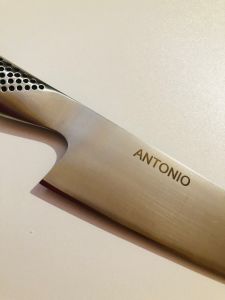
French knife cm. 20 purple handle Tecna Line by Ambrogio Sanelli

€29.90 €24.51
Availability: In stock
The professional cutlery line is equipped with a double-molded handle, composed of an internal core in rigid and non-deformable PP, firmly connected to the steel tang, and an external coating in SEBS, softer to the touch. The two materials blend perfectly, ensuring excellent ergonomics and superior comfort thanks to micro-spheres that limit slipperiness. The blades are made of NITRO-B stainless steel (1.4916), with a semi-gloss finish. Each knife undergoes an accurate sharpening process, with laser profile control, ensuring precision and durability over time. The precise and indelible laser marking reports the product code and batch number. All the materials used are non-toxic, sterilizable, dishwasher safe and resistant to both high and low temperatures, respecting the current regulations on hygiene and food safety. The Santoku knife with alveolar blade is a versatile and professional tool, ideal for slicing, chopping and mincing with precision. Thanks to the alveolar blade, it reduces friction with food and prevents slices from sticking when cutting. Blade length: cm. 18 Shipping times: 2-3 days
FAQs
What is the ideal length for a chef's knife?
The most common length for a chef's knife is 20 cm (8 inches), which is perfect for most kitchen tasks. However, the ideal choice depends on several factors: Hand size: Smaller hands handle 16–18 cm blades more comfortably, while larger hands may prefer a 21–25 cm blade. Personal habits: Those who favor broad movements and long cuts might lean toward longer knives; those who prioritize precision or work in tight spaces might prefer a shorter blade. Experience level: Beginners tend to choose shorter, more manageable blades, while professionals often prefer 21 or 24 cm knives for greater efficiency. In short, there is no “perfect” size for everyone — the right length should be chosen based on comfort, control, and intended use.
What’s the best way to store kitchen knives?

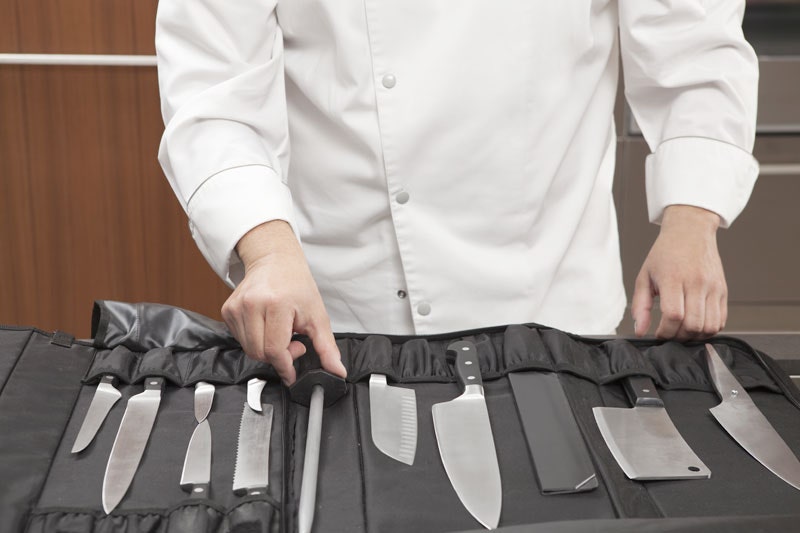
Avoid keeping them loose in drawers, where they can get damaged or become a safety hazard. It’s better to use a wooden block, magnetic strip, or blade guard. You can find the right solution in our catalog.
Do you have professional chef knives?
Yes, in our ecommerce store you will find only professional and high-quality chef knives. Each model is selected to meet the needs of chefs, cooks, and cooking enthusiasts who seek reliable, sharp, and durable tools. We offer a complete range of professional kitchen knives, ideal for precision cutting, meat, fish, vegetables, and much more. You will find slicing knives, santoku, paring knives, and other models commonly used in professional kitchens. We collaborate only with brands recognized at the professional level, such as [e.g., Victorinox, Global, Kai, F. Dick, Ambrogio Sanelli, Wüsthof, etc.], to offer you the best in performance and safety in the kitchen
Can I put knives in the dishwasher?

It’s highly discouraged. High heat and aggressive detergents can damage both blade and handle. Knives can also knock against other items, dulling the edge.
What does "blade hardness" mean?

Hardness refers to how resistant the steel is, measured on the Rockwell scale (HRC). The harder the steel, the better it retains its edge—but it’s also more brittle and prone to chipping.
What materials are used for knife blades?
Blades can be made of stainless steel (rust-resistant), carbon steel (very sharp but delicate), or ceramic (lightweight and razor-sharp but fragile). Premium knives often use Damascus steel or advanced alloys. Not sure which to choose? Contact us—AFcoltellerie has them all.
What are knife handles made of?
Handles can be made of wood (classic but delicate), plastic (durable and hygienic), or technical materials like micarta or G-10, which are extremely tough and non-slip even when wet.
What’s the best knife for beginners?
A 20 cm chef’s knife is the most versatile option to start with. Paired with a paring knife, it covers most everyday kitchen needs.
What are the grooves (granton edge) on a blade for?
The grooves or “granton edge” reduce friction and prevent food from sticking to the blade. They’re especially useful with wet or soft foods like fish, cheese, or vegetables.
Are there knives for left-handed users?
Yes. Some single-bevel Japanese knives are made specifically for right- or left-handed use. Many universal knives, with a double bevel, work well for both.
European or Japanese knives: what’s the difference?
European knives are sturdier, with thick, curved blades for rocking cuts and tough ingredients. Japanese knives have thinner, harder blades for clean, precise slicing—but they’re also more fragile. In short: Europeans are durable and versatile, Japanese are sharp and surgical.
What truly distinguishes the Tecna HACCP line?
The Tecna HACCP line is based on the professional approach of the Tecna line, but adds a key operational element: visual workflow management through colour coding. It is therefore not simply an aesthetic variation, but a solution designed for environments where hygiene, internal traceability and food separation are part of everyday work. The coloured handle helps operators quickly identify which knife should be used for meat, fish, vegetables, cooked food or other food categories, reducing cross-contamination risks and improving workstation organisation.
Who is the Tecna HACCP line recommended for?
The Tecna HACCP line is recommended for professional kitchens, food laboratories, canteens, delicatessens, butcher shops, fish counters and all environments where several operators use different knives during the same working day. It is especially useful when food safety depends not only on cleaning procedures, but also on the ability to immediately identify the correct knife for each food preparation process. It is a practical choice for those who want to standardise workflows and reduce operational mistakes.
What is the Tecna HACCP line ideal for?
The Tecna HACCP line performs best in professional environments organised around separated workflows: raw meat, fish, vegetables, cooked food or specific preparation categories. It is ideal when the knife must be efficient, durable and immediately recognisable within a shared workstation. Compared with the standard Tecna line, it adds an important management advantage: it does not only perform a cutting function, but also supports process control.
How should the Tecna HACCP line be maintained?
Maintenance should follow both professional knife-care principles and food-safety logic: regular sharpening, hand washing, immediate drying and correct storage. It is important to keep the coloured handles clearly recognisable, avoiding misuse that could create confusion between different workflows. Colour coding works effectively only when it is respected consistently by all operators.
What truly distinguishes Ambrogio Sanelli knives within the professional cutlery market?
Ambrogio Sanelli is one of the most recognisable historic Italian brands in the professional cutlery sector. Unlike many manufacturers focused primarily on extreme hardness or ultra-refined cutting precision, the Sanelli philosophy prioritises reliability, ergonomics, operational continuity and durability in everyday professional use. These knives are developed for long working sessions in professional kitchens, food laboratories, butcher shops and gastronomy environments, maintaining a practical balance between performance, comfort and ease of management.
What is the production philosophy behind Ambrogio Sanelli?
The Ambrogio Sanelli philosophy is deeply connected to real professional knife use. The goal is not to create extremely delicate or highly specialised blades, but reliable and ergonomic tools capable of supporting intensive daily workflows. Each line is developed with a specific operational logic: some focus on robustness and productivity, while others prioritise ergonomics, comfort or a more refined cutting feel.
Who are Ambrogio Sanelli knives recommended for?
Ambrogio Sanelli knives are particularly suited to professional chefs, butchers, food industry operators, culinary schools and advanced users looking for reliable and practical cutting tools. Depending on the selected line, the brand can satisfy users seeking robustness and productivity as well as those preferring greater ergonomics, precision or cutting sensitivity.
What are Ambrogio Sanelli knives ideal for?
Ambrogio Sanelli knives perform best in environments where operational continuity, reliability and comfort directly affect work quality. They are especially effective for intensive preparation tasks, repetitive cutting work and professional environments where knives are used continuously for many hours.
How should Ambrogio Sanelli knives be maintained?
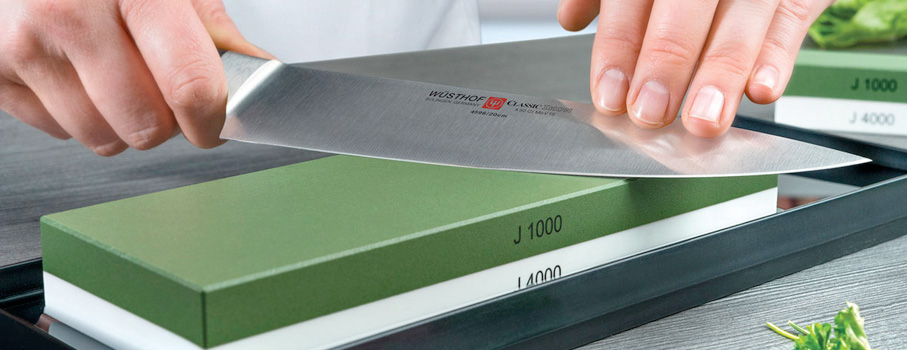
Maintenance follows a simple but professional approach: regular sharpening, hand washing and immediate drying help preserve cutting continuity, ergonomics and long-term durability. Compared to many very hard Japanese blades, several Ambrogio Sanelli lines are more forgiving and easier to manage during intensive professional use.
Chat with us