WORLDWIDE SHIPPING

 IT
IT FR
FR



 IT
IT FR
FR Share
Share

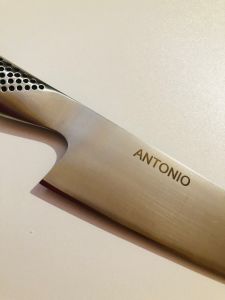

Global G77 Chef's knife with alveoli
€116.00
€95.08
Availability:
In stock
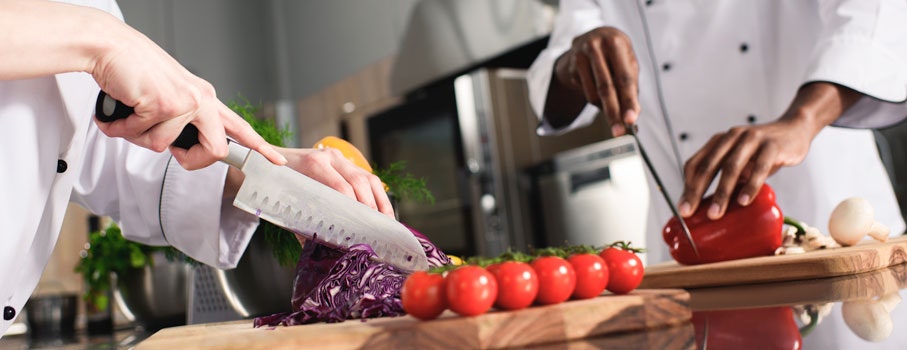
Cook knife with blade 20 cm considered by professionals and amateurs as the basic knife for kitchen.
It is called Cook knife because it is actually a versatile kitchen knife.
The weight and balance of this knife allow it to be used both for heavy works with thick cuts of vegetables, fruit and meat and for light ones like mincing or haching herbs.
The blade slightly curved allows a swinging cut and its large surface allows to collect foodstuffs and transfert them in a pan or in bowls.
Thanks to the grooves – alveoli foodstuffs attach less than other knives due to the air sacs forming during cut.
Blade length : 20,3 cm.
The characteristics of the blade are :
- Use of stainless steel Cromova 18
- Hardness of steel 56 - 58 Rockwell degrees
- - Keen edge more than any other steel, resisting to rust, stains and corrosion
- Well-balanced knife to guarantee a perfect stability in hand
- An even outline without joints avoids that foodstuffs and dirt get between handle and blade, offering a maximum safety and hygiene
- Made in Japan
It is called Cook knife because it is actually a versatile kitchen knife.
The weight and balance of this knife allow it to be used both for heavy works with thick cuts of vegetables, fruit and meat and for light ones like mincing or haching herbs.
The blade slightly curved allows a swinging cut and its large surface allows to collect foodstuffs and transfert them in a pan or in bowls.
Thanks to the grooves – alveoli foodstuffs attach less than other knives due to the air sacs forming during cut.
Blade length : 20,3 cm.
The characteristics of the blade are :
- Use of stainless steel Cromova 18
- Hardness of steel 56 - 58 Rockwell degrees
- - Keen edge more than any other steel, resisting to rust, stains and corrosion
- Well-balanced knife to guarantee a perfect stability in hand
- An even outline without joints avoids that foodstuffs and dirt get between handle and blade, offering a maximum safety and hygiene
- Made in Japan
FAQs