WORLDWIDE SHIPPING

 IT
IT FR
FR




 IT
IT FR
FR Share
Share


Global Start: Global case complete with knives, accessories, apron and shaped bandana.
was
€1,222.00
Special Price
€977.60
€801.31
Availability:
In stock
Japanese style for this Global suitcase set up for the chef who will start a new profession or is leaving for a new working season and wants to bring with him excellent work tools, along with an apron and bandana with Japanese print.
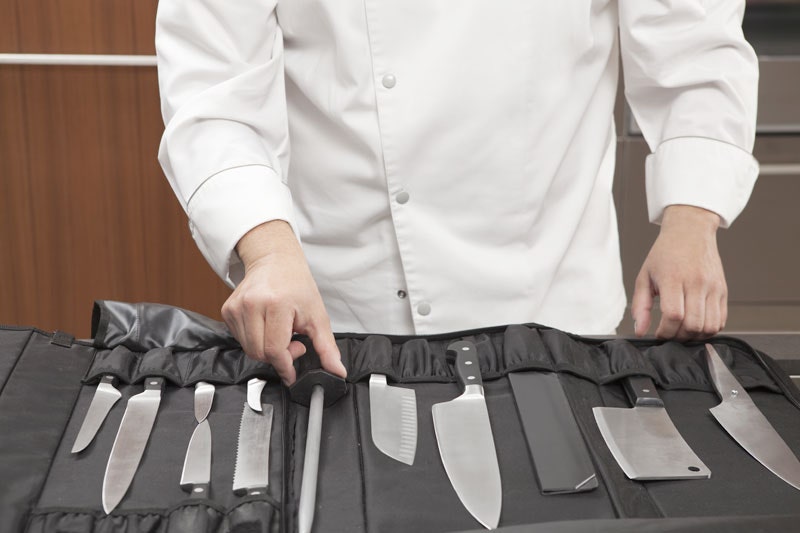
The robust Global knife holder is equipped with a handle and strap for the shoulder strap, the knives are inserted into the case by the handle in a resilient elastic and are guarded by a cover that closes with a zip and prevents the knives to come out.
Inside the case you will find the knives of Japanese production Global blades made of stainless steel with Molybdenum / Vanadium, cold tempered and hardened to Rockwell 56 ° - 58 °, which allows a good thread seal.
The case is complete with the following tools:
n. 1 Global GS20 fish plug tweezers
n. 1 Paring knife cm. 8 GSF31
n. 1 Vegetable knife cm. 10 GS7
n. 1 Small nakiri knife cm. 14 GS5
n. 1 Thread knife cm. 16 G21
n. 1 Chef knife cm. 20 G2
n. 1 Large nakiri knife cm. 18 G5
n. 1 Chef knife cm. 24 G16
n. 1 Serrated knife cm. 22 G9
n. 1 Chef clamp cm. 30 GS28
n. 1 Diamond sharpener cm. 26 G38-B
n. 1 Black cooking apron with Japanese letters pattern with length cm. 70 and width cm. 70
100% cotton fabric. Long lacing with closure on the front
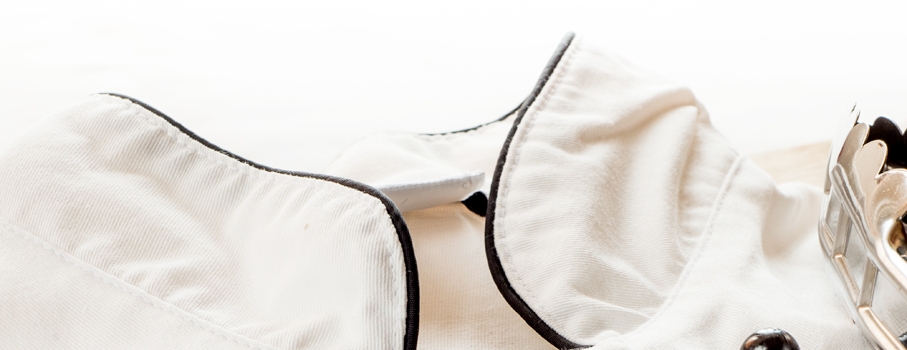
n. 1 Shaped bandana in 100% cotton with fancy Japanese letters.
The case has dimensions Closed 52 x 15 cm. Open 52 x 45 cm.
The robust Global knife holder is equipped with a handle and strap for the shoulder strap, the knives are inserted into the case by the handle in a resilient elastic and are guarded by a cover that closes with a zip and prevents the knives to come out.
Inside the case you will find the knives of Japanese production Global blades made of stainless steel with Molybdenum / Vanadium, cold tempered and hardened to Rockwell 56 ° - 58 °, which allows a good thread seal.
The case is complete with the following tools:
n. 1 Global GS20 fish plug tweezers
n. 1 Paring knife cm. 8 GSF31
n. 1 Vegetable knife cm. 10 GS7
n. 1 Small nakiri knife cm. 14 GS5
n. 1 Thread knife cm. 16 G21
n. 1 Chef knife cm. 20 G2
n. 1 Large nakiri knife cm. 18 G5
n. 1 Chef knife cm. 24 G16
n. 1 Serrated knife cm. 22 G9
n. 1 Chef clamp cm. 30 GS28
n. 1 Diamond sharpener cm. 26 G38-B
n. 1 Black cooking apron with Japanese letters pattern with length cm. 70 and width cm. 70
100% cotton fabric. Long lacing with closure on the front
n. 1 Shaped bandana in 100% cotton with fancy Japanese letters.
The case has dimensions Closed 52 x 15 cm. Open 52 x 45 cm.
FAQs