The Global Use & Care sharpening kit is produced by Minosharp for Global Japanese knives but can be used on all Japanese and European knives with Japanese thread.
Sharpening kit is complete with 2 stones, 2 supports and 4 guides.
In detail you will find:
n. 1 Sharpening stone 240 grain with plastic stone holder and 2 sharpening guides for small and large knives
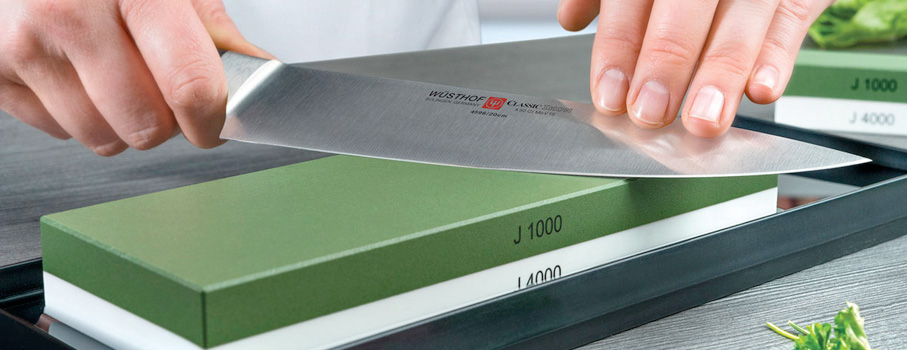
n. 1 combined sharpening stone 1000 and 8000 grain with plastic stone support and 2 sharpening guides
With the three sharpening phases you will give knives that extra touch; excellent kit for sushi chefs.
The plastic sharpening stand becomes a perfect storage box and is ventilated so that the sharpening stone dries out if it is put in the box even if it is still wet.
The sharpening stone must insert in water for 10-15 minutes before use.
FAQs
What does the Global Accessories range include?
The Global Accessories range includes complementary tools such as sharpeners, scissors, tongs, bags and storage solutions designed to enhance kitchen performance.
What are Global accessories used for?
They support food preparation, knife maintenance and safe storage, helping to maintain consistent performance over time.
Are Global accessories suitable for professional use?
Yes, they are designed for intensive professional use, featuring durable materials and practical solutions for everyday work.
How should I choose the right accessories?
The choice depends on your workflow: sharpeners for edge maintenance, storage solutions for protection and transport, and tools for preparation tasks.
What makes Global knives recognisable?
The seamless stainless steel design and the distinctive dimpled anti-slip handle, combined with thin, well-balanced blades.
What distinguishes Japanese knives from Western ones?
Thinner geometries, sharper edge angles and an approach focused on precision and clean cutting.
Who are Global knives suitable for?
They are ideal for those seeking lightness, manoeuvrability and precision, both in professional kitchens and advanced home use.
Santoku or Gyuto: which should you choose?
The santoku is compact and versatile for everyday use; the gyuto is closer to a classic chef’s knife and is ideal for long cuts and sustained work.
What type of maintenance do they require?
Hand washing, immediate drying and regular sharpening are recommended. Avoiding aggressive tools and unsuitable surfaces helps preserve the edge longer.
Are Japanese knives more delicate?
Yes, they often require more care: they are not suitable for bones, frozen foods or twisting, but offer superior cutting performance when used correctly.
Which models are considered essential?
A main knife (chef or gyuto), a paring knife and a serrated bread knife cover most kitchen needs.
How do you properly sharpen a Japanese knife?
Whetstone sharpening is ideal: a medium grit for maintenance and a finer grit for finishing, adapting the choice to the steel and usage.