WORLDWIDE SHIPPING

 IT
IT FR
FR




 IT
IT FR
FR Share
Share


Japanese knives Sushi Oroshi
€46.20
€37.87
Availability:
Out of stock
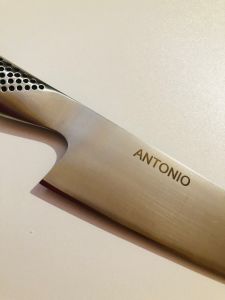
An excellent choice to prepare sushi and vegetables.
Blades in stainless steel, molybdenite and vanadium, for an excellent duration of cutting-edge, razor sharpening, nonslip wood handles.
According to the Japanese tradition, sharpening is on one side and the cutting-edge is thinner than the normal sharpening of occidental knives.
This makes cuts neater and avoids to damage the delicate structure of raw meat and fish.
Considering the particularity of the sharpening and of the steel used, it is strongly recommended to hand wash the blades and to dry them immediately and carefully.
Blade length 24 cm.
Blades in stainless steel, molybdenite and vanadium, for an excellent duration of cutting-edge, razor sharpening, nonslip wood handles.
According to the Japanese tradition, sharpening is on one side and the cutting-edge is thinner than the normal sharpening of occidental knives.
This makes cuts neater and avoids to damage the delicate structure of raw meat and fish.
Considering the particularity of the sharpening and of the steel used, it is strongly recommended to hand wash the blades and to dry them immediately and carefully.
Blade length 24 cm.
FAQs