WORLDWIDE SHIPPING

 IT
IT FR
FR





 IT
IT FR
FR Share
Share

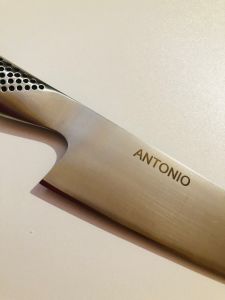

Japanese Santoku knife cm. 16,5 by Hendi
€42.00
€34.43
Availability:
In stock
The Hendi 16.5 cm Japanese Santoku Knife is a great choice for those looking for a versatile, high-quality knife that is perfect for preparing traditional Japanese dishes, such as sushi, but also suitable for a wide range of uses in the kitchen. Made in Japan, this knife is the Japanese equivalent of a chef's knife, with a slightly thinner and shorter blade, ideal for making precise cuts in a single downward motion, without wobbling.
The term "Santoku" refers to the three main functions of this knife: chopping, dicing and slicing, making it perfect for preparations that require precision and versatility. The blade is made of Japanese SUS 420J2 stainless steel, with a hardness of approximately 53 HRC, and offers a sharp edge on both sides, for optimal performance in all types of cutting.
The high-quality poplar wood handle is designed to ensure a secure and comfortable grip, aiding control during use. The traditional Japanese design and high quality materials make this knife an essential tool for those who love Japanese cuisine and are looking for a long-lasting product.
Perfect for those who want a high-precision multifunctional knife, the Santoku Hendi is part of a complete line of knives for the traditional preparation of sushi, guaranteeing superior performance in every phase of culinary preparation.
It is recommended not to wash it in the dishwasher to preserve its integrity.
Made in Japan
Handle: poplar wood
Blade length: cm. 16.5
Delivery time: 2-3 days
FAQs