WORLDWIDE SHIPPING

 IT
IT FR
FR




 IT
IT FR
FR Share
Share

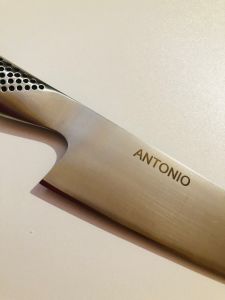

Kai Magoroku Composite Slicing Knife 23 cm.
€279.00
€228.69
Availability:
In stock
Kai Slicing knife with 23 cm blade innovative series Seki Magoroku Composite.
The blade is splendidly finished and was born from the union between two types of steel creating a fascinating contrast.
The central part of the blade is polished and in VG-10 steel with hardness 61±1 HRC and the outer part is satinated and in SUS420J2 steel.
The production process of ''Composite'' blades is based on a new technology used for aeronautic constructions and guarantees a high resistance and a high grade precision.
The two types of steel are united through a particular soldering copper process.
The thin copper line visible between the two types of steel adds a touch of elegance to the design.
The slender handle is in a clear tonality of ''Pakka''.
The shape and the diagonal motif provide these masperpieces with lightness and movement.
Delivery time : 15 days
The blade is splendidly finished and was born from the union between two types of steel creating a fascinating contrast.
The central part of the blade is polished and in VG-10 steel with hardness 61±1 HRC and the outer part is satinated and in SUS420J2 steel.
The production process of ''Composite'' blades is based on a new technology used for aeronautic constructions and guarantees a high resistance and a high grade precision.
The two types of steel are united through a particular soldering copper process.
The thin copper line visible between the two types of steel adds a touch of elegance to the design.
The slender handle is in a clear tonality of ''Pakka''.
The shape and the diagonal motif provide these masperpieces with lightness and movement.
Delivery time : 15 days
FAQs