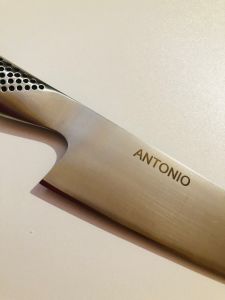
This Kengata knife cm. 19 Kataoka line of the Tamahagane brand is made by the Japanese company Kataoka in Niigata Japan. The literal translation of the word kengata is "like a sword". The name comes from the blade's resemblance to a tanto dagger. In Japan, this knife is very popular among chefs, because it can simultaneously perform the tasks of nakiri and yanagi. 19 cm San Mai blade with VG-5 core with a hardness of 61 HRC, the external part is made of SUS410 steel with Rockwell Hardness 58. There are three layers of steel that give resistance and cutting to the product. The forged blade /Tsuchime/ is engraved and its surface creates a beautiful satin effect. The elegant handle is made of stabilized pakka wood. The construction of this sheet blade is achieved by compression of the two steels. The raw material of 3 layers of total thickness 20.0mm is brought to a thinner thickness of 2.0mm to 2.9mm with repeated rolling processes.
Type: Kengata Knife
Blade length: 19 cm
Handle material: Black Pakkawood
Blade: Shammed 3-ply special steel
Delivery time: 5-7 days
FAQs
What distinguishes Tamahagane knives?
Tamahagane balances traditional Japanese heritage with modern manufacturing. Inspired by the historic steel used for katanas, these knives feature multilayer blades with excellent cutting performance, while remaining more accessible than highly artisanal Japanese knives.
What is the brand philosophy?
To combine Damascus-style aesthetics, modern steels, and precise cutting performance while maintaining a strong Japanese identity with greater production consistency.
Who are they for?
Advanced users and professionals looking for an authentic Japanese knife that is easier to manage in everyday use.
What are they ideal for?
Precision cutting tasks involving vegetables, fish, and boneless meat, where control and clean cuts are essential.
Maintenance?
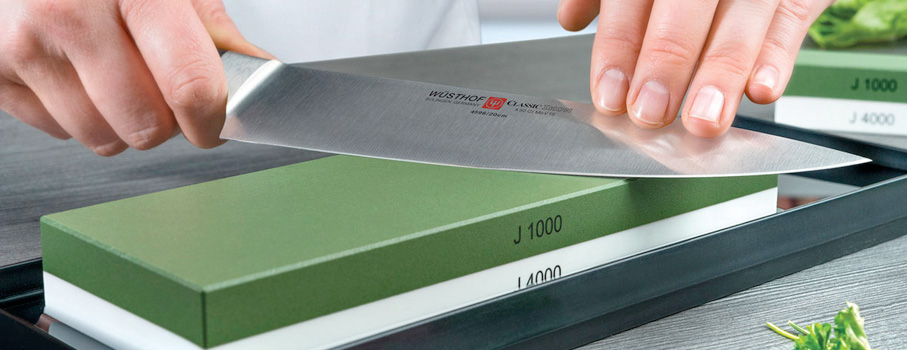
Hand wash, dry immediately, and sharpen regularly using whets
What distinguishes Japanese knives from Western ones?
Thinner geometries, sharper edge angles and an approach focused on precision and clean cutting.
Santoku or Gyuto: which should you choose?
The santoku is compact and versatile for everyday use; the gyuto is closer to a classic chef’s knife and is ideal for long cuts and sustained work.
Are Japanese knives more delicate?
Yes, they often require more care: they are not suitable for bones, frozen foods or twisting, but offer superior cutting performance when used correctly.
How do you properly sharpen a Japanese knife?
Whetstone sharpening is ideal: a medium grit for maintenance and a finer grit for finishing, adapting the choice to the steel and usage.