Kiritsuke Knife Kaname Seki Magoroku Series has a three-layer steel blade.
The core of the Kaname blades is made of extremely resistant VGXeos steel with a hardness of 60-62 (±1) HRC, sheathed in two layers of stainless steel.
The special manufacturing method ensures a thin cutting edge which reduces friction during use. In this way, excellent and long-lasting sharpening is obtained, favoring filigree, homogeneous and precise cuts.
Blade length cm. 15
Handle length cm. 13
Shipping time: 3-5 days
FAQs
What characterises the SEKI MAGOROKU KANAME series?
The SEKI MAGOROKU KANAME is the high-end offering of the Seki Magoroku line: its 3-layer blade combines a VG-XEOS steel core (60-62 HRC) with two outer layers of stainless steel, delivering exceptional hardness and lasting edge retention. The satin finish with polished cutting edge, octagonal black PakkaWood handle and Kiritsuke shape make it a precise, elegant tool, crafted in Seki, Japan.
Who is this series recommended for?
It is designed for professionals and advanced enthusiasts seeking a high-performance knife with refined aesthetics and uncompromising build quality.
What is the ideal use?
The Kiritsuke shape, with its tapered profile and thin blade (1.3–1.5 mm), is ideal for slicing, chopping and filleting with surgical precision, minimising cutting resistance.
How should it be properly maintained?
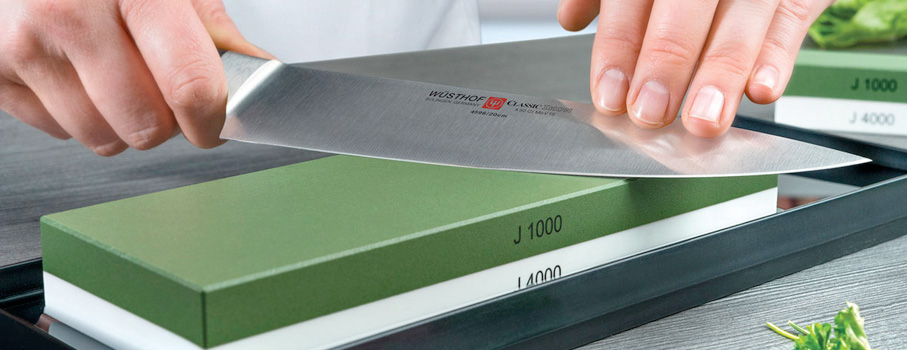
Hand wash only. To preserve the edge over time, use a fine-grained sharpening stone (at least #3000 grit). Store on a magnetic knife holder or in a protective sheath.
What characterises the KAI series?
The KAI series stands out for the combination of Japanese tradition and modern manufacturing, providing reliable knives for conscious and precise kitchen use.
Who is this series recommended for?
It is suitable for professionals and advanced enthusiasts seeking consistent performance and quality.
What type of use is it ideal for?
It is ideal for everyday preparation and precise cutting tasks.
How should it be maintained?
Regular whetstone sharpening and proper cutting boards help preserve performance.
What distinguishes Japanese knives from Western ones?
Thinner geometries, sharper edge angles and an approach focused on precision and clean cutting.
Santoku or Gyuto: which should you choose?
The santoku is compact and versatile for everyday use; the gyuto is closer to a classic chef’s knife and is ideal for long cuts and sustained work.
Are Japanese knives more delicate?
Yes, they often require more care: they are not suitable for bones, frozen foods or twisting, but offer superior cutting performance when used correctly.
How do you properly sharpen a Japanese knife?
Whetstone sharpening is ideal: a medium grit for maintenance and a finer grit for finishing, adapting the choice to the steel and usage.