WORLDWIDE SHIPPING
Share

3-layer Nakiri knife cm. 18 San Mai Tsubame Tamahagane series

€169.00 €138.52
Availability: Out of stock
The knives of the Tamahagane Kyoto Damascus Stainless line are of the highest quality, extremely sharp and very resistant. Tamahagane SAN MAI Tsubame knives feature a 3-layer stainless steel structure. The middle layer is in VG 5 which is very hard and acts as a cutting edge. The two outer layers are made of SUS410 stainless steel which are softer and more stain resistant than the cutting edge and actually protect the cutting edge. There are several VG stainless steels. VG 5 stainless steel has been selected for SAN MAI Tsubame knives, since VG 5 can be hardened with the maximum hardness compared to other V-G steels, but has an upper edge retention. The angle of the sharpening is between 14 and 15 degrees. The handle is made of fine Micarta which offers an impressive appearance and feel very similar to wood, while being more resistant. Micarta is a pressed linen material that is infused with resin, creating a comfortable grip without the need for maintenance. The blade is hammered by hand up to about half. The whole blade is then sandblasted. Blade hardness: HRC 58/59 Blade length: cm. 18
FAQs
What distinguishes Tamahagane knives?
Tamahagane balances traditional Japanese heritage with modern manufacturing. Inspired by the historic steel used for katanas, these knives feature multilayer blades with excellent cutting performance, while remaining more accessible than highly artisanal Japanese knives.
What is the brand philosophy?
To combine Damascus-style aesthetics, modern steels, and precise cutting performance while maintaining a strong Japanese identity with greater production consistency.
Who are they for?
Advanced users and professionals looking for an authentic Japanese knife that is easier to manage in everyday use.
What are they ideal for?
Precision cutting tasks involving vegetables, fish, and boneless meat, where control and clean cuts are essential.
Maintenance?
Hand wash, dry immediately, and sharpen regularly using whets
What distinguishes Japanese knives from Western ones?
Thinner geometries, sharper edge angles and an approach focused on precision and clean cutting.
Santoku or Gyuto: which should you choose?
The santoku is compact and versatile for everyday use; the gyuto is closer to a classic chef’s knife and is ideal for long cuts and sustained work.
Are Japanese knives more delicate?
Yes, they often require more care: they are not suitable for bones, frozen foods or twisting, but offer superior cutting performance when used correctly.
How do you properly sharpen a Japanese knife?
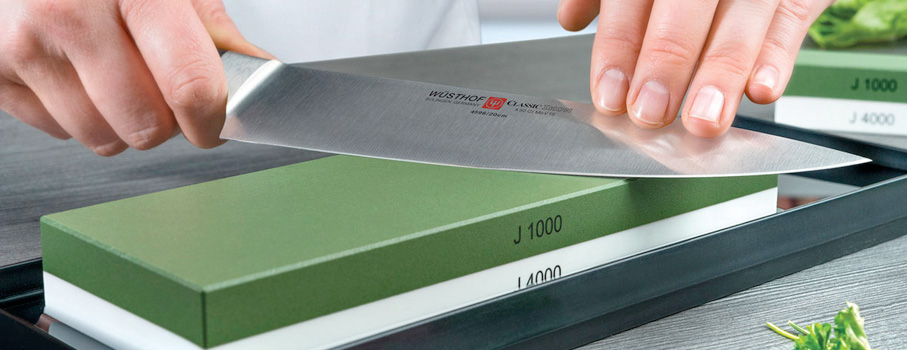
Whetstone sharpening is ideal: a medium grit for maintenance and a finer grit for finishing, adapting the choice to the steel and usage.
Chat with us