WORLDWIDE SHIPPING

 IT
IT FR
FR


 IT
IT FR
FR Share
Share

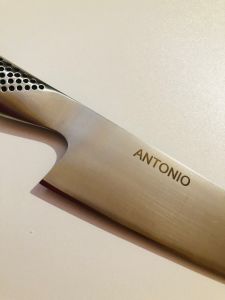

Professional Kitchen Set 10 pieces: 4 Japanese knives + 3 stainless steel pans + 3 tongs
€479.00
€392.62
Availability:
In stock
Professional 10-piece kitchen set: 4 Japanese knives from the Wasabi Black line by Kai has a polished blade, black handle + 3 coated stainless steel pans + 3 pliers
The knives, made in Japan, with a stainless steel blade polished to a hardness of 58 + - HRD, will give each kitchen an exclusive atmosphere of the Far East.
For this series Kai has studied a handle of a particular combination of powder made of bamboo and propylene that offers optimal hygiene characteristics, also due to the natural antibacterial effect of bamboo.
The handle completely encloses the blade, preventing any deposit between blade and handle.
The set includes:
- n. 1 Bread knife 6723B, Blade 23 cm, Handle 12.6 cm. ideal for cutting baked goods - n. 1 Chef Knife 6720C, Blade 20 cm, Handle 12.6 cm. to chop and chop
- n. 1 Fillet Knife 6761F, Blade 20 cm. 12.6 cm handle. perfect for filleting and scalloping
- n. 1 Kitchen knife 6716S, 16 cm blade, 12.6 cm handle for small vegetables and slicing raw meats You will also find:
- Set of 3 stainless steel pans with Teflon Platium plus non-stick inner lining Pans sizes: - Diameter 240 mm. Height 45 mm. - Diameter 280 mm. Height 50 mm. - Diameter 320 mm. Height 55 mm. Satin finish with a finely polished edge. Sturdy multi-point welded thermally insulated handles. Acid resistant. The sandwich bottom (steel-aluminum-steel magnetic) combines rapid heat pick-up and distribution of aluminum with the durability and magnetic properties of steel for induction cooking. The bottom is formed by an impact union, which fuses the various layers; this guarantees resistance to corrosion and excellent thermal conductivity. With non-stick Teflon® platinum plus. Long steel cable handle. Riveted handle. Set of 3 stainless steel pliers by Sanelli Ambrogio: - Wide point straight tongs, total length cm. 30 - Folded tongs, total length cm. 20 - Fish bone tweezers, total length cm. 13
For this series Kai has studied a handle of a particular combination of powder made of bamboo and propylene that offers optimal hygiene characteristics, also due to the natural antibacterial effect of bamboo.
The handle completely encloses the blade, preventing any deposit between blade and handle.
The set includes:
- n. 1 Bread knife 6723B, Blade 23 cm, Handle 12.6 cm. ideal for cutting baked goods - n. 1 Chef Knife 6720C, Blade 20 cm, Handle 12.6 cm. to chop and chop
- n. 1 Fillet Knife 6761F, Blade 20 cm. 12.6 cm handle. perfect for filleting and scalloping
- n. 1 Kitchen knife 6716S, 16 cm blade, 12.6 cm handle for small vegetables and slicing raw meats You will also find:
- Set of 3 stainless steel pans with Teflon Platium plus non-stick inner lining Pans sizes: - Diameter 240 mm. Height 45 mm. - Diameter 280 mm. Height 50 mm. - Diameter 320 mm. Height 55 mm. Satin finish with a finely polished edge. Sturdy multi-point welded thermally insulated handles. Acid resistant. The sandwich bottom (steel-aluminum-steel magnetic) combines rapid heat pick-up and distribution of aluminum with the durability and magnetic properties of steel for induction cooking. The bottom is formed by an impact union, which fuses the various layers; this guarantees resistance to corrosion and excellent thermal conductivity. With non-stick Teflon® platinum plus. Long steel cable handle. Riveted handle. Set of 3 stainless steel pliers by Sanelli Ambrogio: - Wide point straight tongs, total length cm. 30 - Folded tongs, total length cm. 20 - Fish bone tweezers, total length cm. 13
FAQs