Electric sharpener for professional use by Arcos to sharpen knives and scissors, with the particularity of being able to adjust the total sharpening angle (between 25 and 50 degrees).
The machine is built with a very robust metal structure and has a pair of coated grinding wheels, capable of sharpening over 3,000 knives with normal grinding wheel wear.
This sharpening system allows you to sharpen any knife quickly, very easily and safely.
Several passes are required, at a constant speed, depending on the initial wear state of the knife edge.
The blades of the scissors can be sharpened individually from the side of the machine.
Specifications:
Power: 180W
Voltage: 230Vac-50/60Hz
Speed: 1500 rpm
Approximate weight: 12.7kg
Measurements: 342 x 195 x 182 mm.
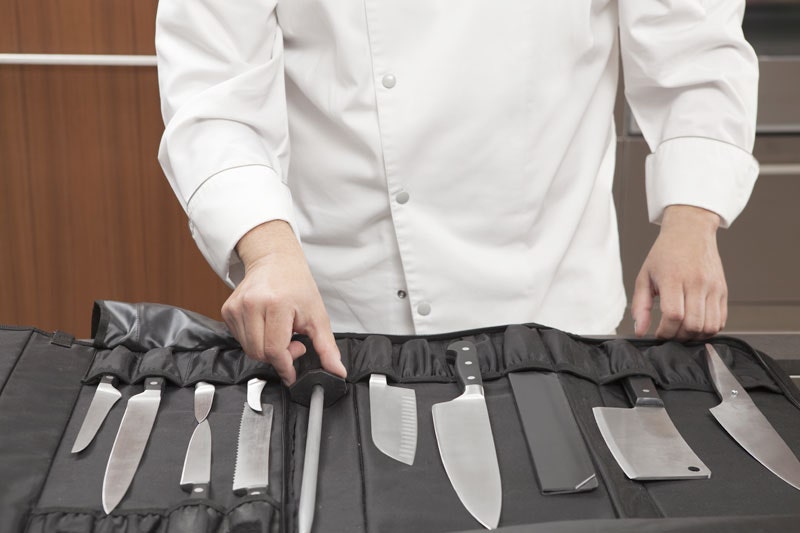
After sharpening your knives on the electric sharpener, you can polish the edge of the knives with Dick's special Master Steel HyperDrill Sharpener.
With its super fine rods you can straighten and smooth the cutting edge.
Quick and safe to use as a portable unit or in a holder.
DOUBLE PROTECTION
The protective rods in the sharpening unit guide the knife safely and optimally.
They have an additional polishing effect without damaging the cutting edge of the knife when it is pulled out.
Another benefit of guard rods is that they keep the plastic sharpener clippings out of the meat. The recessed grips on the back of the Master Steel ensure a firm grip even when wearing gloves. Master Steel can be used as a portable device or fixed to the table in a stand.
The protective rods guide the knife safely and perfectly into the sharpening unit and achieve an additional polishing effect without damaging the cutting edge of the knife during pulling movements.
PRACTICAL ACCESSORIES
As an accessory, we offer a holder that can be used in a variety of ways and is very easy to screw on at the workplace without the need for special tools.
The holder allows the Master Steel to be inserted in three different positions, facing or in a left or right orientation. This makes it easy to integrate into the work process and can always be placed in front of the user. The hole in the handle end of the Master Steel allows the unit to be chained or padlocked in the holder to prevent theft.
Total dimensions with stand: 280 x 135 mm.
Shipping times: 2 weeks
FAQs
Why is it important to sharpen knives?
A sharp knife is safer and more efficient: it requires less force and delivers precise cuts. A dull blade can slip and increase the risk of accidents.
How often should I sharpen my knives?
It depends on how often you use them and the type of blade. Generally, regular honing with a honing steel is recommended, along with deeper sharpening every few months or when the knife loses effectiveness.
Should I use a honing steel or a sharpener?
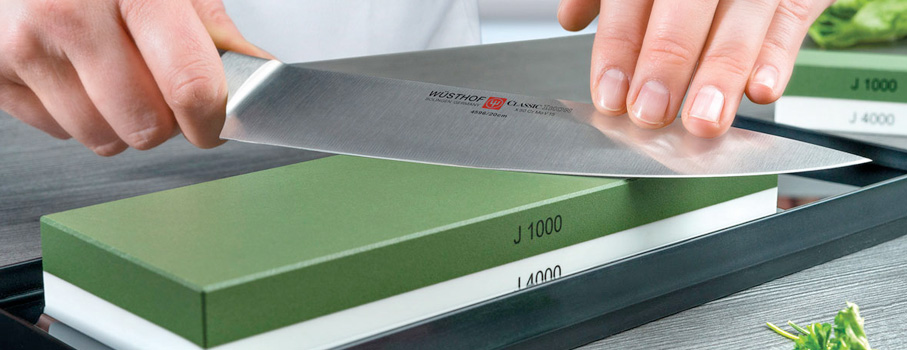
A honing steel maintains the edge and prolongs the life of the knife, but it doesn’t actually sharpen. To restore the edge, you need a sharpener (manual, electric, or whetstone). The ideal routine is to use both: the honing steel for daily care, the sharpener for periodic maintenance.
What’s the difference between a smooth, grooved, or ceramic honing steel?
A smooth steel realigns the edge without removing metal. A grooved one has a slightly abrasive action, taking off a small amount of material. A ceramic steel is gentler and suitable even for hard blades like Japanese knives.
How do you correctly use a honing steel?
Hold the steel vertically and draw the blade across both sides at a 15–20° angle using light, steady strokes. Just a few passes are enough to maintain the edge.
Can I sharpen any type of knife?
Almost all types, but be careful with serrated or ceramic blades: they require specific tools or techniques. Always check the manufacturer's guidelines or ask us for advice.
What is a knife sharpener and who is it for?
It's a tool with a preset angle: you rest or draw the blade through a slot, and the abrasive always works at the same inclination. You don't need to learn to hold the angle by hand, so it suits anyone who wants consistent results quickly, at home or in a kitchen where several people share the same knives. The trade-off is less control than a stone.
Who are sharpening machines for?
For anyone who sharpens a lot of knives on a regular basis: butcher shops, charcuterie workshops, restaurant and hotel kitchens, canteens and resellers. The category includes professional machines for heavy use, such as the Dick models, and semi-professional machines such as the Tormek T-2 or compact belt sharpeners, which suit smaller kitchens or serious home cooks. Compared with hand-held sharpeners, they work faster and handle larger volumes.
Manual or electric?
Manual sharpeners, with ceramic wheels or crossed rods, are compact and quiet and remove little metal, which makes them right for regular maintenance. Electric sharpeners work faster and can also restore badly worn blades, but they remove more steel, so use them when the knife needs it rather than every time. If you sharpen many knives every day, you'll find professional machines in the Sharpening machines category.
Belt, wheel or water-cooled: what's the difference?
Belt machines use a replaceable abrasive belt: they remove metal quickly, and you change grit by changing the belt. Wheel machines use abrasive wheels, often with separate stations for sharpening and polishing. Water cooling stops the blade from overheating while it is being sharpened: too much heat can damage the steel's temper and shorten edge life. That makes it important on machines that run for long periods at high speed.
What do the different stages mean?
Many models have two or three stages with different grits. The first, coarser one rebuilds the edge; the last, finer one refines it and evens it out. For a knife in good condition, the fine stage is often enough to bring the edge back. Use the coarse stage only when the blade is genuinely worn, because it removes the most metal.
How do I choose the right machine?
Start with how many knives you sharpen and how often, then the types of blade (boning, chef's, Japanese, butcher's knives), and finally the space and power supply available. Also check which spare parts and consumables exist for the model, such as belts, wheels and guides, and what they cost over time: they are part of the real cost of the machine.
Is it suitable for Japanese knives?
It depends on the sharpener's angle. Many Japanese knives have a more acute edge than Western ones, and a sharpener set to a wider angle changes it with every pass. Some models work at specific angles, such as the 15° common on many Asian blades; others have separate slots for the two blade types. The working angle is listed on each product page: compare it with your knife's. Single-bevel knives such as deba and yanagiba should be sharpened on a stone.
Is a sharpening machine suitable for every knife?
No. Each machine is designed for certain angles, thicknesses and blade types. Very thin or very hard Japanese blades, single-bevel knives and serrated blades may need a specific model or a different system. Some machines offer dedicated accessories, such as kits for Asian blades or scissor-sharpening jigs. Compatible blades are listed on each machine's product page.
Can I sharpen serrated knives?
Not with most wheel sharpeners: the slots are designed for a plain edge and can damage the teeth. Some models explicitly state that they handle serrated blades; if the product page doesn't say so, don't use it on this type of knife.
Can I find spare parts and consumables for my machine?
For Dick machines, especially the SM-110 and SM-111, the catalogue includes a wide range of spare parts: grinding assemblies, guides, water trays, drive belts, seals and screws. Each part carries a position number (for example "Pos. 560") that matches the exploded diagram in the user manual: the safest way to order the right part is to check that number against your machine model. Replacement abrasive belts for the SM-100 and diamond wheels for the Tormek T-2 are also available.
How do I get a good result?
Place the sharpener on a stable surface and draw the blade through from heel to tip without pressing down: the abrasive does the work, not force. Follow the manufacturer's number of passes and order of stages, and don't saw back and forth unless the instructions say so. Afterwards, rinse and dry the blade to remove metal particles before using it on food.
How do I use and maintain a sharpening machine safely?
Read the manual before first use and set guides and guards as instructed. While working, guide the blade without forcing it: too much pressure removes more steel than necessary and heats the edge. At the end of the day, clean the machine, emptying the water trays and collecting metal residue, and check belts and wheels regularly: a worn abrasive works unevenly and should be replaced.