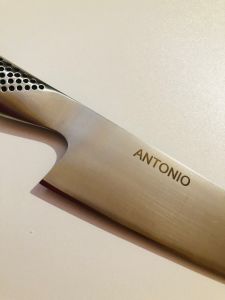
With its understated elegance, the Shun Minamo series joins the ranks of premium class kai knife series. An artistically combination of both Japanese and European features. Tim Mälzer's idea was to create a synthesis of the typical Japanese Santoku and the classic European chef's knife. This fusion was the base for the three blade shapes. The series is designed with a clear stylistic idiom. The combination of the black wood hilt together with the specifically designed blade and its evenly damascene pattern, lets every knife look like an individual item. The name of the series originates from its fine pattern, which resembles a water surface (jap. Minamo) in the rain. The blade construction is made of a hard core, surrounded by flexible damascene steel, thus providing the highest sharpness, long cutting durability and ideal performance. Blade cm. 15 Handle cm. 10,5
FAQs
What is the ideal length for a chef's knife?
The most common length for a chef's knife is 20 cm (8 inches), which is perfect for most kitchen tasks.
However, the ideal choice depends on several factors:
Hand size: Smaller hands handle 16–18 cm blades more comfortably, while larger hands may prefer a 21–25 cm blade.
Personal habits: Those who favor broad movements and long cuts might lean toward longer knives; those who prioritize precision or work in tight spaces might prefer a shorter blade.
Experience level: Beginners tend to choose shorter, more manageable blades, while professionals often prefer 21 or 24 cm knives for greater efficiency.
In short, there is no “perfect” size for everyone — the right length should be chosen based on comfort, control, and intended use.
What’s the best way to store kitchen knives?
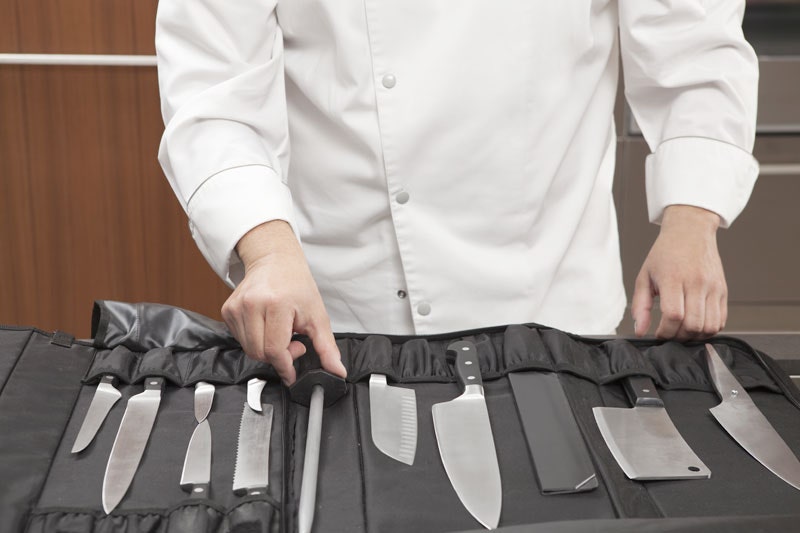
Avoid keeping them loose in drawers, where they can get damaged or become a safety hazard. It’s better to use a wooden block, magnetic strip, or blade guard. You can find the right solution in our catalog.
Do you have professional chef knives?
Yes, in our ecommerce store you will find only professional and high-quality chef knives.
Each model is selected to meet the needs of chefs, cooks, and cooking enthusiasts who seek reliable, sharp, and durable tools.
We offer a complete range of professional kitchen knives, ideal for precision cutting, meat, fish, vegetables, and much more.
You will find slicing knives, santoku, paring knives, and other models commonly used in professional kitchens.
We collaborate only with brands recognized at the professional level, such as [e.g., Victorinox, Global, Kai, F. Dick, Ambrogio Sanelli, Wüsthof, etc.], to offer you the best in performance and safety in the kitchen
Can I put knives in the dishwasher?
It’s highly discouraged. High heat and aggressive detergents can damage both blade and handle. Knives can also knock against other items, dulling the edge.
What does "blade hardness" mean?
Hardness refers to how resistant the steel is, measured on the Rockwell scale (HRC). The harder the steel, the better it retains its edge—but it’s also more brittle and prone to chipping.
What materials are used for knife blades?
Blades can be made of stainless steel (rust-resistant), carbon steel (very sharp but delicate), or ceramic (lightweight and razor-sharp but fragile). Premium knives often use Damascus steel or advanced alloys. Not sure which to choose? Contact us—AFcoltellerie has them all.
What are knife handles made of?
Handles can be made of wood (classic but delicate), plastic (durable and hygienic), or technical materials like micarta or G-10, which are extremely tough and non-slip even when wet.
What’s the best knife for beginners?
A 20 cm chef’s knife is the most versatile option to start with. Paired with a paring knife, it covers most everyday kitchen needs.
What are the grooves (granton edge) on a blade for?
The grooves or “granton edge” reduce friction and prevent food from sticking to the blade. They’re especially useful with wet or soft foods like fish, cheese, or vegetables.
Are there knives for left-handed users?
Yes. Some single-bevel Japanese knives are made specifically for right- or left-handed use. Many universal knives, with a double bevel, work well for both.
European or Japanese knives: what’s the difference?
European knives are sturdier, with thick, curved blades for rocking cuts and tough ingredients. Japanese knives have thinner, harder blades for clean, precise slicing—but they’re also more fragile. In short: Europeans are durable and versatile, Japanese are sharp and surgical.
What characterises the Kai Shun Tim Mälzer Minamo series?
The Kai Shun Tim Mälzer Minamo series, developed with chef Tim Mälzer, represents a contemporary interpretation of the Japanese kitchen knife. The blades feature a refined Damascus pattern called “Minamo”, inspired by ripples on the water surface, combined with a VG-MAX steel core for excellent cutting performance, precision and long-lasting sharpness. The ergonomic Pakka wood handle provides stability, comfort and excellent control.
Who is this series recommended for?
It is recommended for professional chefs and advanced enthusiasts looking for high-end Japanese knives with outstanding performance, refined aesthetics and cutting precision.
What type of use is it ideal for?
It is ideal for precise preparation of meat, fish and vegetables, as well as refined culinary tasks requiring clean and controlled cuts.
How should it be maintained?
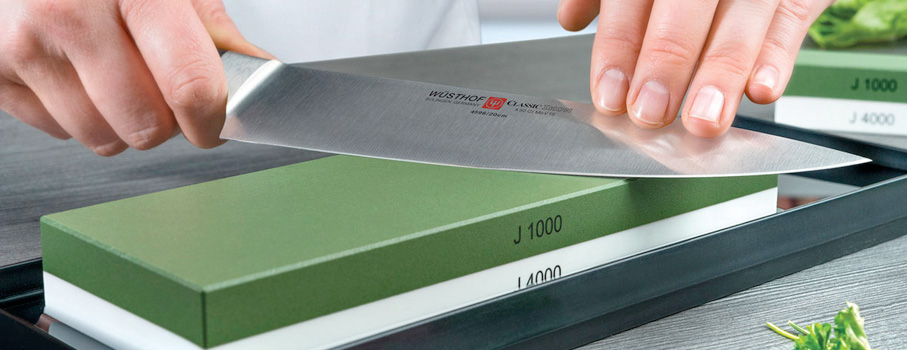
Regular Japanese whetstone sharpening, the use of wooden or high-quality synthetic cutting boards, and hand washing with immediate drying are recommended.
What characterises the KAI series?
The KAI series stands out for the combination of Japanese tradition and modern manufacturing, providing reliable knives for conscious and precise kitchen use.
Who is this series recommended for?
It is suitable for professionals and advanced enthusiasts seeking consistent performance and quality.
What type of use is it ideal for?
It is ideal for everyday preparation and precise cutting tasks.
How should it be maintained?
Regular whetstone sharpening and proper cutting boards help preserve performance.
What distinguishes Japanese knives from Western ones?
Thinner geometries, sharper edge angles and an approach focused on precision and clean cutting.
Santoku or Gyuto: which should you choose?
The santoku is compact and versatile for everyday use; the gyuto is closer to a classic chef’s knife and is ideal for long cuts and sustained work.
Are Japanese knives more delicate?
Yes, they often require more care: they are not suitable for bones, frozen foods or twisting, but offer superior cutting performance when used correctly.
How do you properly sharpen a Japanese knife?
Whetstone sharpening is ideal: a medium grit for maintenance and a finer grit for finishing, adapting the choice to the steel and usage.