WORLDWIDE SHIPPING
Share

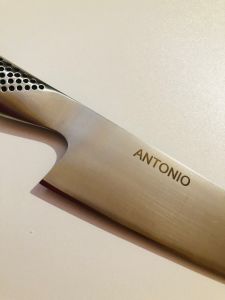
Utility Knife Series A-30 by Ryda Knives

€95.00 €77.87
Availability: In stock
The A-30 series is designed for experienced kitchen knife users. Over many years, Ryda Knives has meticulously developed these knives with the needs of experienced users in mind. The knife was designed to meet the needs of those who are used to holding the knife with a "pinch" grip on the blade. The knives feature a lightweight and well-balanced construction, offering chefs a pleasant and efficient experience. Unlike other knives that often cause finger discomfort and pain, our design is the culmination of decades of kitchen experience and years of meticulous refinement. For the blade we chose a 3-layer steel with an Aus-10 steel core, a steel renowned throughout the world for its high performance. With a hardness rating of 60 HRC, it allows for easy sharpening when needed, whilst being robust enough for tasks where hardness is key. Additionally, the steel is subjected to a vacuum treatment to improve its durability. The edge is sharpened to 15° on each side, ensuring it is easy to restore sharpness when necessary. The handle is made of stabilized walnut wood, which gets extra hardness thanks to vacuum treatment. Japanese blades, the wood of the handles comes from the USA, the finishing and assembly takes place in Sweden. Total length cm. 25.2 Blade length cm. 12.7 Thickness 2mm. Weight 75 grams
FAQs
What is the ideal length for a chef's knife?
The most common length for a chef's knife is 20 cm (8 inches), which is perfect for most kitchen tasks. However, the ideal choice depends on several factors: Hand size: Smaller hands handle 16–18 cm blades more comfortably, while larger hands may prefer a 21–25 cm blade. Personal habits: Those who favor broad movements and long cuts might lean toward longer knives; those who prioritize precision or work in tight spaces might prefer a shorter blade. Experience level: Beginners tend to choose shorter, more manageable blades, while professionals often prefer 21 or 24 cm knives for greater efficiency. In short, there is no “perfect” size for everyone — the right length should be chosen based on comfort, control, and intended use.
What’s the best way to store kitchen knives?

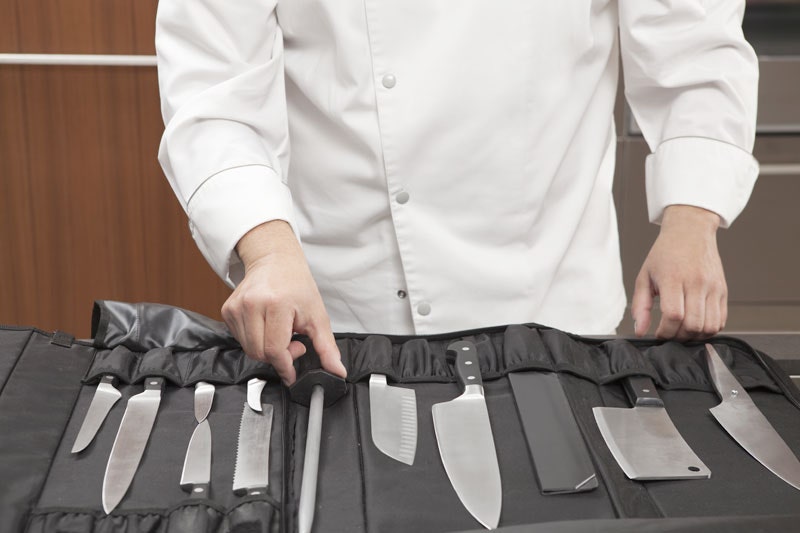
Avoid keeping them loose in drawers, where they can get damaged or become a safety hazard. It’s better to use a wooden block, magnetic strip, or blade guard. You can find the right solution in our catalog.
Do you have professional chef knives?
Yes, in our ecommerce store you will find only professional and high-quality chef knives. Each model is selected to meet the needs of chefs, cooks, and cooking enthusiasts who seek reliable, sharp, and durable tools. We offer a complete range of professional kitchen knives, ideal for precision cutting, meat, fish, vegetables, and much more. You will find slicing knives, santoku, paring knives, and other models commonly used in professional kitchens. We collaborate only with brands recognized at the professional level, such as [e.g., Victorinox, Global, Kai, F. Dick, Ambrogio Sanelli, Wüsthof, etc.], to offer you the best in performance and safety in the kitchen
Can I put knives in the dishwasher?

It’s highly discouraged. High heat and aggressive detergents can damage both blade and handle. Knives can also knock against other items, dulling the edge.
What does "blade hardness" mean?

Hardness refers to how resistant the steel is, measured on the Rockwell scale (HRC). The harder the steel, the better it retains its edge—but it’s also more brittle and prone to chipping.
What materials are used for knife blades?
Blades can be made of stainless steel (rust-resistant), carbon steel (very sharp but delicate), or ceramic (lightweight and razor-sharp but fragile). Premium knives often use Damascus steel or advanced alloys. Not sure which to choose? Contact us—AFcoltellerie has them all.
What are knife handles made of?
Handles can be made of wood (classic but delicate), plastic (durable and hygienic), or technical materials like micarta or G-10, which are extremely tough and non-slip even when wet.
What’s the best knife for beginners?
A 20 cm chef’s knife is the most versatile option to start with. Paired with a paring knife, it covers most everyday kitchen needs.
What are the grooves (granton edge) on a blade for?
The grooves or “granton edge” reduce friction and prevent food from sticking to the blade. They’re especially useful with wet or soft foods like fish, cheese, or vegetables.
Are there knives for left-handed users?
Yes. Some single-bevel Japanese knives are made specifically for right- or left-handed use. Many universal knives, with a double bevel, work well for both.
European or Japanese knives: what’s the difference?
European knives are sturdier, with thick, curved blades for rocking cuts and tough ingredients. Japanese knives have thinner, harder blades for clean, precise slicing—but they’re also more fragile. In short: Europeans are durable and versatile, Japanese are sharp and surgical.
What sets the RYDA A-30 series apart?
The RYDA A-30 series was developed for users already accustomed to professional-level kitchen knives. Its design prioritises lightness, balance and comfort in a pinch grip, where thumb and index finger control the blade close to the handle. This approach derives directly from the professional experience behind the RYDA brand. The blade uses a three-layer construction with a high-carbon AUS-10 steel core, valued for its balance of performance, toughness and ease of resharpening. Stated hardness is approximately 60 HRC and the edge is sharpened to 15 degrees per side. A stabilised figured walnut handle completes a construction designed to feel natural and controlled. A-30 therefore differs from the higher RYDA series not because it is generic, but because it seeks a particularly practical balance between performance, lightness and maintenance.
Who is the RYDA A-30 series recommended for?
RYDA A-30 is primarily recommended for cooks and enthusiasts who already have a well-established cutting technique and regularly use a pinch grip. Handle geometry and balance were developed specifically to make this type of control comfortable and to promote fluid movement during repetitive preparation. The series is also interesting for users who want to enter the RYDA world without immediately choosing the more sophisticated ST650 steel constructions. AUS-10 at around 60 HRC offers a balanced combination of edge retention and relatively straightforward resharpening compared with harder steels. It is less suitable for heavy work on bones, frozen foods or levering motions: A-30 remains a precision cutting series and should be used according to the function of each blade.
What types of use is the RYDA A-30 series ideal for?
RYDA A-30 is designed for the main kitchen tasks where speed, precision and control need to work together. The chef's knife can handle vegetables, herbs, boneless meat and general preparation, while other profiles in the series specialise the cutting action according to ingredient and technique. Its relatively light construction helps during extended work sessions and allows a pinch grip without unnecessarily loading the wrist. The approximately 15-degree-per-side edge promotes clean penetration through food and good cutting feedback. To preserve these characteristics, versatility should not be confused with indiscriminate use: bones, frozen foods and lateral twisting require different tools. A-30 performs at its best as a precise, well-controlled blade.
How should RYDA A-30 knives be maintained?
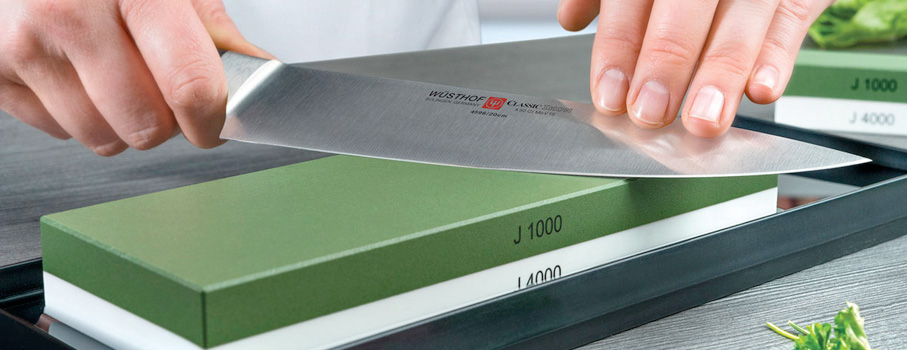
RYDA A-30 knives should be hand washed and dried immediately, avoiding dishwashers, prolonged immersion and aggressive detergents. The stabilised walnut handle is designed to provide greater resistance than untreated wood, but careful maintenance remains important to preserve its finish and stability over time. Use wooden or suitable synthetic cutting boards and store the knife so the blade cannot strike other utensils. AUS-10 at around 60 HRC provides a good balance between edge retention and ease of resharpening. When sharpening is required, preserve the original angle of approximately 15 degrees per side using suitable stones or systems. Regular, minimally invasive maintenance helps RYDA A-30 retain its precision and pleasant handling.
What sets RYDA knives apart?
RYDA Knives was created from an approach strongly rooted in real kitchen experience. Founder Viktor Ingmarsson worked for many years as a chef and developed the project from the need to improve the ergonomics, balance and comfort of knives used for many consecutive hours. Before the first models were launched, years of testing and refinement were devoted to handles, steels, hardness and edge geometry. The defining feature of RYDA knives is therefore the relationship between blade and grip. Handles are designed around different ways of holding a knife, particularly the forward or pinch grip used by many chefs. Weight and balance point are not secondary details but integral parts of the design. A-30, ST650 and A-73 interpret this philosophy with different construction levels and materials. RYDA is therefore aimed at users who look beyond steel hardness or blade aesthetics and want a tool designed around the cutting motion and the relationship between hand, balance and geometry.
What are the main differences between RYDA A-30, ST650 and A-73?
The three RYDA series share a focus on ergonomics but occupy different positions. A-30 is developed for experienced users who appreciate a light, well-balanced construction, with an AUS-10 steel core, hardness around 60 HRC and a stabilised walnut handle. It is technical but relatively straightforward to resharpen and manage in daily work. ST650 introduces proprietary ST650 powder steel as the core of a 73-layer Damascus construction and uses figured olive-wood handles. In the main models, stated hardness is around 62±1 HRC, with a design focused on high cutting ability and edge retention. A-73 is the brand's highest-level offering. It also uses ST650, but each knife type is designed more specifically around its function and corresponding balance point. The series celebrates the brand's development and includes the Legacy Chef Knife, winner of a Red Dot Award in 2024.
Who are RYDA knives recommended for?
RYDA knives are particularly suited to chefs, professionals and experienced enthusiasts who pay close attention to ergonomics and balance. The brand philosophy was born from prolonged kitchen use and the search for a grip capable of reducing the strain generated by poorly balanced tools. A-30 can be interesting for users who already have good technique and want a light, precise knife that is relatively easy to maintain. ST650 is aimed at those seeking a step up in steel quality and edge retention, while A-73 is primarily designed for professionals or enthusiasts seeking the brand's most sophisticated offering. RYDA is particularly coherent with users of the pinch grip who want to clearly feel the balance point during cutting. As with all high-performance knives, selection should be accompanied by correct technique and maintenance appropriate to blade hardness.
What preparations are RYDA knives ideal for?
RYDA's different geometries cover the main tasks of an advanced kitchen. The chef's knife is the reference for vegetables, herbs, boneless meat and general preparation; Santoku and other more compact profiles can favour control and speed with vegetables and smaller ingredients; carving, utility and paring knives address more specific operations. RYDA knives are most effective in tasks where balance and precision allow the edge to work without excessive force. The approximately 15-degree-per-side geometry used across several series promotes clean cutting but requires bones, frozen foods and lateral twisting to be avoided. Choosing the model according to technique is fundamental: RYDA designs the behaviour and balance of different blades around their specific function, an approach especially evident in A-73.
How should RYDA knives be maintained and sharpened?
RYDA knives should be hand washed and dried immediately after use, with particular care for stabilised-wood or olive-wood handles and high-carbon blades. Storage should prevent any contact between the edge and other utensils, using knife blocks, suitable magnetic racks or dedicated guards. Wooden or appropriate synthetic cutting surfaces are recommended. Glass, ceramic, stone, bones and frozen foods can subject a thin, hard edge to unsuitable stress. Sharpening should preserve the original geometry: an angle of around 15 degrees per side is common across RYDA series. A-30, at around 60 HRC, is also designed for relatively accessible resharpening; the harder ST650 and A-73 require even greater precision. Controlled, minimally invasive maintenance preserves performance and blade profile for longer.
Chat with us