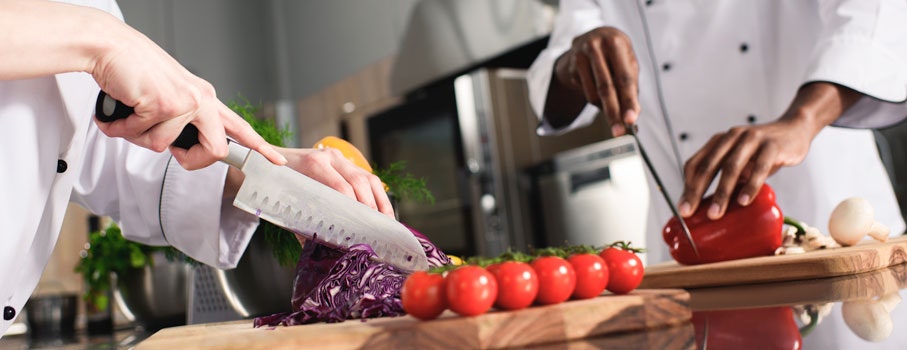
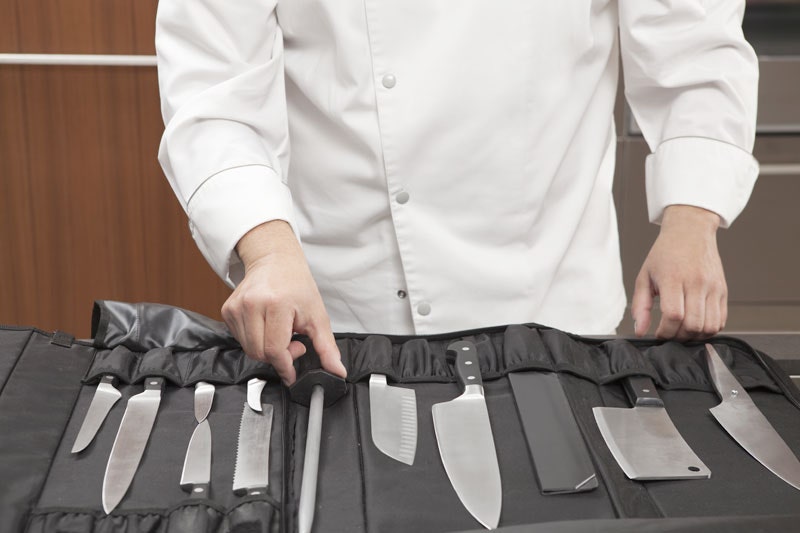
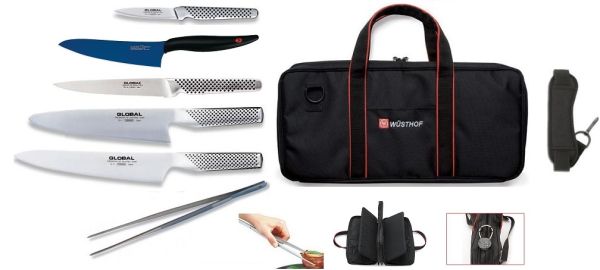
Valigetta elegante e capiente di Wusthof allestita per lo chef esigente, che desidera avere il massimo del taglio, unita alla leggerezza dei coltelli e all'eccellente bilanciamento. Questa valigetta da 20 posizione di Wusthof con apertura a libro, viene fornita completa di: n. 1 Coltello affettare cm. 21 Global G3 n. 1 Coltello trinciante cuoco cm. 21 Global G6 n. 1 Coltello cucina, utility cm. 15 Global GSF24 n. 1 Coltello Titanium di Kasumi con lama cm. 13 n. 1 Pinza da cucina lunghezza cm. 30 La valigetta ha due comparti separati ognuno con protezione lame, chiusura a cerniera. Lucchetto a combinazione per maggiore sicurezza. Dotata di maniglia e tracolla inclusa. Dimensione 48 x 25 x 6 cm.
FAQs
What do Global cases, sets and knife blocks include?
Global cases, sets and knife blocks include a coordinated selection of knives and accessories designed to cover the main kitchen preparation tasks, from everyday cutting to more specific operations.
What is the difference between cases, sets and blocks?
Cases are designed for transport and professional use, sets offer predefined knife combinations, while blocks provide stable storage and organisation in the kitchen.
Who are these products recommended for?
They are ideal for professionals, advanced enthusiasts and anyone looking for a complete and coherent solution without selecting individual knives.
How should I choose the right solution?
The choice depends on usage: cases for mobility, sets for versatility, and blocks for convenient and organised storage.
What makes Global knives recognisable?
The seamless stainless steel design and the distinctive dimpled anti-slip handle, combined with thin, well-balanced blades.
What distinguishes Japanese knives from Western ones?
Thinner geometries, sharper edge angles and an approach focused on precision and clean cutting.
Who are Global knives suitable for?
They are ideal for those seeking lightness, manoeuvrability and precision, both in professional kitchens and advanced home use.
Santoku or Gyuto: which should you choose?
The santoku is compact and versatile for everyday use; the gyuto is closer to a classic chef’s knife and is ideal for long cuts and sustained work.
What type of maintenance do they require?
Hand washing, immediate drying and regular sharpening are recommended. Avoiding aggressive tools and unsuitable surfaces helps preserve the edge longer.
Are Japanese knives more delicate?
Yes, they often require more care: they are not suitable for bones, frozen foods or twisting, but offer superior cutting performance when used correctly.
Which models are considered essential?
A main knife (chef or gyuto), a paring knife and a serrated bread knife cover most kitchen needs.
How do you properly sharpen a Japanese knife?
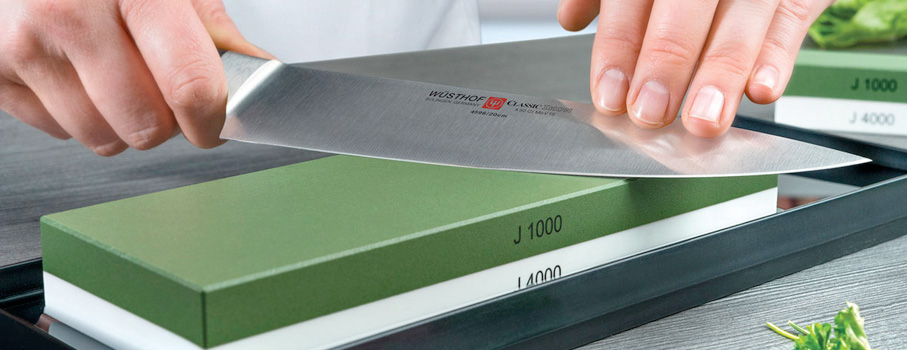
Whetstone sharpening is ideal: a medium grit for maintenance and a finer grit for finishing, adapting the choice to the steel and usage.