WORLDWIDE SHIPPING
Share

Ceramic sharpener grain 1000 by Wusthof

€65.00 €53.28
Availability: In stock
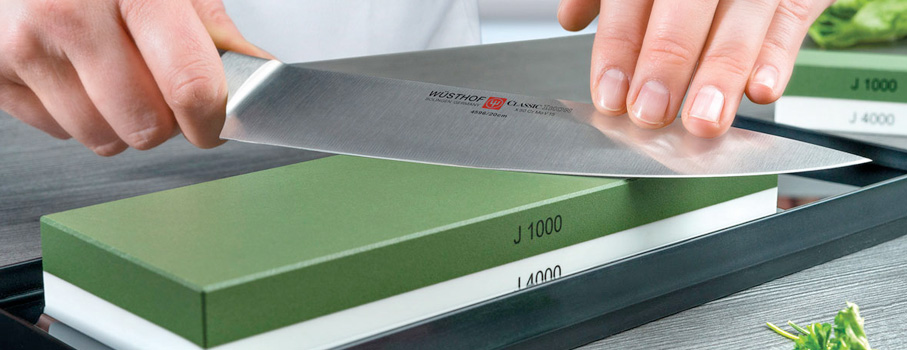
Quality knives from WÜSTHOF can be sharpened easily with this fine ceramic sharpener.
Grain 1000. Corresponds to 3000 Japanese Standard.
To be used like a regular sharpening steel.
The result will be a fine and very sharp edge.
Length 26 cm.
FAQs
Why is it important to sharpen knives?
A sharp knife is safer and more efficient: it requires less force and delivers precise cuts. A dull blade can slip and increase the risk of accidents.
How often should I sharpen my knives?
It depends on how often you use them and the type of blade. Generally, regular honing with a honing steel is recommended, along with deeper sharpening every few months or when the knife loses effectiveness.
Should I use a honing steel or a sharpener?
A honing steel maintains the edge and prolongs the life of the knife, but it doesn’t actually sharpen. To restore the edge, you need a sharpener (manual, electric, or whetstone). The ideal routine is to use both: the honing steel for daily care, the sharpener for periodic maintenance.
What’s the difference between a smooth, grooved, or ceramic honing steel?
A smooth steel realigns the edge without removing metal. A grooved one has a slightly abrasive action, taking off a small amount of material. A ceramic steel is gentler and suitable even for hard blades like Japanese knives.
How do you correctly use a honing steel?
Hold the steel vertically and draw the blade across both sides at a 15–20° angle using light, steady strokes. Just a few passes are enough to maintain the edge.
Can I sharpen any type of knife?
Almost all types, but be careful with serrated or ceramic blades: they require specific tools or techniques. Always check the manufacturer's guidelines or ask us for advice.
What is a honing steel for?
A honing steel is used between sharpenings. In use, an edge doesn't wear away straight away: it bends slightly out of line, and the knife feels duller than it really is. A few strokes on the steel straighten it. A steel doesn't replace sharpening: once the edge is rounded or worn, you need a stone or a sharpener.
Honing or sharpening: how do I tell which the knife needs?
If the knife cuts well again after a few strokes on the steel, the edge only needed realigning. If it still slides on tomato skin or tears paper, the edge is worn and needs sharpening. A practical check: look at the edge under direct light. A sharp edge doesn't reflect light; any spots that shine are rounded.
Steel, diamond or ceramic: what's the difference?
A steel rod, smooth or with a regular or fine cut, realigns the edge while removing very little metal; it is the everyday tool in butcher shops and professional kitchens. Diamond and ceramic rods remove steel, so they sharpen slightly with every stroke: diamond is the fastest, ceramic is finer. For very hard blades, such as many Japanese knives, ceramic or diamond is generally preferred over steel.
Round or oval? And how long should it be?
An oval section has a wider contact area and needs fewer strokes on broad blades such as chef's or butcher's knives. A round section is the most common and suits general use. The rod should be longer than the blade: for a 20 cm knife, a 25 to 30 cm steel lets the whole edge travel along the rod in one stroke.
How do I use a honing steel correctly?
Hold the steel upright with its tip resting on a cloth or chopping board, so it can't slip. Draw the blade down the rod from heel to tip, alternating sides, at the same angle used for sharpening and without pressing: 5 to 10 strokes per side are enough. The fast in-the-air technique you often see makes it hard to keep a steady angle and doesn't improve the result. After a diamond or ceramic rod, wipe the blade to remove metal particles.
How often should I use it?
In a professional kitchen, several times a day if needed: before each service or whenever cutting performance drops. At home, a few strokes before using your main knives are enough. Use diamond and ceramic rods more sparingly, since they remove metal.
Chat with us