WORLDWIDE SHIPPING

 IT
IT FR
FR



 IT
IT FR
FR Share
Share

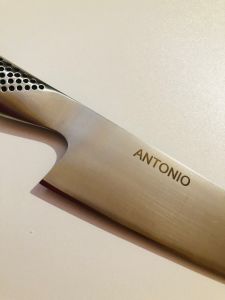

Kai Shun Classic Series 18 cm Damascus Santoku Knife
€233.40
€191.31
Availability:
In stock
Kai Shun Santoku Knife cm. 18
The Shun chef’s knife series is one of the world’s most extensive knife series made of damask steel. It is well received among the cooking elite and ambitious hobby chefs. Shun professional chef’s knives are made from a newly developed stainless damask steel with 32 layers. The inner layer is made from V-gold-10 steel. This steel is highly resistant to corrosion, extremely hard (61±1 HRC) and the reason for the blade being incomparably and lastingly sharp.
The convex blade profile in combination with the hand honing of each Shun knife makes for an unrivalled sharpness that allows the knife to glide softly through even the toughest foodstuffs. Paired with the knife’s well-balanced weight this sharpness allows for non-fatigue work.
The refinement of the natural beauty of the damask structure gives each SHUN knife its unique and individual character. Thus every single SHUN knife is turned into a unique specimen – a piece of art that combines craftsmanship, technology and design.
The SHUN chef’s knife series has adapted the manufacturing technique for the finest chef’s knives - which derives from the Japanese way of forging Samurai swords - to the production of Western-style blades.
Blade length: 18 cm.
Handle length: 12,2 cm
Blade material: Stainless Damask Steel 32 Layers
Cutting edge: double-edged
Handle material: laminated Pakka wood. Shipping time: 5-7 days
The convex blade profile in combination with the hand honing of each Shun knife makes for an unrivalled sharpness that allows the knife to glide softly through even the toughest foodstuffs. Paired with the knife’s well-balanced weight this sharpness allows for non-fatigue work.
The refinement of the natural beauty of the damask structure gives each SHUN knife its unique and individual character. Thus every single SHUN knife is turned into a unique specimen – a piece of art that combines craftsmanship, technology and design.
The SHUN chef’s knife series has adapted the manufacturing technique for the finest chef’s knives - which derives from the Japanese way of forging Samurai swords - to the production of Western-style blades.
Blade length: 18 cm.
Handle length: 12,2 cm
Blade material: Stainless Damask Steel 32 Layers
Cutting edge: double-edged
Handle material: laminated Pakka wood. Shipping time: 5-7 days
FAQs