WORLDWIDE SHIPPING
Share

Kasumi Sharpener Stone Grain 240 1000

€64.00 €52.46
Availability: In stock
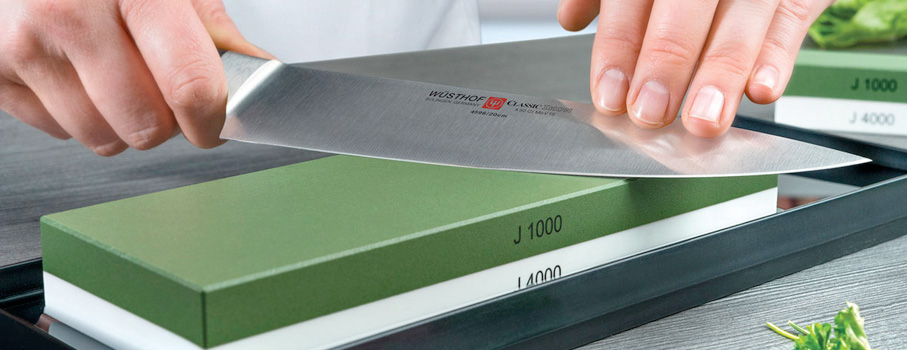
Kasumi Sharpener Stone Grain 240 1000 This stone is recommended by the Japanese company Kasumi to sharpen damascene knives and also all other knives with steel blade.
In case the cutting-edge of the knife were in bad conditions, you could start to sharpen the knife from the thicker grain 240 and finish with the thinner grain 1000.
In case the knife presented a medium loss of cutting-edge, this could be restored with the thinner grain 1000. An antislip rubber is included.
The stone must be always wet with water, for a perfect sharpening.
Stone dimensions : 18x6 cm. Height 3 cm.
A small stone is included to trim the 240 and 1000 stones after having used them many times.

FAQs
Why is it important to sharpen knives?
A sharp knife is safer and more efficient: it requires less force and delivers precise cuts. A dull blade can slip and increase the risk of accidents.
How often should I sharpen my knives?
It depends on how often you use them and the type of blade. Generally, regular honing with a honing steel is recommended, along with deeper sharpening every few months or when the knife loses effectiveness.
Should I use a honing steel or a sharpener?
A honing steel maintains the edge and prolongs the life of the knife, but it doesn’t actually sharpen. To restore the edge, you need a sharpener (manual, electric, or whetstone). The ideal routine is to use both: the honing steel for daily care, the sharpener for periodic maintenance.
What’s the difference between a smooth, grooved, or ceramic honing steel?
A smooth steel realigns the edge without removing metal. A grooved one has a slightly abrasive action, taking off a small amount of material. A ceramic steel is gentler and suitable even for hard blades like Japanese knives.
How do you correctly use a honing steel?
Hold the steel vertically and draw the blade across both sides at a 15–20° angle using light, steady strokes. Just a few passes are enough to maintain the edge.
Can I sharpen any type of knife?
Almost all types, but be careful with serrated or ceramic blades: they require specific tools or techniques. Always check the manufacturer's guidelines or ask us for advice.
What do Kasumi accessories include?
Kasumi accessories include tools dedicated to sharpening, protecting and storing blades correctly. They are not simple add-ons, but elements that directly affect how efficiently and safely a knife can be maintained over time.
What are they really for?
They make knife ownership sustainable in the long term. A good accessory prevents storage mistakes, reduces the risk of edge damage and helps preserve cutting qualities for longer, especially with higher-performing Japanese lines that are more sensitive to improper use.
How should they be chosen correctly?
The choice depends on actual function: sharpeners and stones for edge maintenance, guards and cases for storage, and dedicated supports or organisational solutions for workflow. The correct logic is not to buy accessories generically, but to build a coherent system around the way the knife is really used.
How should they be managed over time?
Accessories also require care: they should be kept clean, used correctly and replaced when they no longer perform their job well. An unsuitable or worn accessory can compromise a blade just as much as incorrect knife use.
What truly distinguishes Kasumi knives within the Japanese knife market?
Kasumi occupies a very interesting position because it strikes a balance between Japanese tradition and real-world accessibility. Its use of VG-10 steel, often combined with Damascus-style layering, allows for strong edge retention and refined cutting performance without necessarily reaching the most extreme hardness levels, which can make a knife more demanding to handle. This makes Kasumi a brand that offers aesthetics, precision and reliability, while remaining more approachable than more elite and demanding lines.
How should the differences between Kasumi series be understood?
Kasumi series differ not only in appearance, but also in their philosophy of use. The Damascus VG-10 line represents the brand’s balance of tradition and visual appeal; VG-10 Pro is geared toward more professional, continuous use; HM Hammered adds a functional benefit in food release; Titanium and Ceramic explore alternative materials; while Tora offers an easier entry point into Japanese knives. Understanding these differences is essential in order to choose based on use, rather than on looks alone.
Who is Kasumi, as a brand, really suited for?
Kasumi is particularly well suited to users who want to enter the world of Japanese knives with serious tools, but without immediately moving into the most extreme premium segment. It is ideal for advanced home cooks, enthusiastic users and also for less demanding professional environments, where a good balance of performance, durability and ease of maintenance matters.
How should someone choose the right Kasumi series in an informed way?
The choice should begin with actual use. Those who cook frequently and want strong performance may prefer VG-10 Pro or HM Hammered; those drawn to aesthetics and tradition may lean toward Damascus VG-10; users seeking greater ease of use may choose Tora; and those with specific needs may consider Ceramic or Titanium. The real question is not which line is objectively best, but which one best matches the way the knife will actually be used.
What is the right maintenance approach for Kasumi knives?
Kasumi knives require the kind of care typically associated with Japanese knives, although the level of tolerance varies depending on the series. VG-10-based lines require more attention in sharpening and everyday use, while series such as Tora or Titanium tend to be slightly more forgiving. In every case, hand washing, immediate drying and the use of suitable cutting boards remain essential.
Chat with us