WORLDWIDE SHIPPING

 IT
IT FR
FR



 IT
IT FR
FR Share
Share

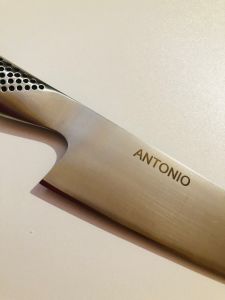
The Japanese: Case complete with Kai and Global knives and accessories
€429.00
€351.64
Availability:
In stock
The Japanese knives remain knives with excellent cut and blades with hardness that every exclusive kitchen wants to possess.
With this case we wanted to combine the essential knives to the chef who wants to work effectively meat, fish and vegetables.
We have completed it with those accessories: pliers and scissors that never seem to be enough when preparing food, cooking, flattening, and decorating dishes.
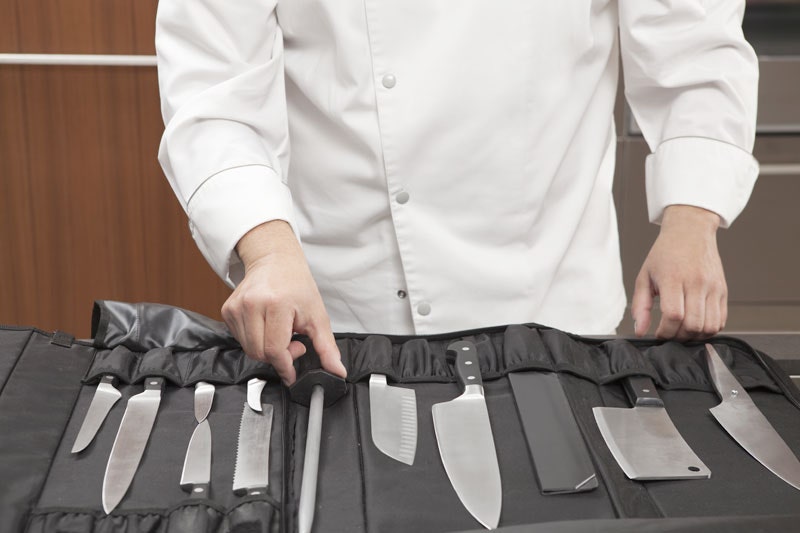
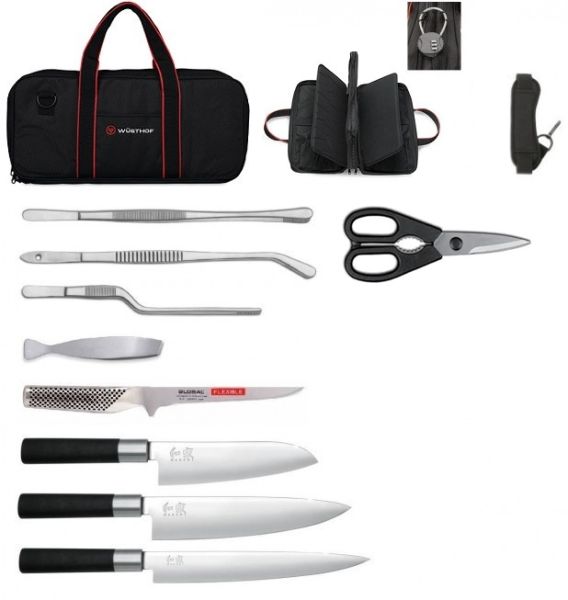
In this elegant, safe and capacious case of Wusthof are included:
n. 1 Knife slicing for meat and fish blade cm. 23 Wasabi Black Series by Kai (6723L)
n. 1 Chef knife blade cm. 20 Wasabi Black Series by Kai (6720C)
n. 1 Santoku knife blade cm. 16 Wasabi Black Series by Kai (6716S)
n. 1 Flexible blade cutting knife cm. 16 of Global (G21)
n. 1 Chef's tweezers total length cm. 30
n. 1 Chef's tweezers wide tipstotal length cm. 30
n. 1 Crancked tweezers, length cm. 20
n. 1 Tweezers in stainless steel to remove fish-bones total length cm. 13
n. 1 Kitchen scissors, micro-toothed blades, ideal for picking up crab's nippers and for fish clean up.
The Wusthof case is made of durable fabric, has three compartments and can hold up to 20 knives; supplied combination lock. Book opening. Equipped with handle and shoulder strap.
Dimensions: 48 x 25 x 10 cm
With this case we wanted to combine the essential knives to the chef who wants to work effectively meat, fish and vegetables.
We have completed it with those accessories: pliers and scissors that never seem to be enough when preparing food, cooking, flattening, and decorating dishes.
In this elegant, safe and capacious case of Wusthof are included:
n. 1 Knife slicing for meat and fish blade cm. 23 Wasabi Black Series by Kai (6723L)
n. 1 Chef knife blade cm. 20 Wasabi Black Series by Kai (6720C)
n. 1 Santoku knife blade cm. 16 Wasabi Black Series by Kai (6716S)
n. 1 Flexible blade cutting knife cm. 16 of Global (G21)
n. 1 Chef's tweezers total length cm. 30
n. 1 Chef's tweezers wide tipstotal length cm. 30
n. 1 Crancked tweezers, length cm. 20
n. 1 Tweezers in stainless steel to remove fish-bones total length cm. 13
n. 1 Kitchen scissors, micro-toothed blades, ideal for picking up crab's nippers and for fish clean up.
The Wusthof case is made of durable fabric, has three compartments and can hold up to 20 knives; supplied combination lock. Book opening. Equipped with handle and shoulder strap.
Dimensions: 48 x 25 x 10 cm
FAQs