WORLDWIDE SHIPPING

 IT
 FR

- KNIVES
- JAPANESE KNIVES
- EUROPEAN KNIVES
- PROMOTIONAL AND CUSTOMIZATIONS
- CHEF'S CASES - KNIVES BLOCKS - SETS
- SHARPENING
- PASTRY
- PASTRY UTENSILS
- ACCESSORIES & UTENSILS
- CAKE STANDS AND DISPLAY
- CHOCOLATE
- MARTELLATO PROFESSIONAL
- PAVONI ITALIA
- BRUSHES, SPATULAS AND WHIPS
- SCHNEIDER
- SILICONE
- SILIKOMART PROFESSIONAL
- AIRPLUS
- CHOCADO
- ÉCLAIR
- DECORATIVE ELEMENTS
- FRUITS 3D
- ICE
- MINI DESSERTS - MIGNON
- MODERN SINGLE PORTIONS
- CLASSIC SINGLE PORTIONS AND CAKES
- NATURAE
- 60 X 40 MOLDS
- AIR MAT
- TARTE 4.0
- JELLY MOULDS
- MODERN CAKES
- STORAGE AND DISPLAY I-GLOO AND MACADO'
- MOULDS FOR CHOCOLATES
- CHOCOLATE ACCESSORIES
- SMALL PLATES
- ACCESSORIES
- CRAFT MOULDS
- PASTRY CUTTER
- TRAYS, GRADE, BOWLS, JUGS, BOTTLES
- THERMOMETERS, TIMER AND SCALES
- BAKEWARE, RINGS AND MOULDS
- MOULDS
- PACKAGING AND PASTRY TRAYS
- BAKING MATS & LINERS
- GUITARS - FRAMES
- VALENTINE'S DAY - MOTHER'S DAY
- DECORATING CAKES
- ICE-CREAM SHOP
- PASTRY UTENSILS
- KITCHEN
- WELLNESS KITCHEN
- COOKING UTENSILS
- ELECTRIC KITCHEN UTENSILS
- POTS
- CARVING & DECORATION
- MANDOLINE AND GRATERS
- ETHNIC CUISINE
- CATERING & BUFFET
- COOKING BOOKS

- CLOTHING
- TABLE & BAR
- HOME & FREE TIME
- GIFT IDEAS
- NEWS
- SALES
- SPARE PARTS
- DELUXE
- AFCOLTELLERIE Home
- Blog
- Business

 IT
 FR
- FAQ
- Set di coltelli
FAQ
Set di coltelli
FAQs
A set or individual knives: which makes more sense?
A set makes sense when it contains knives you will actually use. The advantage is having blades from the same series, with the same steel, the same handle and the same care routine. If you need one or two specific models, it's better to buy them individually and build up your collection over time: a knife that stays in the drawer isn't a saving.
Which knives do I need to start with?
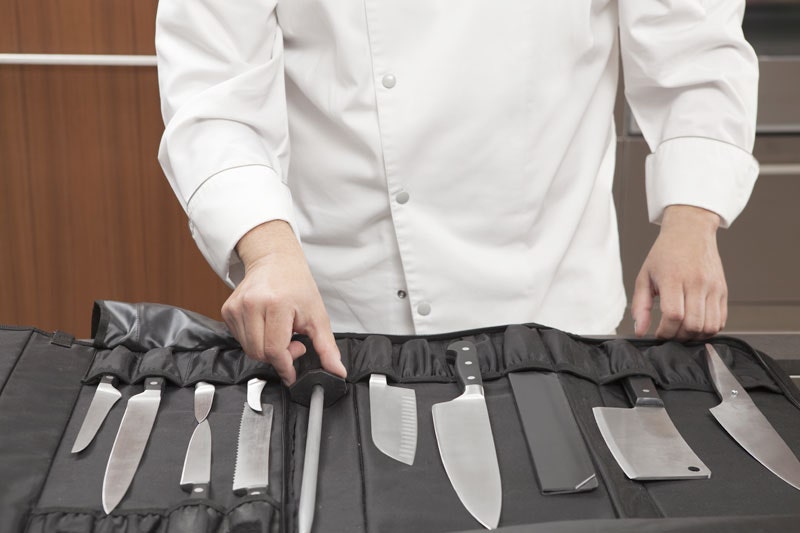
Three knives cover most of the work: a chef's knife of about 20 cm, or a santoku, for slicing and chopping; a paring knife for precision work; and a serrated knife for bread and foods with a hard crust or skin. From there you add specific blades, such as boning, filleting or slicing knives, depending on what you prepare most often.
What are specialist sets?
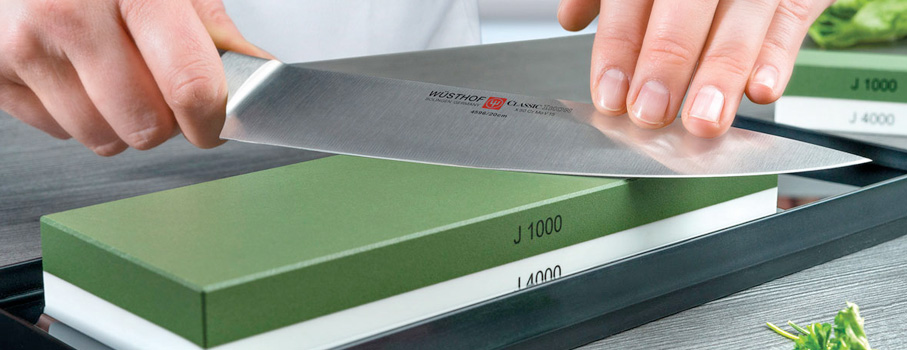
They are sets built around a trade or a task: butchery, fishmongery, pastry, sushi, vegetables. They bring together the blades that job requires, sometimes with dedicated accessories such as a honing steel, fish bone tweezers or a sharpening stone. They are designed for people already working in a specific field or training in that specialisation.
What are HACCP sets with coloured handles for?
In professional kitchens, colours help keep tools separate by type of food and reduce the risk of cross-contamination: for example red for meat, blue for fish, green for vegetables and yellow for poultry. The rules require cross-contamination to be prevented, but they don't set a single colour code: the colours should be defined in your business's food safety plan and used consistently, together with chopping boards in matching colours.
Western or Japanese set?
Western knives generally have thicker blades and softer steels: they cope better with heavy use and small knocks, and they are easy to maintain with a honing steel. Japanese knives often have thinner blades and harder steels that hold their edge for a long time and cut very precisely, but they should be used without twisting and kept away from bones. The choice depends on what you cut and how much time you want to spend on maintenance.
How do I look after the knives in a set?
Wash them by hand and dry them straight away: even when a model is declared dishwasher-safe, hand washing is better for the edge and the handle. Cut on wooden or synthetic boards, never on glass, stone or steel. Store them in a block, on a magnetic rack or in a knife case, so the blades don't knock against other utensils.
Categories:
Set di coltelli